Guide
Best Roasting Pan Sets For Thanksgiving
Our honest guide to best roasting pan sets for thanksgiving — what actually matters, what to skip, and how to choose well.
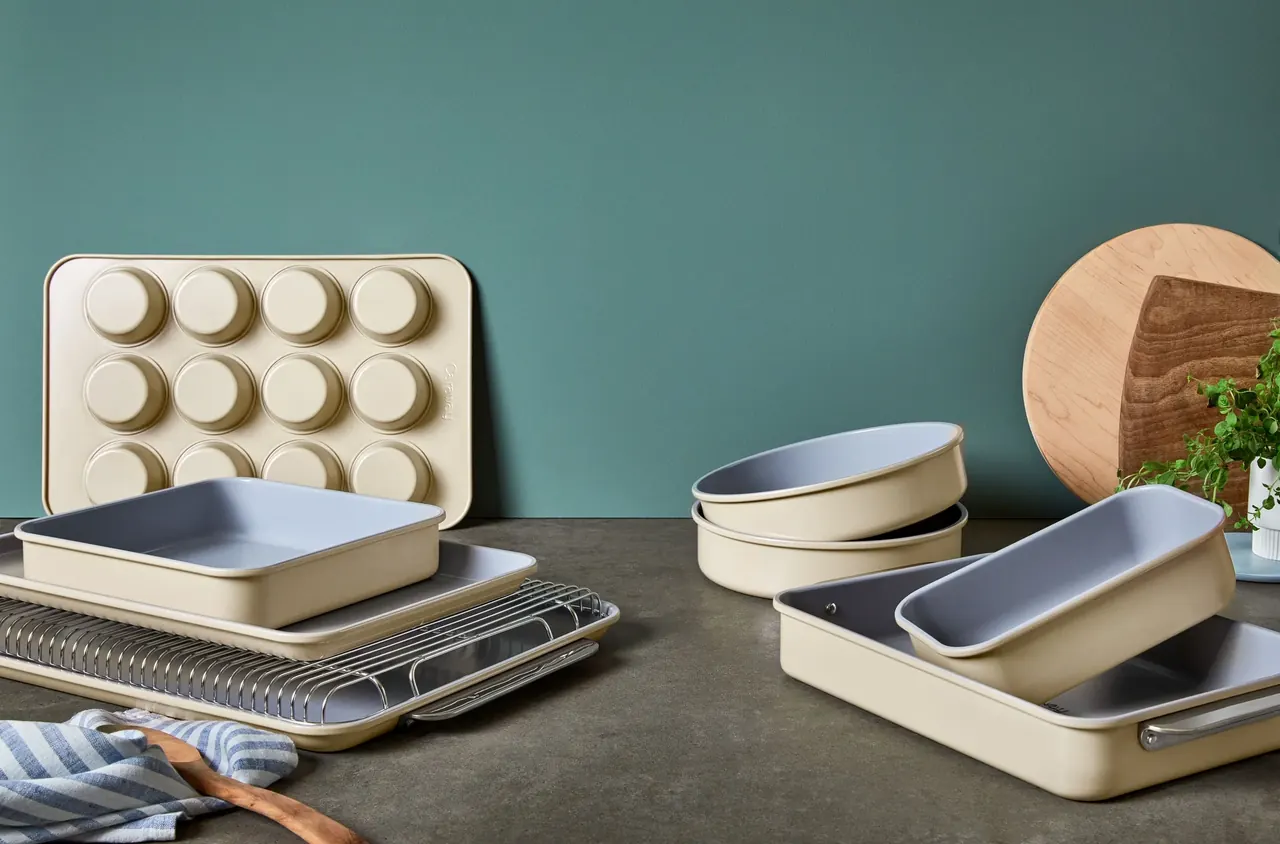
Our honest guide to best roasting pan sets for thanksgiving — what actually matters, what to skip, and how to choose well.
 Best Premium
The best roasting pan sets for Thanksgiving are the ones that fit your turkey comfortably, hold steady under a heavy load, and make gravy and cleanup feel manageable instead of messy. For most home cooks, that means paying closer attention to interior size, rack stability, handle shape, and material than to extra accessories. A good set should earn its keep beyond one holiday, too, working just as well for chickens, roasts, vegetables, and weekend batch cooking.
If I were choosing one material for the widest range of Thanksgiving jobs, stainless steel with a thicker, heat-spreading base makes the most sense. It is durable, generally resistant to rust and staining, and especially useful if you like making pan gravy from the browned bits left behind after roasting.

Fox Run Oval Roaster Set, Stainless Steel, 10-Quart
Shop at Amazon →This material is also practical because it usually tolerates higher heat and more assertive scrubbing than coated pans. That matters after a long roast, when drippings have reduced into sticky spots around the edges. A sturdier clad construction can help with more even heating and can reduce the chances of warping under normal roasting temperatures.
The main tradeoff is cleanup. Stainless is not the easiest surface after a turkey dinner, and if the pan is thin, hot spots can darken drippings too quickly. I would also check that a pan is approved for stovetop use before planning to build gravy in it. A general roasting pan buying guide is useful here because size and construction matter just as much as the finish.
Hard-anodized aluminum is appealing when weight is a real concern. A full roasting pan is already awkward, and a lighter pan can be easier to move from oven to counter with more control. Aluminum also conducts heat efficiently, which helps with steady roasting.
For Thanksgiving, that lighter feel can be a real advantage if you are working with a large bird, vegetables, and several cups of hot juices. The surface is usually tougher than plain aluminum, but care still matters. I would avoid sudden temperature swings, abrasive scrubbers, and any assumption that every pan in this category can go straight onto the stovetop.
This is the material I would consider if lifting and maneuvering feel like the deciding factor. The compromise is that lightweight cookware can be more vulnerable to warping, and some versions are less ideal for building a deeply browned fond for gravy.
Carbon steel works well for cooks who want strong browning and do not mind a little maintenance. It heats quickly, can roast beautifully, and often becomes more reliable with regular use as the surface develops seasoning.
That said, Thanksgiving is not the day I want to fuss over rust prevention if I am already juggling side dishes and timing. Carbon steel needs prompt drying, careful cleaning, and attention to acidic drippings. If left wet or stored carelessly, it can rust. For someone comfortable with seasoned cookware, it can be a strong option. For occasional holiday use, it asks a bit more from you.
Enameled cast iron holds heat exceptionally well and looks nice enough to bring to the table. It is good at steady roasting and can handle large cuts with confidence. If your set includes a sturdy rack and wide handles, it can feel very secure in use.
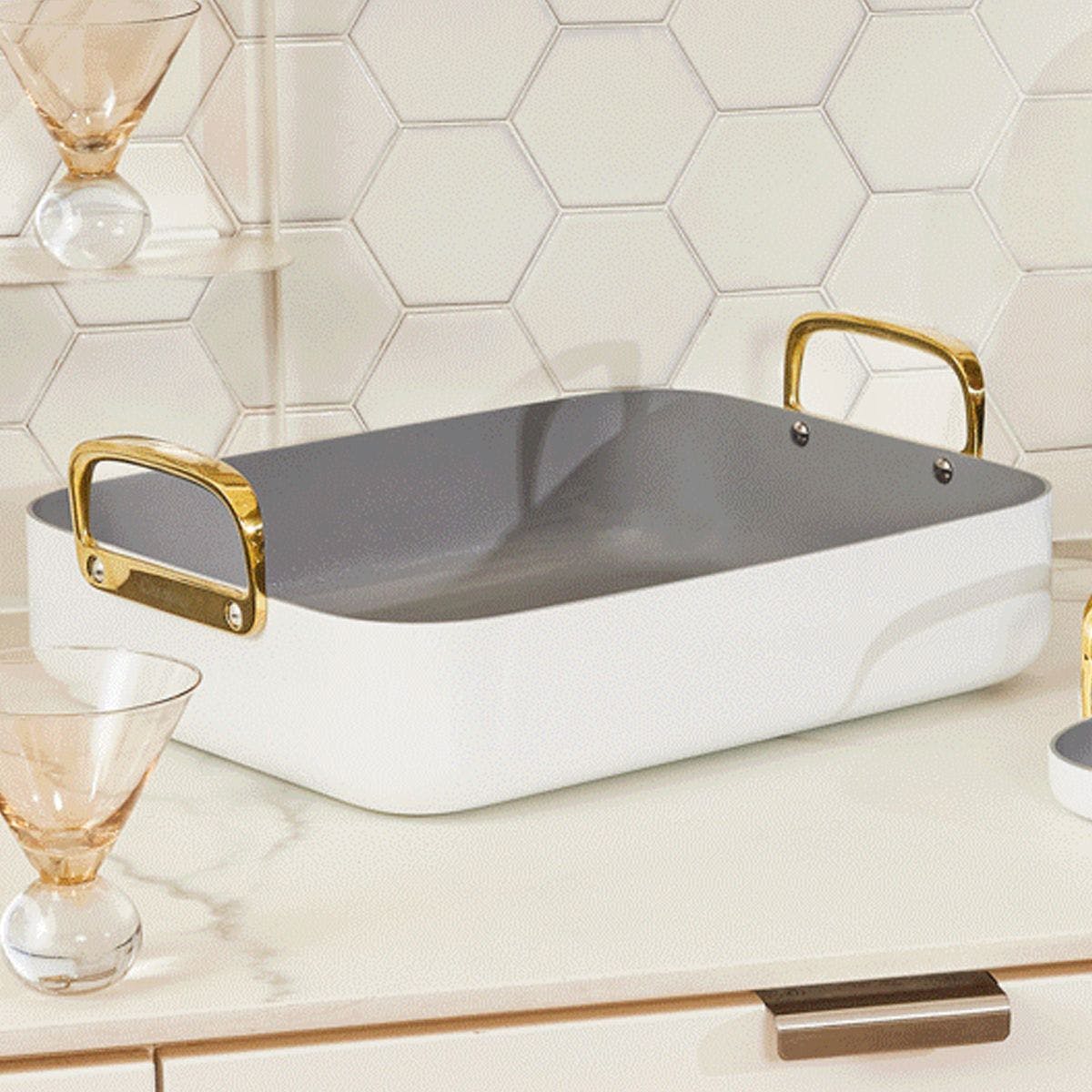
Caraway Home 16x13" Roasting Pan In White | Non-Stick, Non-Toxic, PFAS-Free Ceramic Pan + Wire Rack | Induction-Compatib
Shop at Caraway Home →The obvious drawback is weight. A heavy pan becomes much heavier once you add a turkey and hot drippings, so safe handling matters. I would be especially careful about handle shape and grip room here. Enameled surfaces also need gentler treatment than bare steel. No harsh scouring, no banging the rack against the interior, and no stacking that risks chips or scratches.
This material is best for cooks who value heat retention and do not mind a substantial pan that takes up storage space.
Nonstick sets are popular for one reason: cleanup is easier. If your biggest concern is scraping baked-on residue after dinner, a nonstick surface can simplify that part of the job. It can also help when roasting sticky glazed vegetables alongside the main event.
Still, nonstick has real limits at Thanksgiving. It is not the best choice for building rich fond for gravy, and it requires more careful utensil use and closer attention to heat limits. Metal tools, abrasive cleaners, and repeated overheating can shorten the life of the coating.
I think of nonstick as the easiest option to maintain in the short term, but not always the most versatile one for serious holiday roasting.
The best set is the one that actually fits the bird you plan to cook. I look at interior dimensions first, not just the pan’s outside measurements or a broad capacity claim. Thick rims, sloped sides, and large handles can reduce the usable cooking area more than you would expect.
A helpful rule is to leave about 2 to 3 inches around the turkey so heat can circulate and the bird does not press against the walls. A pan around 16 by 13 inches often works for many turkeys up to roughly 20 pounds, though bird shape matters too, as explained in this turkey roasting pan size guide.
Depth matters just as much. Sides around 2 to 3 inches often strike the right balance: deep enough to contain drippings and vegetables, but not so tall that they interfere with browning. I would also make sure the rack sits securely and does not rock when the turkey is centered on it.
Before Thanksgiving, measure the oven cavity, the door opening, and the clearance above the rack. A tall bird on a raised rack can create problems even if the pan itself technically fits.
A useful roasting pan set does not need many pieces, but the pieces it does include should solve real problems. The rack is the most important extra. It should support the turkey evenly, keep it above the drippings, and leave enough room underneath for airflow and a small layer of aromatics.
Handles matter almost as much as the rack. I would look for wide, firmly attached handles that allow space for thick oven mitts. Decorative or narrow handles can make a heavy pan harder to balance safely.
A lid can be helpful if you roast covered for part of the cooking time, but it is optional for many cooks. A thermometer is more important than a lid, because size and timing alone do not confirm doneness. For technique, a trusted recipe such as this turkey with pan gravy method is a better guide than any accessory included in a set.
The most common mistake is choosing a pan that is too small. A cramped turkey browns unevenly, blocks airflow, and makes it harder to remove the bird cleanly. It also leaves too little room for drippings, which are the foundation of gravy.
Another common problem is crowding too many vegetables under the bird. A thin layer of onions, carrots, or celery is useful. A mound of vegetables is not. Too much underneath can raise the turkey too high, restrict airflow, and scorch the drippings.
I would also avoid relying on time alone. Preheat the oven fully and check the turkey with an instant-read thermometer in the breast and thigh. Resting after roasting is part of the process, not an optional pause. It gives the juices time to settle and creates a useful window for making gravy, a point also emphasized in this Thanksgiving mistakes guide.
Finally, do not underestimate the weight of a loaded pan. Check handles, rivets, and rack stability before the holiday. Clear a landing spot before the turkey comes out of the oven, and use two dry oven mitts every time you lift.
Cleanup is easier if you do not let the pan sit overnight with cooled fat and burnt sugars. Once the pan is safe to handle, pour off excess grease, add warm water, and let stuck-on residue soften before scrubbing.
For stainless steel, a non-scratch pad and soaking usually do the job. For nonstick and enamel, I would skip anything abrasive. Carbon steel and cast iron need prompt drying, and in some cases a light coat of oil after cleaning.
One habit that helps every material is avoiding thermal shock. Do not take a blazing hot pan and run cold water into it. That can warp thinner pans and can stress enamel. For storage, place a cloth or paper towel between rack and pan if they nest together, so the surface does not get scratched.
Look at the interior dimensions and leave about 2 to 3 inches around the bird for airflow. A pan around 16 by 13 inches often suits many turkeys up to about 20 pounds, but a broad bird or bulky rack may require more room.
Stainless steel is usually better for durability, browning, and making gravy from fond. Nonstick is easier to clean, but it is less ideal for deep browning and needs gentler care.
Yes. A rack helps the turkey roast more evenly, keeps it out of the drippings, and improves airflow around the bird. It is one of the few accessories I consider essential.
For a smaller turkey or turkey breast, a sturdy deep baking pan can work if it can support the weight and contain the drippings. Thin disposable pans are risky for heavy birds unless they are fully supported on a rigid sheet pan.
The best roasting pan sets for Thanksgiving are practical, not flashy: the right size, the right material for your cooking style, and a rack and handles you can trust. If you choose with safety, airflow, gravy-making, and cleanup in mind, you will have a pan set that works well long after the holiday table is cleared.

Paige Gilmore
Founder of Stripes & Willows — recipe creator, food photographer and stylist. Every guide is written to make honest, useful kitchen decisions easier.
More about Stripes & Willows →This page contains affiliate links. If you buy through them, Stripes & Willows may earn a commission at no extra cost to you — it never affects what we recommend.