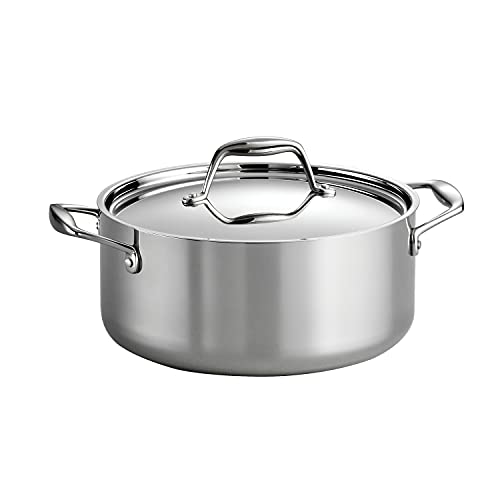
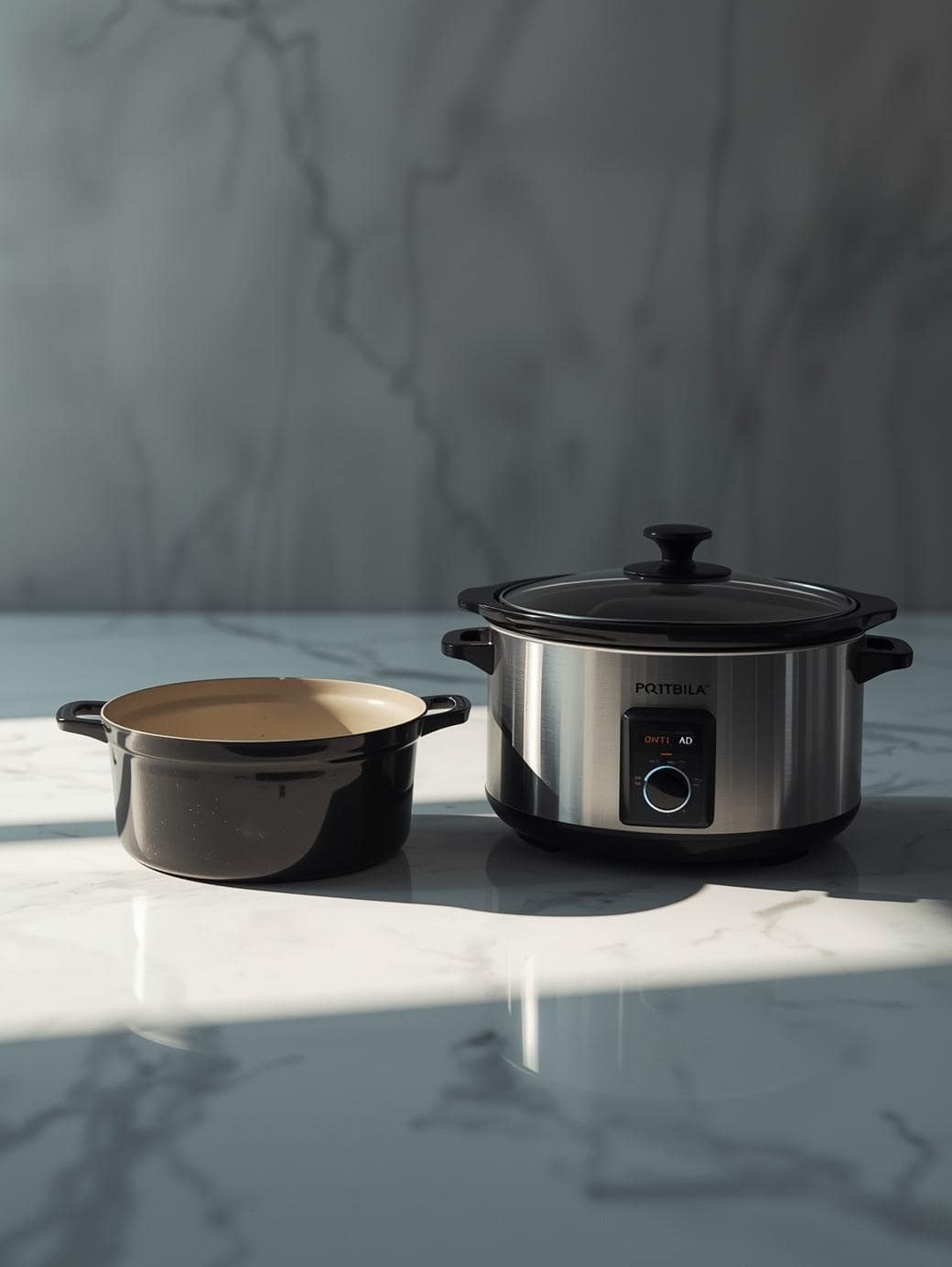
If I’m choosing between an enameled cast iron Dutch oven and a tri-ply stainless steel Dutch oven, my short answer is this: enameled cast iron is the better pick for slow braises, soups, stews, and bread, while tri-ply stainless steel is the easier everyday pot for quicker cooking, frequent stirring, and lighter lifting. Both are nonreactive, both work in the oven and on induction, and both can earn a permanent place in a kitchen. The real difference comes down to heat behavior, weight, and how you like to cook on an ordinary Tuesday.
How They Cook Differently
Enameled cast iron has a steady, calm quality on the stove. Once it gets hot, it stays hot, which is exactly what I want for long simmers and braises. If I add cold stock or a pile of vegetables, the pot doesn’t lose its footing so quickly. That strong heat retention is the main reason it does such a good job with dishes that need time rather than speed.
Tri-ply stainless steel feels more responsive. Because it’s built with layers that usually include an aluminum core, it heats more evenly than plain stainless steel and reacts faster when I turn the burner up or down. That matters when I’m sautéing onions, browning meat in stages, or trying to keep fond from going too dark. The importance of fully clad, multi-layer stainless construction is well established in cookware guidance for exactly this reason: it improves evenness and control.
Neither material is automatically better at everything. Enameled cast iron gives me stability. Tri-ply stainless gives me agility.
Where Enameled Cast Iron Pulls Ahead
For braising, I still think enameled cast iron makes the strongest case for itself. The heavy walls and lid create a gentle cooking environment that suits tough cuts of meat, beans, and soups that need a long, quiet simmer. I also like it for tomato-based sauces and wine-heavy braises because the enamel lining is nonreactive.
It’s also the one I’d lean toward for bread baking. A heavy covered pot traps steam well and holds oven heat reliably, which helps with crust development. Guidance from sources like King Arthur Baking on Dutch oven bread lines up with that general idea: a covered pot helps mimic the steamy environment bread likes early in the bake.
The tradeoff is pace. Enameled cast iron rewards gradual preheating and medium heat. I wouldn’t treat it like a pot that wants to be blasted empty over high heat, and I’m careful about rapid temperature swings. The enamel finish is durable in normal use, but it’s still a coating that can chip if it takes a hard knock.
Where Tri-Ply Stainless Steel Makes More Sense
Tri-ply stainless steel is usually the more practical daily driver. It’s lighter than enameled cast iron, easier to move when full, and simpler to pour from at the sink or stove. If I’m making rice, boiling pasta, reheating soup, cooking grains, or starting a quick one-pot dinner, that lower weight and quicker response are hard to ignore.
I also like stainless for browning because I can see what’s happening more clearly. A light interior makes fond easier to judge, which helps when I’m trying to stop just short of burnt. Deglazing is straightforward too, and I don’t have to think about preserving a seasoning layer.
Good tri-ply stainless steel can absolutely braise and roast well. It just doesn’t hold heat with the same authority as enameled cast iron, so the cooking feel is a little more active. I may need to manage the burner more closely, and lid fit matters more during long cooks.
Acidic Foods, Moisture, and Flavor
This is one area where the two materials are closer than many people assume. Enameled cast iron and stainless steel are both nonreactive with ordinary acidic ingredients, so tomatoes, vinegar, wine, and citrus are all fair game. According to the FDA’s general food-safety guidance for cookware and kitchen use, keeping cookware in good condition and using appropriate food storage practices matters more than avoiding standard acidic cooking in these materials.
What I do notice more than flavor reactivity is moisture control. Heavier lids tend to help with low-evaporation cooking, and enameled cast iron often has the edge there. For a pot roast or a bean stew, that can mean a more stable, humid environment. Stainless lids vary more, so I’d keep an eye on the liquid level during a long oven braise.
Care and Cleanup
Both materials are relatively easy to live with, but they ask for different habits.
With enameled cast iron, I’m careful about impact and thermal shock. I don’t want to bang the rim with metal utensils, drop the lid into the sink, or run cold water into a very hot pot. Hand-washing is the safer routine here. Even if some cookware is marketed as dishwasher-friendly, regular dishwasher use is not the standard I’d count on for preserving the finish over time.
With tri-ply stainless steel, the main annoyances are sticking, discoloration, and water spots. Those are usually cosmetic or technique-related, not signs that the pot is failing. If food is stuck on, I’d soak it or simmer a little water with dish soap, then use a nonabrasive scrubber. Stainless steel is generally the easier of the two for dishwasher use, though hand-washing still keeps it looking nicer.
The basic cleaning advice often given for stainless cookware is simple and sensible: avoid harsh abrasives first, loosen residue with soaking or simmering, and don’t panic over rainbow stains or slight dullness.
Common Mistakes I’d Avoid
The first mistake is assuming heavier always means better. A heavy pot can cook beautifully, but it still has to be moved from stove to oven to sink. If a full Dutch oven feels awkward in your hands, that matters.
The second is using more heat than the pot really needs. Enameled cast iron does not need aggressive preheating to work well, and too much heat can make cleanup harder and stress the enamel. Stainless steel is more forgiving, but even there, high heat is often the reason food sticks or fond burns before dinner gets going.
The third is ignoring the lid. People focus on pot material, but a Dutch oven earns its keep during covered cooking. A secure, well-made lid helps with braises, beans, and bread more than many shoppers expect.
And last, I wouldn’t store a pot based only on shelf space. An enameled pot needs protection from chipping if it’s stacked, and any Dutch oven needs enough room to be lifted safely. Capacity on paper is one thing; a full pot in real life is another.
Who Should Choose Which
If your cooking leans slow and cozy, enameled cast iron is probably the better fit. It shines in soups, stews, braises, baked beans, and rustic breads. It also works well for cooks who like bringing a pot from stove to oven to table in one piece.
If your routine is more weeknight-focused, tri-ply stainless steel may be the smarter buy. It’s easier to maneuver, quick to respond, and versatile enough for everything from sautéing to simmering to boiling pasta. I think of it as the lower-fuss option when dinner needs to happen without much ceremony.
FAQ
Which is better for cooking, enameled cast iron or tri-ply stainless steel?
It depends on the style of cooking you do most. I’d choose enameled cast iron for braises, stews, bread, and long simmers. I’d choose tri-ply stainless steel for faster stovetop cooking, easier handling, and more responsive heat control.
Which Dutch oven is better for baking bread?
Enameled cast iron usually has the advantage because it retains heat so well and traps steam effectively with a heavy lid. Tri-ply stainless steel can still work, but bread baking tends to be a stronger use case for enameled cast iron.
Is enameled cast iron safe for everyday cooking?
Yes, as long as the enamel lining is intact and the pot is used according to its care instructions. I’d avoid continued use if the cooking surface has severe interior chipping, sharp damaged areas, or other obvious deterioration.
Which one is easier to clean?
Tri-ply stainless steel is generally a little easier to live with because it tolerates tougher handling and dishwasher use better. Enameled cast iron is still straightforward to clean, but I’d hand-wash it and treat the finish more gently.
What’s the biggest downside of enameled cast iron?
Weight is the biggest practical drawback. After that, I’d put chip risk and slower temperature response near the top of the list.
The Bottom Line
If I had to sum it up simply, enameled cast iron is the better specialist for slow, steady cooking, and tri-ply stainless steel is the better all-around workhorse for daily use. The right choice isn’t about prestige or appearance; it’s about which pot matches the way you actually cook.