Guide
Best Christmas Gifts For Couples Setting Up A Kitchen
Our honest guide to best christmas gifts for couples setting up a kitchen — what actually matters, what to skip, and how to choose well.

Our honest guide to best christmas gifts for couples setting up a kitchen — what actually matters, what to skip, and how to choose well.
 Best Overall
 Also Great
 Amazon
The best Christmas gifts for couples setting up a kitchen are the ones they will both reach for next week, not just admire on the day they open them. I’d focus on useful pieces that support real routines: dependable cookware, a few smart prep tools, serving pieces they can grow into, or drinkware that fits a shared coffee or tea habit. If it’s durable, easy to store, and simple to care for, it has a much better chance of becoming part of their home.
When I’m choosing a kitchen gift for a couple, I start with their habits instead of the holiday moment. Some couples cook most nights and need reliable basics. Others bake on weekends, host friends, or care more about morning coffee than dinner prep. The right gift should make one of those routines smoother.
Amazing Items Personalized Bamboo Cutting Board - 9 Designs |6" x 9"| - Gifts for Couples, Housewarming, Grandma - Engra
Shop at Amazon →For weeknight cooks, useful gifts often include a sturdy pan, a practical cutting board, mixing bowls, or prep tools that make it easier for two people to work at once. For bakers, sheet pans, measuring tools, and oven-to-table pieces tend to get more use. For people who host, I like serving platters, salad bowls, or a roasting dish that can handle both everyday meals and a larger gathering.
Storage matters just as much as usefulness. In a small kitchen, a giant serving board or bulky gadget can become instant clutter. Nesting bowls, stackable bakeware, and multi-use tools usually make more sense than oversized statement pieces.
Material makes a big difference in how a gift feels to live with. A piece can be beautiful, but if it is too heavy, too fussy, or too limited, it may not suit a couple just getting settled.
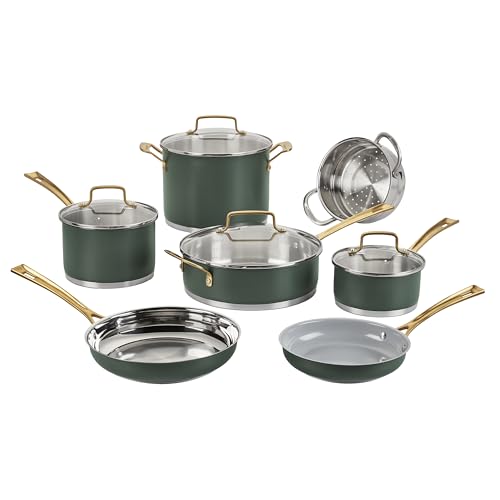
Stainless steel is one of the most practical choices for everyday cookware. It’s durable, widely useful, and works well for sautéing, simmering, and general cooking. It does ask for a little technique, especially around preheating and oil, but it rewards regular use.
Cast iron holds heat exceptionally well and can move from stovetop to oven with ease. It’s great for searing, baking, and even serving. The tradeoff is weight and upkeep. It needs prompt drying and some maintenance, so it’s best for couples who won’t mind that rhythm.
Enameled cast iron offers similar heat retention with easier day-to-day care than bare cast iron. It can be a strong gift when the couple likes braises, soups, baked pastas, or one-pot meals. I still pay attention to weight, handle shape, and care instructions.
Ceramic and stoneware are especially good for baking and serving. They often look at home on the table, which makes them useful for couples building a small kitchen that needs pieces to do double duty. I’d still check temperature guidance and avoid anything that seems too delicate for regular use.
Nonstick can be convenient for delicate foods and low-mess cooking, but it needs gentler care. That means softer utensils, less aggressive scrubbing, and attention to heat limits. As a gift, it works best when the couple wants convenience and understands the maintenance.
Cuisinart Cookware Set, 11 Piece Stainless Steel Cookware Pots and Pans, Home and Kitchen Durable Stainless Steel for Ev
Shop at Amazon →If you’re comparing cookware categories, broad guides from editorial cooking sources like holiday gift recommendations for home cooks can be helpful because they tend to favor repeated usefulness over novelty.
The best kitchen tools for couples are often the least flashy. I look for things that remove friction when two people are sharing prep space.
I’m careful with knives as gifts. A good knife can be genuinely useful, but fit matters: handle shape, weight, grip, and upkeep all vary from person to person. If you go that route, safe storage matters too. I would never treat a loose blade in a drawer as part of a finished gift.
This is also where I avoid single-use gadgets. A tool should solve a common problem, not create a new storage one. A grater, peeler, citrus tool, or scale usually earns its place more easily than a novelty device built for one very specific task.
Couples setting up a kitchen usually need pieces that can stretch from dinner for two to a casual gathering. Serving bowls, platters, and oven-to-table dishes do that nicely.
A good serving piece should be easy to carry, easy to clean, and sized realistically for their space. I like gifts that feel a little special without being too precious to use. A ceramic baker, a large salad bowl, or a versatile wooden board can work well, as long as it suits their maintenance style.
Wooden boards are especially appealing because they can handle bread, cheese, fruit, and casual serving. I just wouldn’t assume every decorative board is meant for heavy cutting. Food-safe finish and intended use matter.
Not every good kitchen gift needs to be cookware. For some couples, the most used gift will be tied to coffee, tea, or evening drinks.
Drinkware is a strong option when it feels good in the hand and is realistic to care for. Stoneware and porcelain help retain heat, while glass can feel lighter and show off layered drinks. Matching mugs are not required. In fact, two complementary pieces can feel more personal than a perfectly uniform set.
For couples who already make drinks at home, useful bar tools or brewing accessories can make sense, but only if they fit an existing habit. A kettle, infuser, scale, strainer, or simple measuring tool can be practical. I’m less interested in adding another appliance unless I know they have the space and want it.
Retail gift roundups like coffee and tea gift collections can be useful for seeing how drinkware and brewing tools are typically grouped, but I’d still filter every idea through the couple’s actual routine.
Personalized kitchen gifts can be lovely, but they work best when the item is useful first. A recipe box, serving board, platter, or set of towels can carry meaning without becoming clutter.
I prefer subtle details over oversized messages. A date, small monogram, handwritten recipe detail, or meaningful place name usually ages better than something loud and overly themed. It should still look at home in their kitchen a year from now.
Food safety matters here too. If the personalized item touches food, check the material and finish. An engraved board is not automatically suitable for every type of serving or prep. If paint, resin, adhesive, or decorative inlay is involved, I’d want clear guidance from the maker. Marketplaces that focus on customization, such as personalized kitchen gift collections, can offer good inspiration, but they also make it especially important to read materials and care details carefully.
A few mistakes come up again and again with kitchen gifts, and they are easy to avoid.
I always like to check dimensions, care instructions, and what the couple may already own. Dishwasher-safe sounds convenient, but that doesn’t always mean best for longevity. Wood, cast iron, sharp knives, insulated drinkware, and some decorated ceramics often benefit from gentler care.
If a gift needs seasoning, hand-washing, or prompt drying, that doesn’t rule it out. It just means the expectation should be clear. A useful gift is easier to appreciate when the upkeep isn’t a surprise.
The best choices support a shared routine: cookware they’ll use weekly, serving pieces for casual meals, prep tools that help two people cook together, or drinkware tied to coffee and tea habits. I’d choose usefulness over novelty every time.
A kitchen scale, instant-read thermometer, sturdy grater, good peeler, or citrus tool can all be genuinely useful. The key is regular use and easy cleaning.
Simple basics often make the best affordable gifts: kitchen towels, measuring tools, nesting bowls, oven mitts, a serving bowl, or a practical board. These fill common gaps without taking over a small kitchen.
A personalized recipe box, engraved serving piece, complementary drinkware, or a small gift built around a shared meal can feel distinctive without being impractical. I like gifts that reflect a real habit or memory.
The best Christmas gifts for couples setting up a kitchen are useful, durable, and easy to live with. If you match the gift to their routines, space, and tolerance for maintenance, it will feel thoughtful long after the wrapping paper is gone.

Paige Gilmore
Founder of Stripes & Willows — recipe creator, food photographer and stylist. Every guide is written to make honest, useful kitchen decisions easier.
More about Stripes & Willows →This page contains affiliate links. If you buy through them, Stripes & Willows may earn a commission at no extra cost to you — it never affects what we recommend.