Guide
The Best Pan Material for Eggs & Delicate Foods
The best cookware material for eggs & delicate foods: how Nonstick (PTFE) compares with Ceramic-Coated, Carbon Steel on heat, upkeep and value — and when each o
The best cookware material for eggs & delicate foods: how Nonstick (PTFE) compares with Ceramic-Coated, Carbon Steel on heat, upkeep and value — and when each o
 Amazon
If I want the easiest, least fussy pan for eggs and other delicate foods, I choose traditional nonstick. If I care more about long-term durability, a well-seasoned carbon steel or cast iron pan can be excellent. Stainless steel can absolutely cook eggs well too, but it asks for the most precision with preheating, fat, and timing.
Eggs are a very clear test of cookware. They cling to rough spots, react badly to heat that’s too high, and punish a dry pan almost immediately. That’s why the best pan material depends on what kind of eggs I’m making and how much technique I want to use on a busy morning.
For fried eggs, soft scrambles, and tender omelets, traditional nonstick is still the easiest answer. The smooth coated surface limits direct contact between the egg proteins and the pan, so release is more reliable and I can use less fat.
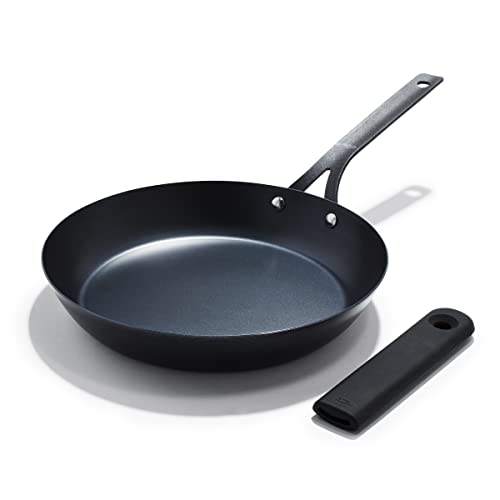
OXO Obsidian 10" Carbon Steel Frying Pan, Pre-Seasoned Skillet, Builds Natural Nonstick with Use, Induction Ready, Oven
Shop at Amazon →This is the material I’d point most home cooks toward if the goal is simple: intact whites, tender curds, and easy cleanup. It’s also why egg-pan roundups from places like Food & Wine tend to focus so heavily on release and cleanup.
The tradeoff is durability. A nonstick coating is not forever, and eggs are often the first thing that tell me performance is slipping. Moderate heat matters here. So do gentle utensils and soft cleaning. If a coated pan is overheated, scratched, or scrubbed harshly, delicate foods start sticking much sooner.
Best for: fried eggs, soft scrambled eggs, omelets, low-fat cooking.
If I want a more durable pan that can still handle eggs beautifully, carbon steel is my favorite middle ground. It develops a seasoned surface over time, and once that seasoning is smooth and stable, eggs release very well with proper heat and enough fat.
Compared with cast iron, carbon steel is usually more responsive. It heats up and cools down faster, which helps with foods that can overcook in seconds. That makes it especially appealing for omelets and fried eggs where I want a little browning but still need control.
The catch is that seasoning has to be maintained. A new or unevenly seasoned pan can grab eggs badly. Acidic ingredients, prolonged soaking, and rough scrubbing can all weaken that surface. I treat carbon steel as a pan that rewards consistency: preheat it gently, add fat, let the egg set before trying to move it, then clean and dry it promptly.
Best for: fried eggs, omelets, cooks who want a noncoated pan with good responsiveness.
Cast iron can be excellent for eggs once it’s properly seasoned, especially if I like a fried egg with browned, lacy edges. Its big strength is heat retention. Once it’s hot, it holds steady heat very well, which can produce beautiful color and crispness.

EverLast Tri-Ply Clad Stainless Steel Frying Pan Set
Shop at Anolon →That same strength is also its challenge. Cast iron responds slowly when I lower the burner, so if I overshoot the heat at the start, the pan may stay too hot longer than I want. For eggs, I find gradual preheating and moderate heat much more useful than blasting it on high.
A smooth, well-kept seasoning helps fill tiny surface irregularities, but it still isn’t a magic shield. Eggs need some fat, and they need a moment to set before I try to lift or flip them. After cooking, drying the pan well and leaving a very thin film of oil helps preserve that easy-release surface.
Best for: crisp-edged fried eggs, baked egg dishes, cooks who don’t mind a heavier pan.
Stainless steel is the most technique-dependent option for eggs, but it’s also one of the most versatile materials in the kitchen. It’s durable, noncoated, and useful far beyond breakfast. The difficulty is that eggs readily stick if the pan is too cool, too dry, or too hot.
With stainless steel, preheating matters. A practical explanation from The Cookware Critic notes that eggs tend to bond quickly to inadequately heated metal. I preheat the pan, add fat, and wait until the butter foams or the oil looks fluid and lightly shimmering before adding the eggs.
Even then, stainless steel is less forgiving than nonstick. For a soft scramble or a very delicate fried egg, I’d rather use something else. But if I’m comfortable with heat control and don’t mind a little residue now and then, it can absolutely work.
Best for: experienced cooks, multipurpose use, people avoiding coated surfaces.
Ceramic-coated pans can be very slick when new and often work nicely for eggs over low to medium heat. For someone who wants a coated surface but prefers to avoid traditional nonstick, they can be appealing.

Xtrema Pure Ceramic Cookware Frying Pan
Shop at Xtrema Cookware →The main thing I keep in mind is that “ceramic” does not mean permanently nonstick. Release can fade with repeated overheating or abrasive cleaning. Gentle handling matters here just as much as it does with other coated pans.
For eggs, ceramic-coated pans tend to do best when I keep expectations realistic: quick cooking, moderate heat, soft utensils, and prompt cleanup. That usually gives the coating its best chance of staying useful.
Best for: light egg cooking, moderate heat, cooks who want a PTFE-free coated surface.
Enameled cast iron sits in a narrower lane for eggs, but it can still be useful. It gives me the steady heat of cast iron without requiring exposed-iron seasoning, and the smooth enamel can handle eggs well with enough fat and moderate heat.
Still, it’s heavy, slower to adjust to burner changes, and not as naturally forgiving for delicate eggs as a good nonstick pan. I find it more appealing for baked egg dishes, frittatas, and stovetop-to-oven cooking than for everyday soft scrambles.
Because enamel can be damaged by thermal shock or abrasive tools, I’d keep the care gentle: no metal scraping, no harsh scouring, and no sudden temperature swings.
Best for: frittatas, baked egg dishes, cooks who already like enameled cookware.
For delicate fried eggs with tidy whites and soft yolks, traditional nonstick is still the easiest route. For soft scrambled eggs, I want the same smooth surface and low heat so the curds stay tender and easy to move.
For omelets, nonstick and seasoned carbon steel are both strong choices because they let me slide and fold the eggs cleanly. For crisp-edged fried eggs, cast iron and carbon steel usually give the nicest browning. For frittatas and baked egg dishes, I care more about oven safety, stable heat, and comfortable handling than pure slipperiness.
Material matters, but care habits matter just as much. Most egg problems come from a pan that is overheated, under-greased, scratched up, or carrying a thin layer of old burnt residue.
If a coated pan starts sticking consistently despite good technique, or if the surface is peeling, blistered, or deeply scratched, it’s time to stop treating it like an egg pan. By contrast, when cast iron or carbon steel starts sticking, the issue is often damaged seasoning rather than the end of the pan.
The biggest mistake is too much heat. Eggs cook fast, and high heat can set the outside before the center is ready, creating tough spots that cling to the pan. This is especially true with heavy pans that hold heat after the burner is lowered.
The second mistake is too little fat. Even a very good egg pan works better with a thin, even film of butter or oil. Completely dry cooking tends to expose every imperfection on the surface.
Another common problem is crowding the pan. Too many eggs at once lower the temperature and make it harder to maneuver a spatula cleanly. And finally, trying to flip or scrape too soon almost always makes things worse. Eggs usually release more easily once the underside has had a moment to set.
That pattern shows up in professional testing too. Serious Eats notes in its egg-pan testing that no single surface performs identically across every egg style, which is exactly why technique and pan choice both matter.
Traditional nonstick is the easiest for frying eggs because delicate whites release cleanly with minimal fat. If I want crisp edges and more durability, seasoned carbon steel or cast iron are great options.
For easy release, cast iron usually has the edge once it’s well seasoned. Stainless steel is more versatile and lower-maintenance in some ways, but it asks for more precise preheating and fat control.
For soft scrambled eggs, I prefer traditional nonstick. It lets me stir gently, scrape the curds cleanly, and pull the eggs while they’re still tender and glossy.
Yes, very good, once the seasoning is established. It’s especially useful if I want a durable, noncoated pan that still has enough responsiveness for omelets and fried eggs.
If easy release is the priority, traditional nonstick is still the best pan material for eggs and other delicate foods. If I want a longer-lasting pan and I’m willing to use a little more technique, carbon steel and cast iron are excellent choices, while stainless steel is best for cooks who value versatility and don’t mind a steeper learning curve.

Paige Gilmore
Founder of Stripes & Willows — recipe creator, food photographer and stylist. Every guide is written to make honest, useful kitchen decisions easier.
More about Stripes & Willows →This page contains affiliate links. If you buy through them, Stripes & Willows may earn a commission at no extra cost to you — it never affects what we recommend.