Guide
The Best Cookware Material for High-Heat Searing
The best cookware material for high-heat searing: how Cast Iron compares with Carbon Steel, Stainless Steel (Tri-Ply) on heat, upkeep and value — and when each
The best cookware material for high-heat searing: how Cast Iron compares with Carbon Steel, Stainless Steel (Tri-Ply) on heat, upkeep and value — and when each
 Also Great
If I want the shortest answer, it’s this: cast iron is the best cookware material for high-heat searing when my main goal is a hard, dark crust and strong heat retention. Stainless steel is the best all-around choice if I also want fond for pan sauces and easier day-to-day versatility, while carbon steel sits neatly in the middle with cast-iron-style browning in a lighter, quicker pan.
A great sear is never just about the material. The food needs to be dry, the pan needs enough room so it browns instead of steams, and the surface needs to stay hot when the food hits it. In practice, those details matter just as much as what the skillet is made from.
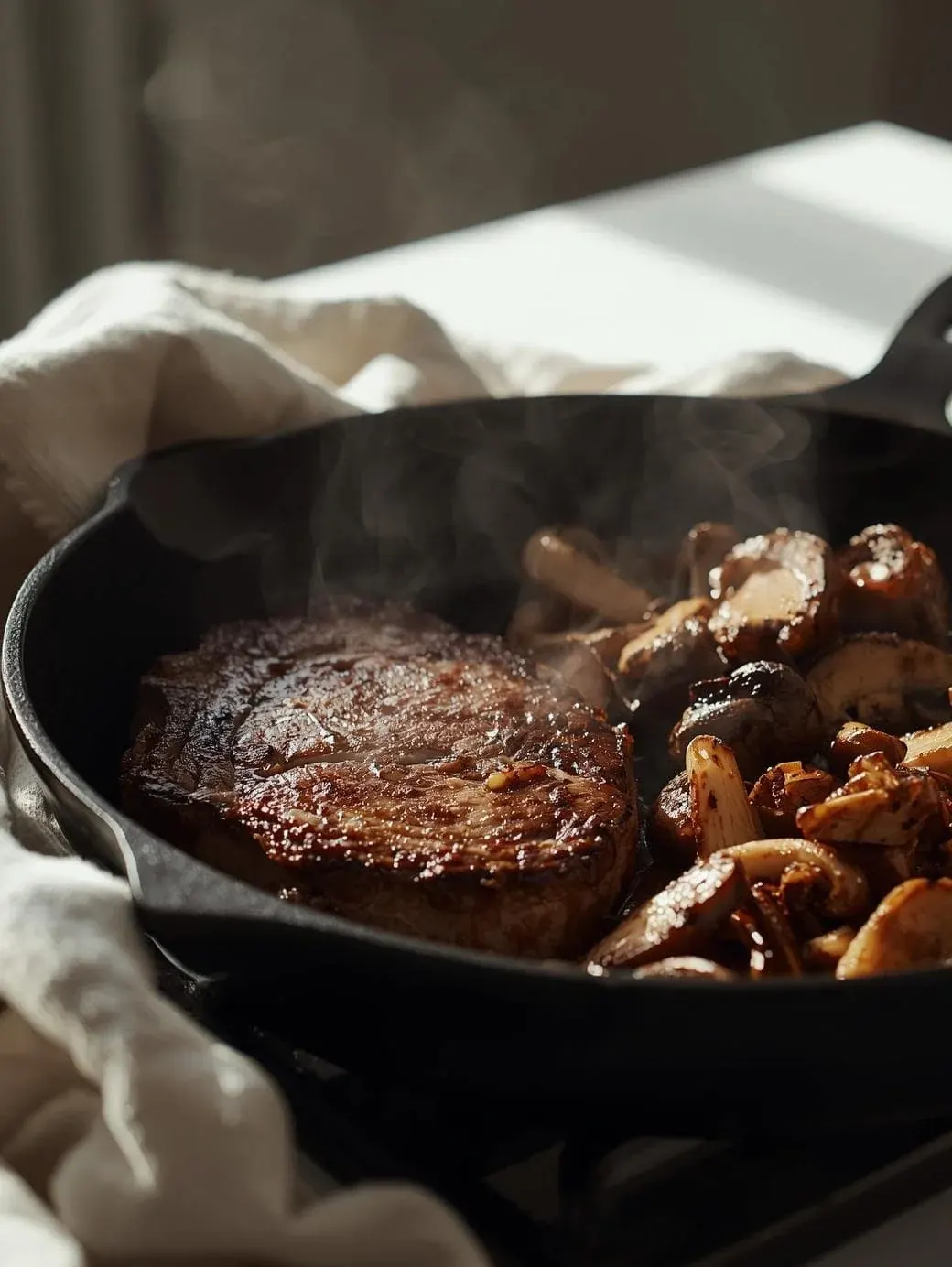
For thick steaks, chops, burgers, and dense vegetables, cast iron is the material I’d put first. Its biggest strength is heat retention. Once it’s fully preheated, it doesn’t lose temperature as quickly when cold food goes into the pan, which helps build a deeper crust.

Merten & Storck 8" Pre-Seasoned Carbon Steel Frying Pan Skillet
Shop at Amazon →That makes cast iron especially useful for searing larger cuts of meat. A pan that stays hot gives the surface of the food a better chance to brown before moisture takes over. As one practical comparison explains, searing comes down to sustained contact heat and a pan that can hold steady under load.
The tradeoff is weight and speed. Cast iron is slower to heat, and it can heat unevenly if I rush it. A hot center does not mean the whole pan is ready. It also needs seasoning care, and bare cast iron is not ideal for long acidic cooking.
Common mistakes with cast iron are simple: overheating it too fast, using a burner that’s too small for the pan, crowding the food, or shocking a hot pan with cold water. If I avoid those, cast iron is hard to beat for pure searing power.
If I want one material that sears well and handles the rest of dinner gracefully, I’d choose stainless steel. It tolerates high heat, creates excellent browning, and lets fond build on the surface so I can deglaze with stock, wine, or citrus and turn those browned bits into a sauce.
This is the pan I’d lean on for chicken thighs, pork chops, mushrooms, and weeknight meals where I want to sear first and build flavor in the same skillet. Stainless steel is also nonreactive, which makes it more comfortable for tomato, vinegar, and wine-based cooking than bare iron.
The main challenge is sticking. Food often clings at first if the pan is not properly preheated, if the food is damp, or if I try to move it before the crust forms. In a good sear, release usually happens naturally. If I have to force it, it often means the surface hasn’t browned enough yet.
Construction matters here too. Fully clad stainless steel tends to heat more evenly than thin single-layer pans, which helps reduce hot spots. This cookware material guide does a good job of separating materials by heat behavior, upkeep, and the jobs they handle best.
Carbon steel makes a lot of sense if I want much of cast iron’s searing ability without quite as much weight. It heats faster, cools faster, and is easier to maneuver, which can make it feel more responsive on the stove.
Cuisinart 722-30H Chef's Classic Stainless 12-Inch Open Skillet with Helper Handle,Stainless Steel
Shop at Amazon →For steaks, chops, tofu, vegetables, and fast stovetop cooking, carbon steel is very compelling. Like cast iron, it develops seasoning over time, and that seasoned surface can become increasingly release-friendly. It also moves more comfortably from stovetop to oven in many cases.
Its downsides are familiar if you’ve used bare iron before. It needs drying and light oiling after cleaning, prolonged acidic cooking can affect the seasoning, and very sudden temperature changes can encourage warping in thinner pans. Care guidance for carbon steel and bare iron consistently stresses gradual heating, drying thoroughly, and maintaining seasoning in thin layers.
If cast iron feels too heavy and stainless steel feels a little less forgiving for release, carbon steel is often the sweet spot.
Enameled cast iron can sear very well, and I like it most when the recipe starts with browning and ends with a covered braise or oven finish. It offers much of cast iron’s heat retention, but with a surface that doesn’t require seasoning and doesn’t mind acidic ingredients in the same way bare iron does.
That said, it is not always my first pick for repeated high-heat searing. The enamel surface is less forgiving than bare cast iron or carbon steel if handled roughly, overheated empty, or scraped aggressively. It’s also usually heavy and slower to respond to heat changes.
For short, intense stovetop searing alone, bare cast iron or carbon steel often makes more sense. For browning followed by oven cooking, stews, braises, or tomato-based dishes, enameled cast iron earns its place.
I would not choose traditional nonstick or ceramic-coated cookware for high-heat searing. They can lightly brown food, and they’re very useful for eggs, fragile fish, and low-fat cooking, but they are not the best tool for a deep steakhouse-style crust.
The reason is practical. High heat can shorten the life of coatings, and slick surfaces generally build less fond. That means less browning and less flavor left behind for sauces. A straightforward searing guide also points back to the same basics: steady heat, a flat pan, and full contact with the food matter more than promises of easy release.
If I’m cooking something delicate and only want a little color, a coated pan can still be useful. For serious searing, I’d keep it out of the running.
No matter which material I’m using, a few habits make the biggest difference. First, I dry the food very well. Surface moisture turns to steam, and steam gets in the way of browning.
Second, I preheat the pan with patience. I want the surface hot enough that oil shimmers, not so hot that it smokes aggressively the moment it goes in. Third, I avoid crowding. If pieces are packed too tightly, moisture gets trapped and the food simmers instead of sears.
I also pay attention to pan shape and burner size. A flat pan on an appropriately sized burner gives more even contact and more predictable browning. Warped cookware, oversized skillets on small burners, and cramped cooking surfaces all make searing harder than it needs to be.
Good searing depends on the condition of the pan, not just the material itself. For cast iron and carbon steel, that means drying thoroughly after washing and applying a very thin film of oil when needed. I would not leave them damp or store food in them.
For stainless steel, the biggest point is not to confuse fond with burnt residue. Browned bits are useful and should release with deglazing. Black, bitter buildup usually means the heat was too aggressive or the pan was left too long without enough fat or movement.
For enameled and coated pans, I’d avoid abrupt temperature swings, harsh scouring, and overheating an empty pan. Those are the habits most likely to shorten the useful life of the surface.
Cast iron is better when maximum heat retention matters most, especially for thick steaks and burgers. Stainless steel is better when I want strong browning plus fond for a pan sauce and a more flexible everyday pan.
Yes. Carbon steel is excellent for high-heat searing. It heats faster than cast iron, handles high temperatures well, and can develop a seasoned surface that releases food nicely with proper use.
Not really. They can brown gently, but they are not the best choice for very high heat or for building the kind of crust most people want on steak. They also produce less fond.
Usually the pan wasn’t hot enough, the food was too wet, there wasn’t enough fat, or the food was moved too soon. In many cases, once a crust forms properly, the food releases on its own.
For many home kitchens, a 10- to 12-inch skillet is a practical range, assuming it matches the burner well. The key is having enough space between pieces of food so moisture can evaporate and browning can happen.
If high-heat searing is the goal, cast iron comes out on top for heat retention and crust. Stainless steel is the most versatile everyday choice, and carbon steel is the best compromise if I want strong searing in a lighter, faster pan.
The material matters, but the result still comes down to dryness, preheating, spacing, and patience. Get those right, and any of the top three can do very good work.

Paige Gilmore
Founder of Stripes & Willows — recipe creator, food photographer and stylist. Every guide is written to make honest, useful kitchen decisions easier.
More about Stripes & Willows →This page contains affiliate links. If you buy through them, Stripes & Willows may earn a commission at no extra cost to you — it never affects what we recommend.