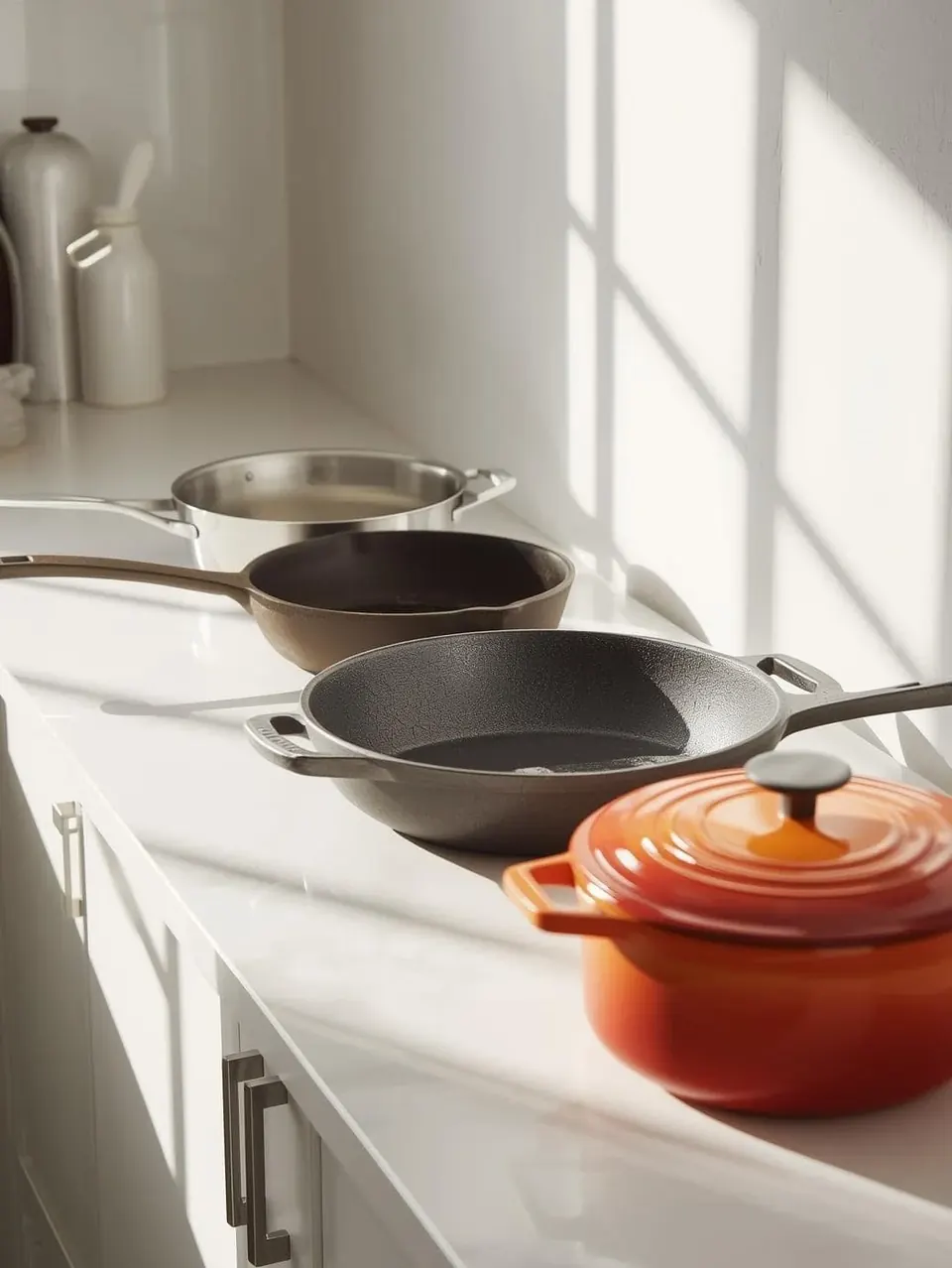
Walking into a kitchen store can feel overwhelming when you're staring at walls of shiny pots and pans. I've been there, wondering if I really need that expensive copper pan or if my budget-friendly option will do the job.
The best cookware material depends on what you're cooking, but stainless steel, cast iron, and non-stick are the top three materials that belong in almost every kitchen.
I'll be honest—I used to think all pans were basically the same until I burned through my third cheap non-stick skillet in two years. That's when I started digging into what actually makes cookware materials different from each other.
Some heat up fast, others hold heat forever, and a few are total nightmares to clean.
In this guide, I'll walk you through the materials that actually matter. I'll help you figure out which ones match your cooking style and share what I've learned about building a collection that'll last.
Whether you're searing steaks, making delicate eggs, or just trying to avoid another kitchen disaster, I've got you covered.
What Makes the Best Cookware Material?
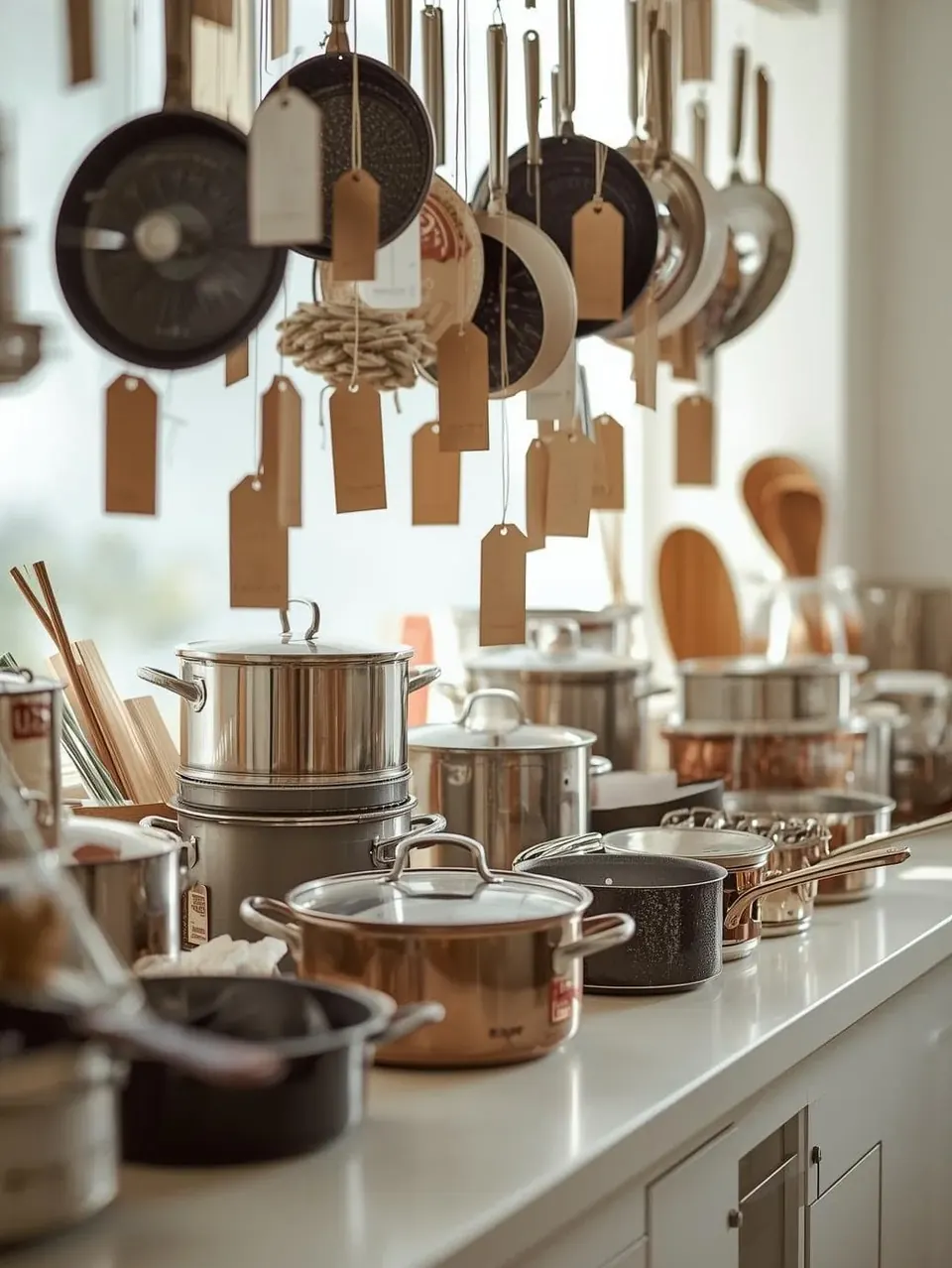
The best cookware material balances heat performance with your cooking style. Heat conductivity decides how quickly your pan responds to temperature changes, and durability affects how long your investment lasts.
Key Points for Comparing Cookware Materials
When I compare different cookware materials, I focus on five main things that actually matter in daily cooking. First, I look at how the material handles heat—does it warm up quickly or take forever?
Second, I check if it works with my induction cooktop (this matters more than you'd think). Third, I consider the weight.
Heavy pans can strain my wrist when I'm flipping vegetables or moving a hot pan from stove to oven. Fourth, I think about maintenance.
Can I toss it in the dishwasher, or does it need special care? Finally, price matters.
Fully-clad stainless steel cookware costs a lot more than basic aluminum, but it lasts longer. I also think about what I cook most often.
If I'm making delicate fish or eggs every morning, I need different features than someone who mainly sears steaks.
How Cookware Heats up
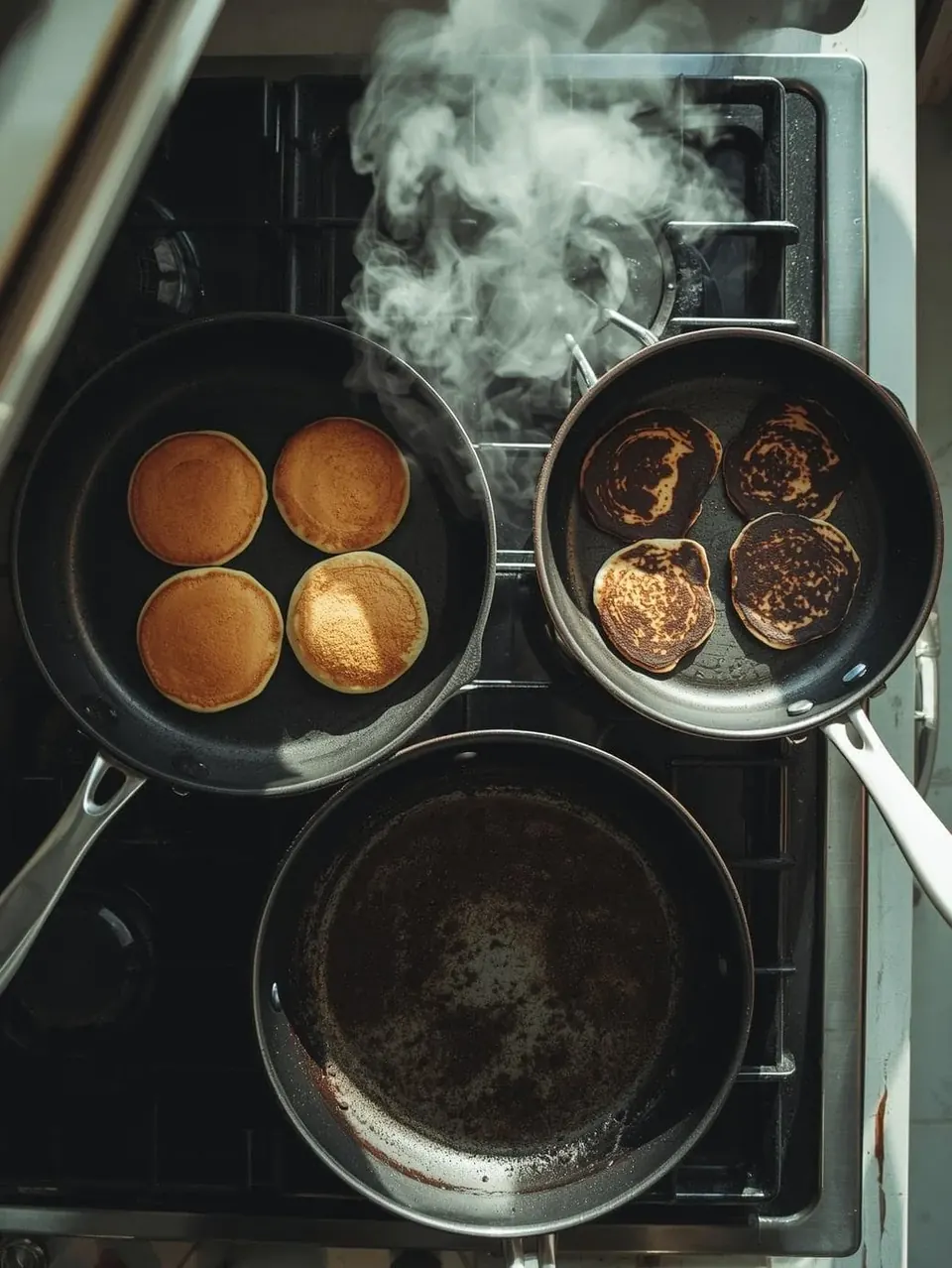
Heat conductivity means how fast a material transfers heat from your burner to your food. Copper has the highest thermal conductivity, followed by aluminum, then stainless steel.
This is why metal cookware often uses layered construction—combining materials gives you the best of both worlds. Heat distribution is just as important.
Some materials heat evenly across the whole cooking surface, while others create hot spots that burn food in one area and leave other parts undercooked. I've found that fully-clad stainless steel distributes heat quickly and evenly throughout the whole pan, including the sides.
This makes a huge difference when I'm cooking sauces. Impact-bonded pans only have conductive layers on the bottom, so they heat unevenly on the sides.
Cast iron heats slowly but holds heat incredibly well. Once it's hot, it stays hot—perfect for getting a great sear on meat.
from Maintenance to how Durability
Maintenance requirements vary a lot between cookware materials. Stainless steel is dishwasher-safe and tough, but I spend extra time scrubbing when food sticks.

All-Clad Essentials Non-stick Set of 2
Shop at Walmart →Also at AmazonCoated cookware like non-stick cleans easily with just a quick wipe, but the coating wears out faster. Cast iron needs the most attention.
I have to season it regularly and avoid using soap during cleaning. If I don't dry it immediately, it rusts.
Durability decides whether your cookware lasts a decade or just a few years. Fully-clad stainless steel should last a lifetime and won't rust, flake, or warp.
Non-stick pans usually last only two to five years before the coating goes bad. Specialty cookware like enameled cast iron offers durability without the seasoning hassle.
The enamel coating protects the iron underneath and makes cleanup easier.
Reactivity and Safety Considerations
Reactive materials interact with acidic foods like tomatoes, vinegar, or citrus. This can change both the food's taste and the pan's surface.
Aluminum and bare cast iron are reactive, so I avoid cooking acidic sauces in them for long. Non-reactive materials include stainless steel, enameled cast iron, and ceramic.
I use these when I'm making tomato-based sauces or dishes with wine. Safety also involves coating materials.
Traditional PTFE-coated non-stick cookware works great under 500°F, but I avoid overheating it. Ceramic-coated options offer a natural alternative, though they're less durable.
Some people worry about aluminum leaching into food. While bare aluminum is reactive, hard-anodized aluminum creates a non-reactive surface that's safer for acidic foods.
I prefer this over standard aluminum for everyday cooking.
Top Cookware Materials Explained
Each cookware material brings something different to your kitchen, from stainless steel's durability to cast iron's heat retention. I've worked with all these materials over the years.
Understanding what makes each one special helps you pick the right pan for every dish you love to cook.
Stainless Steel Cookware
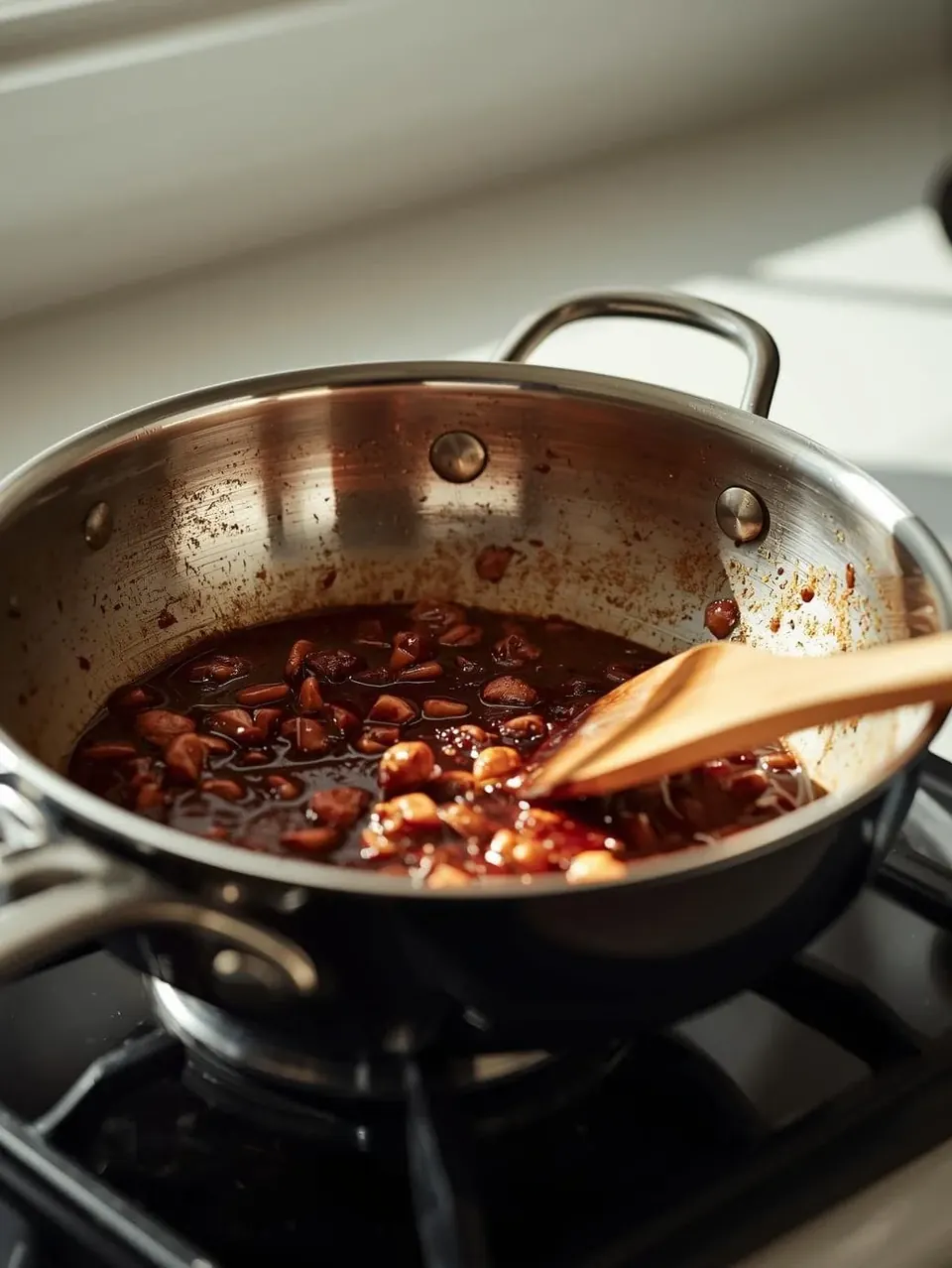
Stainless steel cookware has earned its spot as my go-to workhorse in the kitchen. I reach for my stainless steel pans almost daily because they can handle just about anything I throw at them.
The best stainless steel cookware comes in two main types: fully-clad and impact-bonded. Fully-clad stainless steel pans sandwich aluminum or copper between steel layers throughout the entire pan, including the sides.
This creates incredibly even heating with no cold spots. Impact-bonded stainless steel only has the conductive layer on the bottom, which makes it more affordable but less consistent for sauces and liquids.
I prefer fully-clad for most cooking tasks.
Key benefits I've noticed:
Works on all cooktops including induction
Safe at high oven temperatures
Won't react with acidic foods like tomatoes
Lasts forever with proper care
The downside? Food sticks if you don't preheat properly. I always heat my stainless steel pans for 2-3 minutes before adding oil, then wait until the oil shimmers before adding food.
This simple trick prevents most sticking issues.
Cast Iron and Enameled Cast Iron
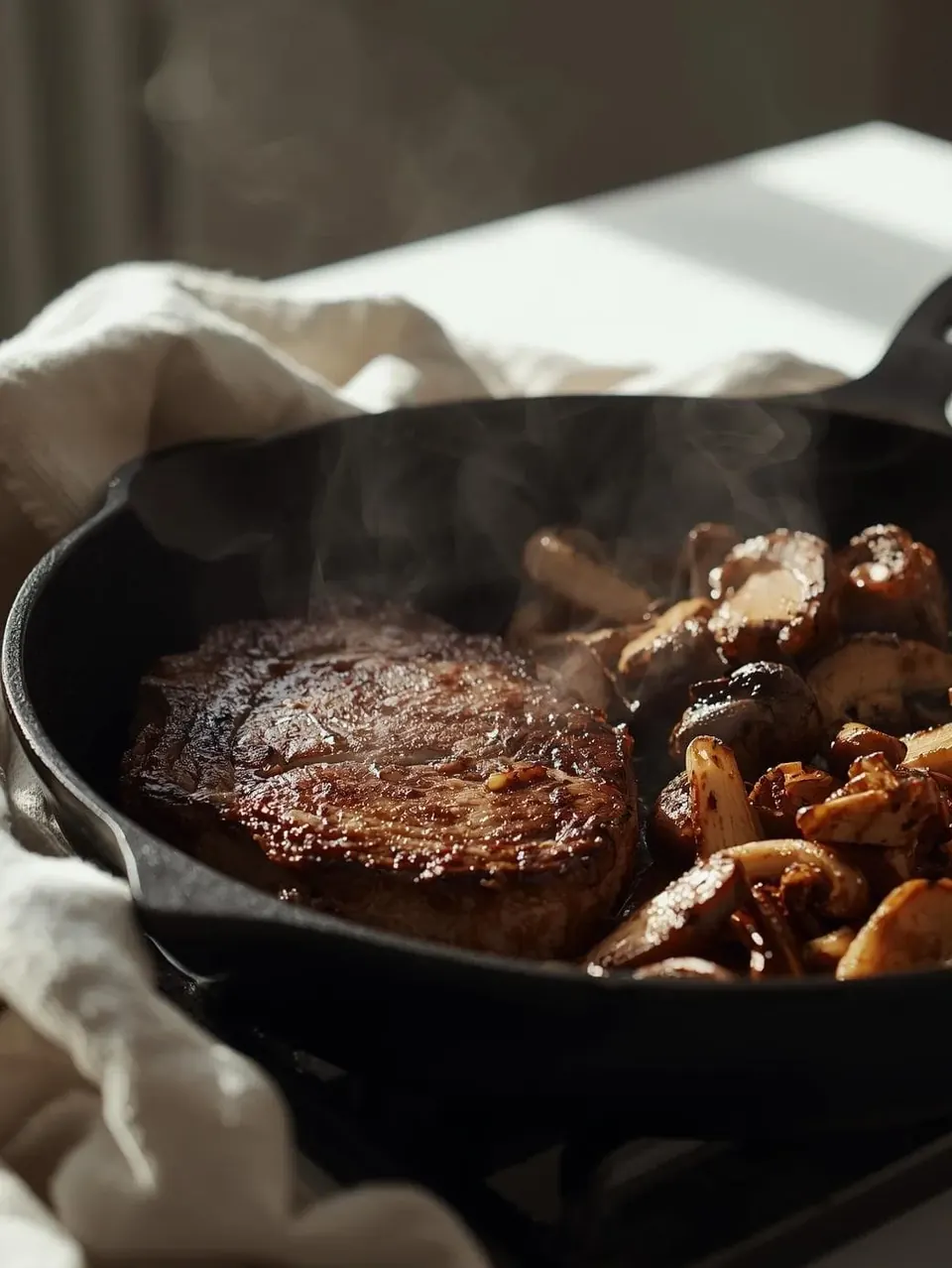
My cast iron skillet has outlasted every other pan in my kitchen. Cast iron cookware heats up slowly but holds heat like nothing else, which makes it perfect for searing steaks or frying chicken.
Regular cast iron pans need seasoning to create a natural nonstick surface. I season mine by rubbing it with oil and baking it upside down at 450°F for an hour.
This builds up a protective layer over time. Enameled cast iron solves the maintenance issue by coating the iron with a glass-like enamel.
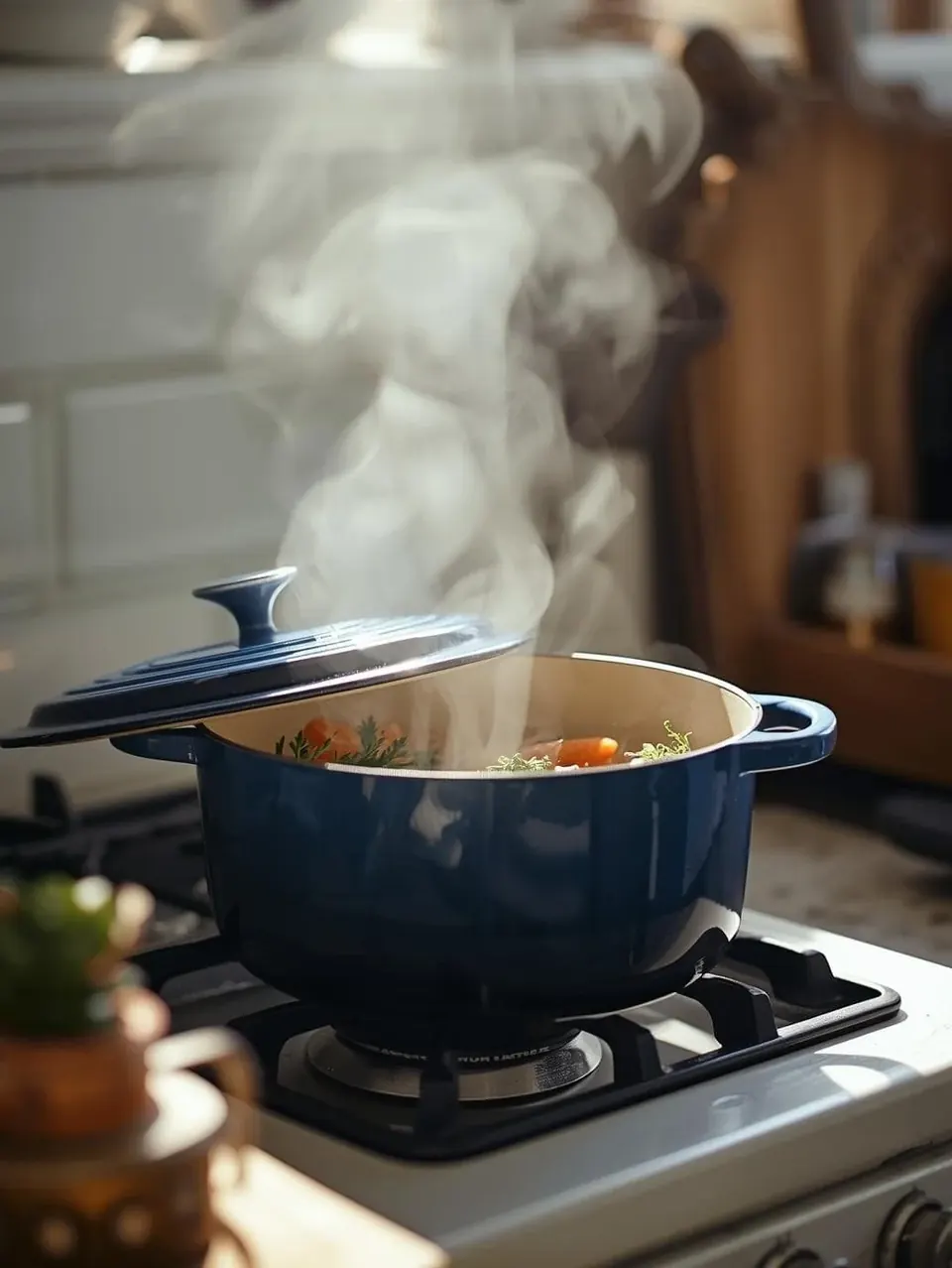
My enameled cast iron Dutch oven doesn't need seasoning and won't react with acidic ingredients like wine or tomatoes.
What I love about each type:
Regular Cast Iron Enameled Cast Iron Affordable No seasoning required Naturally nonstick when seasoned Non-reactive to acidic foods Can handle any heat level Easier to clean Gets better with age Beautiful colors available
Both types are heavy. My 12-inch cast iron skillet weighs about 8 pounds empty, so I don't recommend these if you have wrist issues.
Nonstick and Ceramic Nonstick Options
I keep a nonstick pan specifically for eggs and delicate fish. Traditional non-stick cookware uses PTFE coating (often called Teflon), while ceramic nonstick coating offers a more natural alternative.
PTFE-coated cookware works incredibly well for releasing food. Modern versions are PFOA-free, which addresses earlier health concerns.
I use mine for scrambled eggs, pancakes, and flaky fish that would normally stick to other surfaces. The catch with non-stick PTFE-coated cookware is temperature limits.
I never heat mine above 400°F because PTFE can break down at higher temperatures and release fumes. Ceramic non-stick pans use a mineral-based coating instead of PTFE.
I bought ceramic coated cookware hoping it would last longer, but the nonstick properties faded after about a year of regular use. They're safer at higher temperatures than PTFE, but they don't last as long in my experience.
My practical tips:
Use wooden or silicone utensils only
Hand wash instead of dishwasher
Replace when the coating shows wear
Expect 2-3 years of good performance
Pure ceramic cookware is completely different from ceramic-coated pans. It's made entirely of clay and works well for slow-cooked dishes, but food sticks more easily.
Aluminum and Hard-Anodized Aluminum
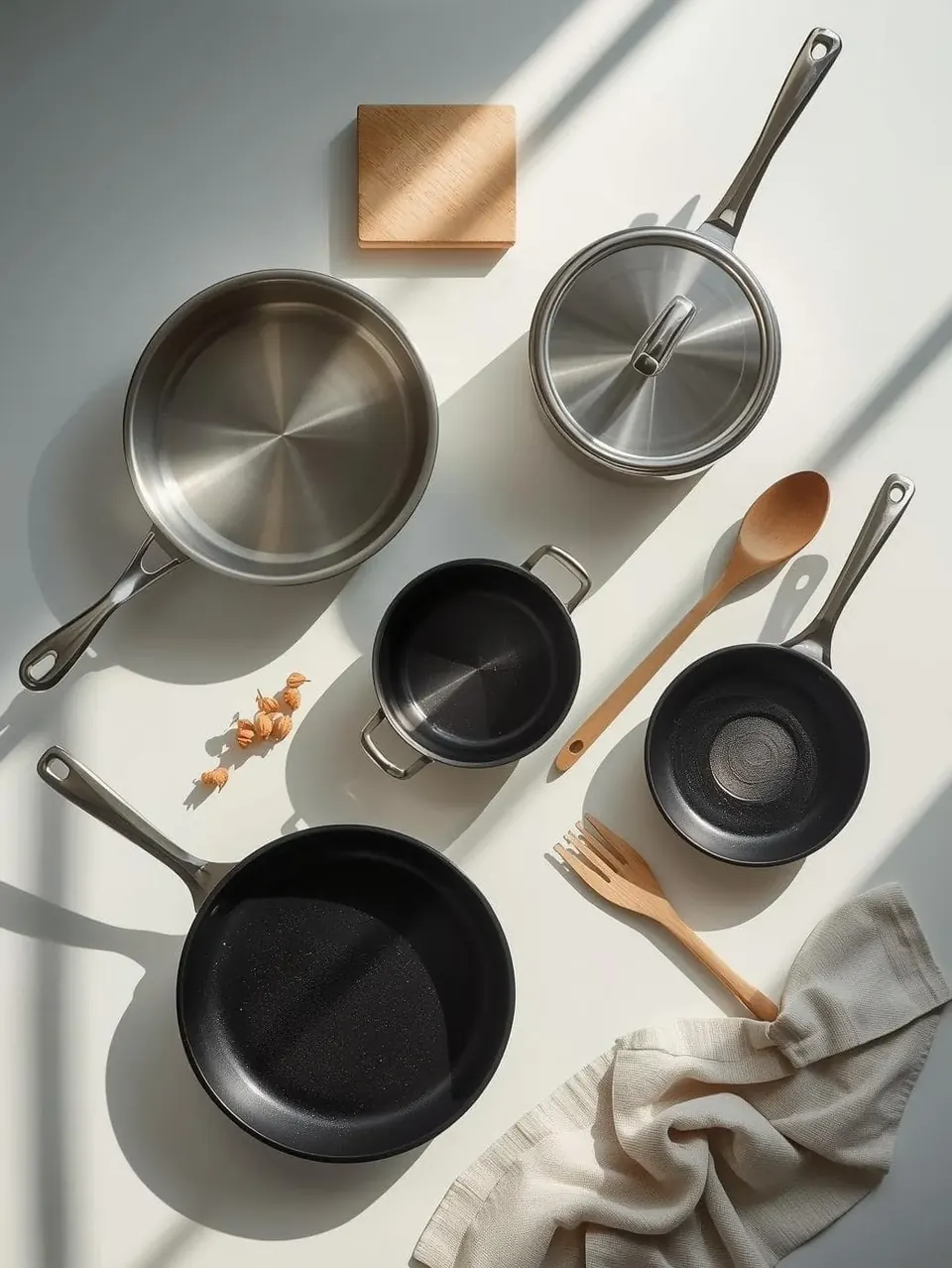
Plain aluminum cookware heats up incredibly fast and distributes heat evenly. I've noticed it's lightweight and affordable, which makes it popular for everyday cooking.
The problem with bare aluminum is that it reacts with acidic foods and can warp easily. Most manufacturers either coat it with nonstick surfaces or put it through an anodizing process.
Hard-anodized aluminum goes through an electrochemical process that makes the surface much harder and more durable. My anodized aluminum pans resist scratches better than regular aluminum cookware and won't react with tomatoes or citrus.
Anodized aluminum sits somewhere between regular aluminum and stainless steel in price. It heats more evenly than stainless steel but doesn't last quite as long.
I find it works great for sautéing vegetables and cooking delicate proteins like fish. Most aluminum cookware comes with a nonstick coating these days.
This combination gives you excellent heat distribution with easy food release, though you'll still need to replace them every few years as the coating wears down.
Other Notable Cookware Materials
Beyond the mainstream options, carbon steel brings restaurant-quality performance to home kitchens. Copper offers unmatched heat control for precision cooking, and titanium provides ultra-lightweight durability for specific needs.
Carbon Steel Advantages
I've really come to love carbon steel pans for their versatility and performance. Carbon steel cookware blends the best parts of cast iron and stainless steel—it's lighter than cast iron but can develop a similar non-stick surface if you season it right.
Carbon steel heats up fast and reacts quickly when you change the temperature. This makes it great for high-heat cooking like searing steaks or stir-frying veggies.
I can move my carbon steel pan from stovetop to oven without worrying since it handles temperatures up to 600°F. The main thing to remember is that carbon steel pans need seasoning, just like cast iron.
You'll build up a natural non-stick coating over time with regular use and care. These pans react to acidic foods, so I avoid cooking tomato sauces or citrus dishes in them for too long.
Key benefits of carbon steel:
Lightweight compared to cast iron
Develops natural non-stick surface
Affordable price point
Extremely durable
Copper Cookware Benefits
Copper pans are what I reach for when I want precise temperature control. Copper cookware heats quickly and evenly, and it reacts almost instantly when you adjust the heat.
Professional chefs love copper for making delicate sauces, caramelizing sugar, and cooking fish. The downside? Copper is pricey and needs some care to keep it looking nice.
Most copper cookware comes lined with stainless steel or tin so it won't react with acidic foods. I think copper is worth it for special cooking jobs, but I don't use it every day.
Copper also needs polishing if you want it to stay shiny. If you don't mind it developing a patina, you can skip that step.
Titanium and Specialty Materials
Titanium cookware is my top pick for camping or backpacking. It's super light, tough, and doesn't rust.
Titanium heats up decently fast, but it doesn't spread heat as evenly as other materials. That can mean hot spots if you're not careful.
There are also specialty materials like pure ceramic, which are non-toxic and good for slow-cooking and baking. I keep a couple of these for specific tasks, but they don't replace my everyday pans.
Choosing the Best Cookware for Your Cooking Style
The right cookware makes cooking easier and honestly, more fun. What works for me might not work for you.
Different cooking habits call for different materials. Maybe you're whipping up fast weeknight meals, working with an induction cooktop, or trying out stir-frying or slow braising.
Best Materials for Everyday Cooking
For daily cooking, I've found that fully-clad stainless steel is the sweet spot between versatility and durability. It works for everything from breakfast eggs to seared chicken, but you'll need to learn the preheat-and-oil trick to keep food from sticking.
Cast iron is my favorite when I want that restaurant-style sear. A well-seasoned cast iron frying pan becomes naturally non-stick and can last forever.
It's heavy and needs regular seasoning to keep that slick surface, though. If you're starting from scratch, I recommend these basics:
10-12 inch stainless steel saute pan for browning and pan sauces
Cast iron skillet for high-heat cooking
3-quart saucepan with lid for grains and small batches
PTFE non-stick pan for eggs and pancakes
When you're shopping for cookware sets, pick pieces you'll actually use. I've learned that those big 14-piece sets often include pots and pans that just sit in the cabinet.
Selecting Cookware for Induction and Specialty Stovetops
Induction cooktops need magnetic cookware. Your fancy copper or aluminum pans won't work unless they have a magnetic base.
I use a fridge magnet to check—if it sticks, you're good. Stainless steel and cast iron work naturally with induction stoves.
Many modern cookware materials now have an induction-compatible base, even some aluminum pans. For gas stoves, you get more options.
I love using my carbon steel wok on gas because the flames wrap around the sides, giving that real high-heat sear. Electric coil burners work best with flat-bottomed pans so the whole surface touches the heat.
Cookware Recommendations for Specific Cooking Methods
For searing and high-heat cooking, nothing beats cast iron or carbon steel. My 12-inch cast iron skillet gets super hot and stays hot even when I drop in a cold steak.
Braising and slow-cooking need an enameled cast iron dutch oven. The heavy lid keeps moisture in, and the even heat means tender, fall-apart meat every time.
I use mine for everything from pot roasts to baking crusty bread. Delicate foods like fish and crepes need a good non-stick pan.
I keep a PTFE-coated frying pan just for those because flipping a delicate filet in stainless steel is just asking for trouble. Quick stir-fries work best in a carbon steel wok.
It heats up fast, responds right away when you change the temperature, and develops a natural non-stick patina with use. The sloped sides make tossing veggies super easy.
Building Your Cookware Collection: Brands, Sets & Longevity
Quality cookware brands use different materials, and that really changes how your pots and pans feel to use. Deciding between full sets or picking out individual pieces depends on how you cook and what you want to spend.
With proper care, your cookware can last for decades. That's pretty cool if you ask me.
Renowned Cookware Brands and Their Materials
I've found that All-Clad stands out for top-quality cookware with their stainless steel construction. Their pieces use layers of metal bonded together for even heat.
Hestan makes impressive stainless steel cookware with titanium particles that help prevent sticking. Their NanoBond line can handle temperatures up to 1050°F, which is wild for home cooking.
Le Creuset is a wedding-registry staple known for enameled cast iron. This kind of cookware gives you the heat retention of cast iron with a smooth, easy-to-clean surface.
Tramontina gives you great value in stainless steel cookware. You get solid performance without the big price tag.
GreenPan has upped the game for ceramic-coated cookware by adding stainless steel cladding. Their pans are light but tough, and the light-colored interiors make it easier to see your food browning.
Starter Sets vs. Individual Pieces
A full cookware set is a big investment, but it saves you from hunting down matching pieces one by one. Most starter sets have the pans you'll use most.
I suggest looking for sets with these basics:
8-inch and 10-inch frying pans
2-quart and 3-quart saucepans with lids
8-quart stock pot with lid
One sauté pan
Made In offers a pro-level set that mixes materials. You get five-ply stainless steel pieces, a nonstick skillet, a carbon steel pan, and a wok all in one box.
Building your cookware collection piece by piece gives you more control. You can pick exactly what you need and mix materials depending on how you cook.
This way costs more at first, but you get to invest in quality where it matters to you.
Long-Term Value and Care Tips
Stainless steel cookware takes a little know-how, but it'll stick around for years. Make sure you preheat the pan, use enough fat, and don't expect eggs to slide like they do on nonstick pans.
Discoloration happens with stainless steel if you use high heat. This "rainbowing" is just a cosmetic thing and doesn't mess with how the pan works.
Bar Keeper's Friend gets rid of that rainbow effect quickly. It's honestly kind of satisfying to see it shine again.
Nonstick cookware needs a gentler touch. Hand-washing really helps the coating last, even if the box says it's dishwasher safe.
One tester used Ninja nonstick pans every day for three years before having to swap them out. That's not bad at all for nonstick, honestly.
I've noticed that aluminum bases get discolored in the dishwasher over time. Washing by hand and drying right away keeps them looking better.
The Hestan NanoBond line has stuck around for five years and still looks great. The color does get deeper, but their special cleaner brings back the shine.
Carbon steel needs seasoning, but with proper care it can last a lifetime. It's a bit of work, but totally worth it if you ask me.