Guide
Best Serving Bowls For Thanksgiving
Our honest guide to best serving bowls for thanksgiving — what actually matters, what to skip, and how to choose well.

Our honest guide to best serving bowls for thanksgiving — what actually matters, what to skip, and how to choose well.
Best Stoneware
 Also Great
The best serving bowls for Thanksgiving are the ones that match the food, hold enough for the table without feeling oversized, and are easy to carry, serve from, and clean afterward. I’d build a practical set around a few medium bowls for classic sides, one larger wide bowl for salad or roasted vegetables, a couple of small bowls for cranberry sauce and gravy, and at least one heat-safe covered option for dishes that cool quickly.
On Thanksgiving, a bowl does more than look nice on the table. It needs to suit the dish inside it, give guests enough room to serve neatly, and hold up to a busy kitchen-to-table routine. Size, depth, weight, and material all matter more than people expect.
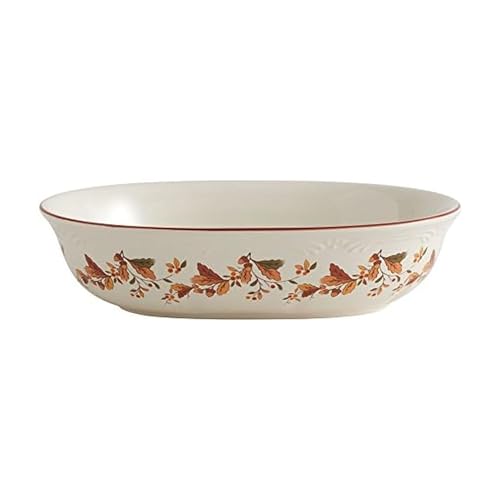
Le Creuset Heritage Stoneware Serving Bowl
Shop at lecreuset.com →Also at AmazonI usually think about three things first: capacity, shape, and heat tolerance. Popular sides like mashed potatoes, stuffing, and roasted vegetables need enough room for generous scoops and repeat helpings. Salads need width more than depth. Sauces and relishes do better in smaller bowls with a contained shape that keeps them from spreading out and looking skimpy.
A helpful reference point from this bowl size guide is that smaller bowls often fall in the 4- to 6-inch range, a 10-inch bowl is a useful middle ground, and larger 12- to 14-inch bowls are better suited to salads and generous shared portions. More important than the number, though, is leaving some headspace so the serving spoon can move without pushing food over the rim.
For a smaller gathering, medium bowls usually make the table feel fuller and less cluttered. For a larger crowd, I prefer two moderate bowls for a popular side rather than one very heavy bowl that is awkward to lift and hard for everyone to reach.
Deep bowls are best for soft, spooned, or saucy foods. Think mashed potatoes, stuffing, rice, braised vegetables, and anything with gravy or a creamy finish. The taller sides help contain the food and cut down on spills.
Wide, gently sloped bowls are easier for salads, green beans, Brussels sprouts, roasted carrots, or anything served with tongs. They give guests more access from different angles, which matters on a crowded buffet or family-style table.
One common mistake is choosing a bowl based on looks alone and ending up with something too shallow for hot sides or too narrow for salad tongs. Another is filling a bowl right to the rim. Thanksgiving food tends to be served quickly and generously, so a little extra room always helps.
Ceramic and porcelain are some of the most useful materials for Thanksgiving because they handle hot food well and feel at home on the table. When a bowl is marked oven-safe by the manufacturer, it can make the oven-to-table transition much simpler.
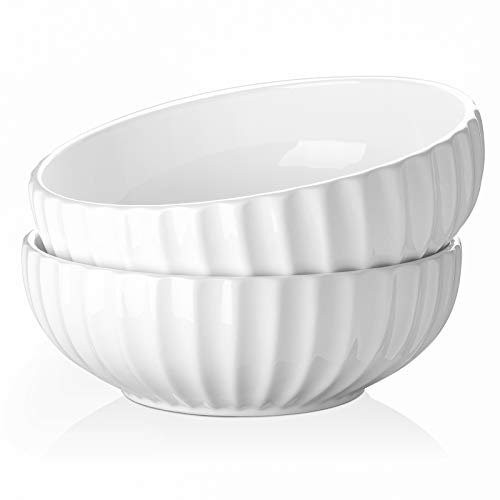
DOWAN 9.8'' Serving Bowls, 86 oz Large Salad Bowl, Ceramic Serving Dishes, Set of 2, Pumpkin Shape for Christmas, Entert
Shop at Amazon →Porcelain is often a bit lighter and has a smooth, nonporous feel. Ceramic and stoneware tend to feel heavier and can retain heat well, which is helpful for mashed potatoes, baked stuffing, and vegetable sides that cool off fast.
The main caution here is thermal shock. A cold bowl should not go straight into a hot oven unless the maker specifically says it can. The same goes for setting a very hot bowl on a cold or wet surface. If I’m using heated serveware, I want a dry trivet ready before the food leaves the kitchen.
Care labels matter too. Metallic trim, handmade glazes, or decorative finishes can change what is safe for the oven, microwave, or dishwasher. “Dishwasher-safe” does not mean “oven-safe,” and it’s worth checking every piece rather than assuming.
Glass serving bowls are especially good for cold dishes, layered sides, fruit, and salads. They let the food show, which is helpful when color and texture are part of the appeal. You can also see at a glance how much is left, which makes refilling easier.
For Thanksgiving, I think glass works best for chilled or room-temperature dishes rather than the hottest sides. It can still be vulnerable to sudden temperature changes, and it tends to show fingerprints, streaks, and utensil marks more readily than other materials.
A wide glass bowl for salad is often a smart choice, especially if you plan to dress the greens close to serving time. That helps avoid one of the most common holiday problems: soggy salad. Wet ingredients should be drained well, and crunchy toppings are better added at the table instead of under a lid where steam can soften them.
Wooden bowls bring warmth to the table and are especially nice for bread, rolls, roasted vegetables, nuts, or drier sides. They have a softer, more informal look than ceramic or glass, which can be useful if the table already has a lot of shine and structure.
That said, wood is less practical for very wet, very hot, or heavily sauced foods. It should also stay away from soaking water, ovens, microwaves, and dishwashers unless the care instructions clearly allow otherwise.
After the meal, wood needs prompt hand-washing and thorough drying. If it starts to look dry, a food-safe conditioner can help maintain the finish. This is not the material I’d choose for gravy, mashed potatoes, or anything that needs to stay hot, but it’s lovely for the right kinds of sides.
Metal bowls, especially stainless steel, are durable and practical in a busy kitchen. They resist chips, tolerate heavy handling, and can work well for cold salads, fruit, and prep-to-table situations.
For Thanksgiving serving, metal is usually more functional than cozy. Thin metal can take on the temperature of the room quickly, and it may feel too cold for some dishes or too industrial for a more traditional table. It also should not go in the microwave, and it’s smart to use a mat or trivet underneath to protect more delicate surfaces.
Still, if you need something lightweight and sturdy for buffet service, metal has its place. It’s especially helpful when the priority is durability and ease rather than heat retention.
Disposable plastic bowls can make sense for very large, casual gatherings, outdoor meals, or sending leftovers home. They also reduce cleanup when the kitchen is already doing too much.
The tradeoff is stability and heat tolerance. Lightweight bowls can slide or tip when full, so a broader base matters. They should also stay away from hot ovens, and microwave use should only happen if the label specifically allows it.
I wouldn’t choose disposable bowls for the whole meal if the goal is keeping hot sides at their best, but they can be useful backup pieces for overflow dishes or leftovers.
A few details make Thanksgiving serving much easier. Stable bases help prevent rocking and sliding, especially on polished tables. Lids are useful for short-term heat retention and carrying food from kitchen to table, though they should come off during service if steam will soften crisp toppings.
Handles can be helpful on heavier pieces, but they are not a substitute for oven mitts. Heated handles can still get hot, and large full bowls are often heavier than they look once the food is inside.
I also like to assign bowls to dishes before cooking starts. It sounds fussy, but it prevents last-minute transfers into bowls that are too small, too shallow, or not meant for heat.
Hot food generally does better in covered, heat-safe bowls for the short period before serving. Stuffing, mashed potatoes, rice, and braised vegetables lose heat quickly, so they benefit most from a lid or from staying in the kitchen until the last minute.
Wide shallow bowls are easier to serve from, but they also cool food faster. For dishes like roasted vegetables, that’s usually fine. For mashed potatoes, it can be frustrating. In that case, a deeper bowl is often the better choice.
For leftovers, perishable food should be refrigerated within two hours, and dense dishes cool more safely in shallower containers. This leftover storage guidance is a good reminder that the prettiest serving bowl is not always the right vessel for storing food after dinner.
Once the meal is over, the biggest priorities are gentle cleaning and careful storage. Glazed ceramic and porcelain should be washed according to their finish, with a soft sponge rather than anything abrasive. Wood should be hand-washed, dried promptly, and stored where air can circulate.
Stacked bowls should have some protection between them so rims and glazes do not chip or scratch. This matters most with ceramic, porcelain, and glass, where a small chip can turn into a bigger problem later.
It’s also worth checking bowls before the holiday season begins. Hairline cracks, unstable bases, and damaged glaze are easier to deal with in advance than on the day you need them. If a bowl is cracked, especially one used for hot or liquid food, it’s best to retire it from serving.
A medium bowl works for many standard sides, while a larger bowl is better for salads or especially popular dishes. A 10-inch bowl is a useful all-around size, and larger 12- to 14-inch bowls are often better for generous shared portions and leafy salads.
Only if the manufacturer marks them oven-safe. It’s important to avoid sudden temperature changes, follow any temperature guidance provided, and place hot bowls on a dry, heat-safe surface.
A wide bowl with a broad opening and stable base is usually best. It should be large enough to toss greens and dressing without spilling, and shallow enough that guests can serve themselves easily.
Not all of them. Lids are most helpful for transport, short holding periods, and leftovers. For crisp foods and dressed salads, they can trap steam and hurt texture, so those are better served uncovered.
The best serving bowls for Thanksgiving are practical first: the right size, the right shape, and the right material for the food you’re serving. If you choose a few dependable bowls for hot sides, a wide one for salad, and smaller pieces for sauces and relishes, the whole meal runs more smoothly from oven to table to leftovers.

Paige Gilmore
Founder of Stripes & Willows — recipe creator, food photographer and stylist. Every guide is written to make honest, useful kitchen decisions easier.
More about Stripes & Willows →This page contains affiliate links. If you buy through them, Stripes & Willows may earn a commission at no extra cost to you — it never affects what we recommend.