Guide
Best Vegetable Peelers For Thanksgiving Prep
Our honest guide to best vegetable peelers for thanksgiving prep — what actually matters, what to skip, and how to choose well.
Our honest guide to best vegetable peelers for thanksgiving prep — what actually matters, what to skip, and how to choose well.
Best Overall
 Caraway Home
For Thanksgiving prep, the best vegetable peeler is a sharp stainless-steel peeler with a handle that stays comfortable through a long run of potatoes, carrots, apples, and squash. In my kitchen, the right choice comes down to three things: it should cut cleanly with light pressure, feel secure in the hand, and suit the produce you actually prep most often. A good peeler saves time, wastes less flesh, and makes a repetitive job noticeably easier.
If I were choosing one blade material for holiday cooking, I’d pick stainless steel first. It handles the usual Thanksgiving mix well, from starchy potatoes to fibrous parsnips to apples for pie, and it stands up to repeated washing better than fussier materials.

Caraway Home 14 Piece Knife & Utensil Set W/ Storage In Navy | Premium German Stainless Steel Knives | Non-Toxic, Non-St
Shop at Caraway Home →Carbon steel can hold a very sharp edge, but it needs more careful drying and is more prone to discoloration or rust. Ceramic has its place, but for hard, heavy prep days, I’d rather have a blade material that’s less likely to chip if it gets knocked around in a crowded sink or drawer.
Material matters, but blade condition matters just as much. A thin, sharp edge that takes off a narrow strip is what keeps peeling efficient. If a peeler skips, tears, or makes you push down hard, it’s no longer doing its job well. This guide to restoring peeler sharpness explains why a clean edge removes skin more safely and with less waste.
A Y-peeler is usually the most efficient shape for Thanksgiving volume. Because the blade sits across the handle, it covers a lot of surface quickly and works especially well on potatoes, carrots, and other roots where you’re making repeated strokes over broad surfaces.
I also think a Y-shape makes more sense when you want ribbons for a salad or garnish. Carrot, cucumber, or asparagus ribbons are easier to produce evenly when the blade travels in a broad, straight pass.
That said, shape preference is personal. Some cooks feel steadier with a Y-peeler right away, while others never quite like the angle. If your wrist feels awkward or you find yourself squeezing too hard, that design is probably not the best match for you.
A straight peeler lines the blade up with the handle, so it feels more like an extension of the hand. That tends to make it a better fit for smaller apples, narrow carrots, and curved produce where precise control matters more than speed.
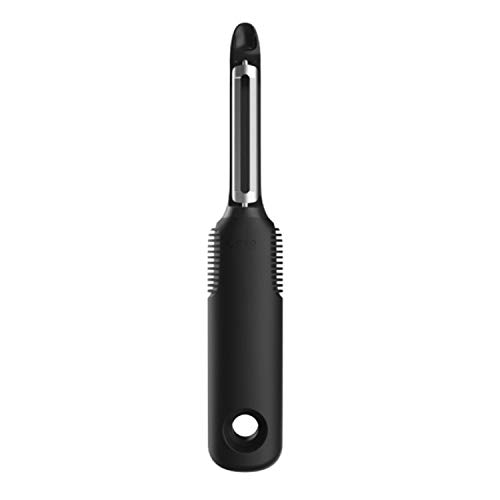
OXO Good Grips Swivel Vegetable Peeler with Soft Comfortable Handle - Black
Shop at Amazon →For apples in particular, a straight peeler can feel easier to guide around tight curves. It’s also useful when you want to work more carefully near blemishes, stems, or uneven surfaces. For deep potato eyes or damaged spots, though, I’d still switch to a paring knife instead of forcing any peeler to do detail work.
If you already know you prefer knife-like control, a straight peeler may simply feel more natural. The best peeler style is the one that lets you keep pressure light and movement predictable after several pounds of vegetables, not just one test carrot.
Thanksgiving prep gets easier when you stop expecting one tool to handle every peel the same way. Potatoes, carrots, apples, cucumbers, and butternut squash all ask for slightly different handling.
For potatoes, I want light, continuous strokes that remove the skin without digging into the flesh. If I’m peeling ahead, I keep them submerged in cold water in the refrigerator until cooking time. For carrots and parsnips, a Y-peeler is often the quickest option because it moves cleanly down the length of the vegetable.
Apples benefit from a gentler touch and closer attention to curves. Cucumbers need a sharp blade more than brute force; a dull peeler tends to drag on soft skins. For butternut squash, stability matters most. I trim the ends first, cut it into manageable sections, and work only on flat, steady pieces. Southern Living’s note on using a Y-peeler for squash and other holiday vegetables lines up with that practical approach.
When the surface is very thick, woody, or irregular, I don’t try to make the peeler solve it. A knife is the better tool for squash edges, bruised areas, tough stem ends, and deeply ridged spots.
A peeler can seem fine for a minute or two and still become tiring halfway through a five-pound bag of potatoes. That’s why handle shape matters. I look for a grip that fills the hand comfortably without forcing a tight pinch, and one that stays secure when hands are damp.

OXO Good Grips Large Vegetable Y Prep Peeler, Black
Shop at Amazon →A larger handle can be more comfortable for anyone dealing with hand fatigue or reduced grip strength. Slim handles can feel nimble, but they may become tiring faster during repetitive peeling. The goal is a handle that lets you work steadily without pressing your thumb hard into the frame or bending your wrist at an awkward angle.
Blade movement matters too. A swivel blade is often the most forgiving choice for mixed produce because it follows curves on potatoes, apples, and carrots. A fixed blade can feel more precise on flatter surfaces or delicate tasks, but it asks for a little more attention to angle.
As for peel catchers, I think of them as a convenience rather than a deciding feature. For large holiday prep, a bowl, sheet pan, or compost bin set beside the cutting board is usually more practical and less fussy.
The common mistake with peelers is assuming a dull one is harmless. In reality, a dull blade is more likely to skid, catch, or make you use too much force. That’s when produce slips and hands get too close to the cutting path.
I keep peeling safer by starting with dry hands, washing produce first, and drying it enough that it won’t slide around. For larger vegetables, especially squash, I create a flat base before peeling so the piece can rest securely on the board. A damp towel under the cutting board helps if the board itself shifts.
Direction matters too. I keep the blade moving away from supporting fingers when possible, and I use short strokes instead of long aggressive ones on uneven surfaces. This safe peeling guide makes the same point: stability and light pressure prevent many avoidable slips.
If a peeler starts skipping, first clean the blade and dry the produce. If it tears soft skins, reduce pressure and make sure the blade is actually suited to the ingredient. If it gouges, your stroke may be too heavy, or the blade may not be following the curve properly. And if it catches on eyes, knots, or damaged spots, stop and trim those with a knife before continuing.
A peeler that performs well at Thanksgiving is usually one that’s been kept clean, dry, and protected from drawer damage. I prefer hand-washing because it’s easier to clear starch, pulp, and fibers from the blade and pivot without knocking the edge against other utensils.
If a peeler is marked dishwasher-safe, that may be fine, but repeated dishwasher cycles can still be hard on blades and handles over time. Hand-washing with warm soapy water and drying right away is the safer habit, especially before a busy cooking week.
Starch from potatoes and sugar from fruit can harden around the blade if they sit too long. I’d rather clean that off promptly than deal with buildup later. It also gives you a chance to spot rust, looseness, or damage before a major prep session.
When should you replace a peeler? If it still skips after cleaning, tears skins repeatedly, needs force to remove a strip, or has a loose blade or cracked handle, it’s time. This guide on choosing the right type of peeler points to the same warning signs: skipping, tearing, and downward pressure are all signs the tool is past its useful life.
A sharp stainless-steel Y-peeler is the most practical all-around choice for large batches of potatoes, carrots, parsnips, and ribbons. If you prefer more direct, knife-like control, a straight peeler may suit you better for apples and smaller produce.
Yes, but only after you make the squash stable. Trim the ends, cut it into manageable sections, and place each piece flat before peeling. If the skin is especially thick or irregular, switch to a knife rather than forcing the peeler.
Usually the blade is dull, dirty, loose, or mismatched to the produce. Clean it first, dry the ingredient, and use lighter pressure. If it still won’t cut cleanly, it likely needs sharpening or replacement.
Yes. Peeled potatoes can be held in cold water in the refrigerator until the next day. Before cooking, drain and rinse them, then check for any missed eyes or discoloration.
The best vegetable peelers for Thanksgiving prep are sharp, comfortable, and matched to the kind of produce on your menu. In most kitchens, that means a stainless-steel peeler, usually in a Y-shape for speed, with a straight peeler or paring knife filling in for more precise work.
If your peeler cuts cleanly with light pressure and feels steady after a long prep session, you’ve chosen well. That matters a lot more than extra features.

Paige Gilmore
Founder of Stripes & Willows — recipe creator, food photographer and stylist. Every guide is written to make honest, useful kitchen decisions easier.
More about Stripes & Willows →This page contains affiliate links. If you buy through them, Stripes & Willows may earn a commission at no extra cost to you — it never affects what we recommend.