Guide
Best Roasting Racks For Thanksgiving Turkey
Our honest guide to best roasting racks for thanksgiving turkey — what actually matters, what to skip, and how to choose well.

Our honest guide to best roasting racks for thanksgiving turkey — what actually matters, what to skip, and how to choose well.
 Best Overall
Best Premium
Best Overall
Best Premium
 Also Great
 Best Value
If I’m roasting a Thanksgiving turkey, a roasting rack is one of the most useful pieces in the pan. It lifts the bird so heat can move underneath, keeps the underside from sitting in fat, and leaves drippings easier to turn into gravy. You do not strictly need one, but the best roasting racks for turkey are the ones that fit the pan properly, stay level under the bird’s weight, and give you a secure way to lift the turkey out without tearing the skin.
A rack’s main job is simple: it raises the turkey above the floor of the pan. That extra space improves airflow, which can help the bottom and sides cook more evenly and brown better. It also keeps the bird from stewing in its own juices.
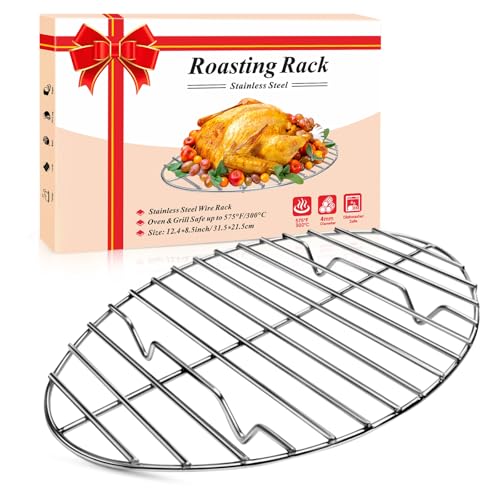
DePango Oval Turkey Roasting Rack,12 Inch Stainless Steel Rack for Thanksgiving Christmas Gifts, Non-Stick Wire Rack Saf
Shop at Amazon →I think of a roasting rack as a practical tool rather than a requirement. A turkey can roast well without one, but a good rack makes the process easier at a few important moments: while the bird cooks, when drippings collect, and when it is time to transfer the turkey to a board.
A rack also helps preserve cleaner drippings. Because the turkey is elevated, rendered fat and juices can collect below the bird instead of soaking the underside. That makes it easier to skim fat and build gravy with more control.
As noted in this Thanksgiving turkey rack discussion, professionals tend to agree on the basics: a rack improves airflow and handling, but it is optional if you can create stable lift another way.
For Thanksgiving turkey, fit and stability matter more than finish or extra features. I start with the pan, not the bird. Measure the interior floor of the roasting pan and make sure the rack sits fully inside it without rocking.
The turkey should rest securely on the rack with space around it for heat to circulate. If the rack presses against the pan walls, or if the bird sags down into the bottom of the pan, you lose much of the benefit.
Handles are genuinely helpful, especially with a heavy bird and hot drippings in the pan. I look for a shape that leaves enough room for oven mitts and keeps the turkey centered rather than forcing it to tilt during lifting.
Weight capacity matters too. A weak rack can bend, spill hot fat, and make the whole pan awkward to handle. Before roasting, it helps to set the empty rack in the pan and press gently in a few spots to see if it wobbles or flexes.
Stainless steel is the most practical material for a roasting rack if your priority is durability and high-heat use. It holds up well in a hot oven and usually tolerates scrubbing better than coated surfaces.
Cuisinart 16-Inch Roasting Pan, Induction Compatible Premium Rectangular Roaster Pan With Rack, Stainless Steel Roasting
Shop at Amazon →The trade-off is cleanup. Roasted fat can bake onto stainless steel, especially around feet, curves, and welds. I like to soak racks promptly after cooking rather than letting residue harden overnight.
If food sticks, avoid attacking it right away with harsh abrasives. A hot soak with dish soap and a nylon brush usually loosens most of it, and a baking soda paste can help with stubborn spots. This is also the material I trust most for repeated holiday use, simply because it handles wear well.
Nonstick roasting racks make cleanup easier and can help reduce sticking on delicate skin. That can be useful when you want the turkey to lift cleanly without leaving browned patches attached to the metal.
The catch is that coated surfaces need gentler care. Metal utensils can scratch the finish, and abrasive scrubbers can shorten the life of the coating. I keep cleaning simple and check any temperature guidance before using a coated rack in a very hot oven.
Nonstick can be a good choice if convenience is the priority, but I would still put fit and sturdiness first. A stable rack with a plain finish is more useful than a slippery one that does not support the bird well.
Disposable foil racks can work for a single holiday meal, especially if you are short on equipment. They are light and convenient, but they need a sturdy roasting pan underneath them. On their own, thin foil supports are not enough for a heavy turkey and hot drippings.

Caraway Home 16x13" Roasting Pan In Cream | Non-Stick, Non-Toxic, PFAS-Free Ceramic Pan + Wire Rack | Induction-Compatib
Shop at Caraway Home →I would be especially careful about buckling and uneven weight distribution here. A disposable rack should sit flat in the pan and support the turkey at multiple points. If it bends noticeably before roasting starts, it is not the right setup.
This is more of a backup option than a long-term one, but it can do the job when used over a rigid pan with careful handling.
For turkey, the most common choice comes down to V-shaped racks and flat racks. Both can work well, but they support the bird differently.
A V-shaped rack cradles the turkey, which helps keep a rounded bird centered. I think this shape makes the most sense for large whole poultry because the turkey settles into the angle instead of perching on a broad flat surface.
A flat rack is more flexible if you also roast other cuts of meat throughout the year. It gives broad support and can be easier to clean, but the turkey may need more careful positioning so it does not shift during basting or lifting.
If I had to reduce it to one rule, it would be this: choose the shape that keeps the bird steady and lifted, not the one with the most features.
Set the rack in the pan before adding anything else. Check that it sits level, then add vegetables or a small amount of liquid if your recipe calls for them. The liquid should stay below the rack so the turkey roasts rather than steams.
Center the turkey over the strongest part of the rack. Tuck wings and legs close if possible so they do not catch on the rack during transfer. If the pan feels crowded before it goes into the oven, it will feel even tighter when hot.
Around 2 inches of open space around the roast is a useful fit guideline, as noted in these roasting pan instructions. That little bit of breathing room helps the hot air do its job.
For the oven, I usually think in terms of clearance. The lower-middle or center position tends to work best, as long as the top of the turkey is not too close to the heating element and the pan slides in and out cleanly.
The biggest roasting rack issues are wobbling, sticking, and scorched drippings. Most of them can be avoided with a quick cold check before the turkey goes into the oven.
If the rack rocks when empty, do not try to fix it with loose foil or random supports underneath. Use a different pan or a different rack. A turkey is too heavy for a shaky setup.
To reduce sticking, dry the turkey skin well before setting it on the rack. A light coating of oil on the rack can help if the material allows it, but too much oil just creates greasy buildup. It also helps to leave the turkey undisturbed early in roasting so the skin has time to firm up.
For drippings, keep an eye on the bottom of the pan. If they begin to darken too far, add a small amount of hot stock or water. Too much liquid can soften the skin and dilute the gravy, so I prefer restraint here.
After roasting, let the pan sit briefly so the fat rises. Then strain and separate before making gravy. It is a small step that gives you a cleaner, better-tasting result.
If there is no roasting rack on hand, the best substitutes are the ones that still lift the turkey securely. A bed of large onion, carrot, and celery pieces is the simplest option. The vegetables add flavor to the drippings and create space under the bird, as long as they are not packed so tightly that they trap steam.
Tightly compressed foil coils or foil balls can also work. The important part is firmness and even height. Loose foil collapses, and once it collapses, the turkey cooks unevenly and becomes harder to move safely.
An oven-safe cooling rack is another possible substitute, but only if it fits fully inside the pan and is built for oven heat and enough weight. Guidance on roasting rack substitutes makes the same point I would: fit and heat-safe construction come first.
No. A turkey can roast successfully without a rack if it sits securely and has some lift from the pan floor. A bed of sturdy vegetables or tightly formed foil supports can do the job, though a proper rack is easier to handle and usually better for airflow.
Only if it is oven-safe, fits inside the roasting pan, and can support the turkey’s weight. Avoid anything with plastic, rubber, or coatings not meant for roasting temperatures.
Only in a shallow amount, and only if the recipe calls for it or the drippings need help staying below the scorching point. The liquid should stay under the rack, not touch the turkey.
The center or lower-middle oven position is usually the most practical. What matters most is leaving enough room above the turkey and keeping the pan clear of the heating elements.
The best roasting racks for Thanksgiving turkey are the ones that fit your pan well, stay stable under a heavy bird, and keep the turkey lifted for better airflow and cleaner drippings. Stainless steel is the most durable choice, nonstick is easier to clean, and disposable foil works in a pinch if the pan underneath is sturdy.
If you do not have a rack, you still have good options. What matters most is secure support, sensible spacing, and a setup that keeps the turkey steady from oven to carving board.

Paige Gilmore
Founder of Stripes & Willows — recipe creator, food photographer and stylist. Every guide is written to make honest, useful kitchen decisions easier.
More about Stripes & Willows →This page contains affiliate links. If you buy through them, Stripes & Willows may earn a commission at no extra cost to you — it never affects what we recommend.