Guide
Best Ice Buckets For Christmas Parties
Our honest guide to best ice buckets for christmas parties — what actually matters, what to skip, and how to choose well.

Our honest guide to best ice buckets for christmas parties — what actually matters, what to skip, and how to choose well.
Best Overall
 lecreuset.com
 Amazon
For most Christmas parties, the best ice bucket is an insulated, stable bucket with enough room for the drinks guests will reach for first, plus a lid and a separate scoop if people will be serving themselves. That combination keeps bottles cold longer, cuts down on drips and stray hands in the ice, and makes the drink station feel calm instead of chaotic while I’m finishing dinner.
An ice bucket does a different job from a beverage tub, and that distinction matters at Christmas. If I’m setting a dinner table or a small bar cart, I want something compact and easy to move. If I’m putting out beer, sparkling water, mixers, and wine for a crowd, I usually need a wider tub or a second chilling vessel nearby. The goal is not to chill every drink for the entire night in one container. It’s to keep the first wave of drinks cold and easy to grab without traffic jams in the kitchen.
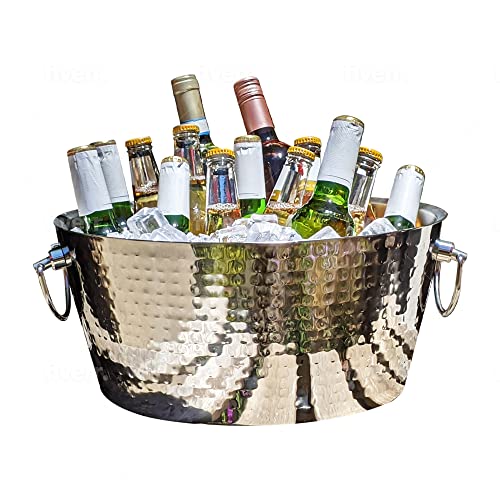
Stainless steel is the most practical choice for a long party, especially if the bucket will stay out through dinner. Double-wall construction helps slow melting and reduce condensation on the outside, which is useful on a dining table, sideboard, or bar cart where pooled water gets messy fast.
BREKX Insulated Hammered Stainless Steel Beverage Tub & Ice Bucket, 12QT
Shop at Amazon →I like stainless steel best when function matters more than display. Guests may not be able to see every bottle at a glance, but the tradeoff is better temperature control and a tidier surface underneath. If drinks will sit out for several hours, or the room runs warm from ovens and people, this is usually the most sensible material.
A lid helps here too. It keeps the cold in a bit longer and helps keep the ice clean when the bucket sits near food, napkins, greenery, or busy hands. A separate scoop is worth having for any self-serve setup.
For care, the routine is simple: empty it promptly, wash with mild soap, rinse well, and dry thoroughly around rims, handles, and seams. Lingering moisture can leave marks over time, so this is one of those pieces that benefits from being fully dried before it goes back in the cupboard.
Clear acrylic or sturdy plastic works well when I want guests to see what’s inside without lifting every bottle. For Christmas parties, that visual clarity is useful. People can spot sparkling water, tonic, wine, or alcohol-free drinks quickly, and that keeps the station moving.
This style makes sense for family gatherings, casual entertaining, and outdoor setups where lighter weight matters. A clear bucket also feels less visually heavy on a crowded holiday table. If the drinks themselves are part of the presentation, this is the material that shows them off best.
The compromise is insulation. In general, acrylic and plastic are better for visibility than for long ice retention, though some insulated plastic styles perform better than plain single-wall containers. A good comparison of ice-bucket materials makes the same basic point: stainless steel and insulated plastics tend to hold cold more effectively, while acrylic is stronger on display.
If I use a clear bucket, I pay extra attention to placement. Keep it out of direct sun, away from heat, and on a tray or folded towel to catch moisture. I also like a broad, stable base, because lighter buckets can feel tippy once the ice melts down and guests start pulling out the last few cans or bottles.
For cleanup, avoid anything abrasive that could cloud the surface. Warm soapy water and a soft cloth are usually the right direction, followed by thorough drying before storage.
Galvanized metal is a good fit for a more casual Christmas setup: bottled beer, canned drinks, porch parties, buffet tables, or a rustic holiday look with evergreens and wood. It tends to offer generous capacity and sturdy side handles, which makes it useful when I need to chill a lot of drinks at once.
Saiveina Ice Buckets for Parties, 2 Pack, 6.5L Each, 2 Ice Scoops
Shop at Amazon →This is the style I think of more as a beverage tub than a true table bucket. It works best when the drink station is fully self-serve and guests need easy access from above. It is less about polished table service and more about keeping a crowd supplied.
The downside is that melted ice gets heavy quickly, and drainage matters more. A filled metal tub can leave a serious puddle if it sits unprotected on the wrong surface. I’d always put it on something waterproof and wipeable, and I would not leave it directly on wood or delicate linens without protection.
If the interior is uncoated, a food-safe liner is wise, especially if the ice may go directly into glasses. Dry storage matters here as well, since trapped moisture can encourage rust or residue over time.
The best size depends on how many drinks need to be cold at the same time, not how many guests you invited in total. For a seated dinner, a smaller bucket that chills one or two bottles may be plenty. For a larger open-house style gathering, I’d rather have a larger tub or two smaller stations than one overstuffed bucket.
Ice needs room to circulate around the drinks. If the container is packed so tightly that bottles are stacked awkwardly or cans are wedged in without enough ice between them, chilling becomes uneven and guests end up rummaging around.
As a planning baseline, event ice guidance suggests about 0.5 kilograms of ice per guest for chilling drinks, and closer to 1 kilogram per guest if cocktails or drinks served over ice are part of the plan. I’d treat that as a starting point, then adjust for party length, room temperature, and how much of the menu depends on ice.
Even a good bucket struggles if the setup is poor. I pre-chill drinks first, then use the bucket to maintain that cold temperature rather than asking it to do all the work from scratch. That one step makes a noticeable difference.
Le Creuset Signature Stainless Steel 10-Piece Cookware Set
Shop at lecreuset.com →When I fill the bucket, I start with a shallow layer of ice, add the largest bottles around the outside, fit cans or smaller bottles into the gaps, then top with more ice. I leave enough room for hands to grab one drink without knocking everything else over.
Placement matters just as much. The bucket should sit on a sturdy, waist-height surface away from the stove, main walkway, and swinging doors. A tray or absorbent mat underneath keeps condensation under control. If I’m setting up a fuller station, I follow the same basic logic you’ll see in a solid holiday beverage-station checklist: glassware, napkins, opener, garnishes, and a waste bowl for caps or corks should all be within reach.
I also keep reserve ice separate in the freezer or a clean cooler. Refilling before the bucket is completely waterlogged is easier than trying to rescue a melted setup in the middle of the busiest hour.
I’m all for a pretty holiday drink station, but the bucket still has to function. That means decorations stay around the station, not in the ice unless they are clearly food-safe and meant for that use.
The easiest approach is to match the bucket to the rest of the table in a restrained way. Stainless steel works with polished, simple settings. Clear acrylic keeps things light and neat. Galvanized metal suits a more relaxed, rustic table. A few cards or small labels help guests identify what’s inside without digging around.
I would keep loose greenery, glitter, flocked stems, and candles away from the bucket opening. They shed, melt, or contaminate the ice, and they can block drainage or make the whole station fussier than it needs to be.
Most of these problems are easy to prevent with a little setup before guests arrive. The bucket should feel effortless in use, not like one more thing to manage.
Once the evening winds down, empty the bucket promptly. Dump the ice and meltwater, wash with warm water and mild dish soap, rinse thoroughly, and dry the interior, base, rim, and handles. If any odors or mineral marks linger, material-specific care helps, and these ice-bucket cleaning guidelines are a sensible reference point.
I would not store any bucket with moisture trapped inside or with the lid sealed tightly while still damp. Let it dry fully, then store it with the lid off or slightly ajar so it stays fresh for the next gathering.
A smaller bucket suits a dinner table or a short drinks service with one or two bottles. A larger bucket or beverage tub works better for self-serve parties with cans, mixers, and multiple bottles. Size it for the drinks that need to be cold at one time, with enough room left for ice.
If the party will last several hours, the room is warm, or the bucket will stay out through dinner, insulation is worth it. For a shorter gathering with backup drinks in the refrigerator, a non-insulated bucket can still do the job.
For a self-serve Christmas party, yes. A lid helps slow melting and keeps the ice cleaner, and a scoop is the easiest way to serve ice hygienically.
A useful baseline is 0.5 kilograms per guest for chilling drinks, increasing to around 1 kilogram per guest if cocktails or drinks over ice are a big part of the menu. It helps to keep extra ice in reserve so the serving bucket can be refreshed easily.
The best ice bucket for a Christmas party is the one that fits the way you’re serving drinks: insulated stainless steel for longer cold retention, clear acrylic for easy visibility, or galvanized metal for a casual crowd-friendly tub. If it’s stable, properly sized, easy to clean, and set up with enough ice and a sensible landing spot, it will make holiday hosting feel much easier.

Paige Gilmore
Founder of Stripes & Willows — recipe creator, food photographer and stylist. Every guide is written to make honest, useful kitchen decisions easier.
More about Stripes & Willows →This page contains affiliate links. If you buy through them, Stripes & Willows may earn a commission at no extra cost to you — it never affects what we recommend.