Guide
Best Gravy Separators For Thanksgiving
Our honest guide to best gravy separators for thanksgiving — what actually matters, what to skip, and how to choose well.

Our honest guide to best gravy separators for thanksgiving — what actually matters, what to skip, and how to choose well.
 Best Premium
 Also Great
For Thanksgiving, the best gravy separator is usually a heat-safe 4-cup model with a built-in strainer and a controlled bottom-release or low-spout pour. That combination handles a full batch of turkey drippings, gives the fat time to rise, and makes it easier to get the savory liquid into your saucepan without carrying too much grease along with it.
Gravy separators are simple tools, but the details matter when the kitchen is busy and the drippings are hot. Capacity, material, visibility, and cleanup all affect how smoothly this step goes. If I’m choosing one for holiday cooking, I want enough room for real turkey drippings, a strainer that catches solids before they cause trouble, and a design that stays easy to control when full.
Heat-resistant plastic is practical for most home cooks because it is lightweight, easy to handle near the stove, and usually clear enough to show the line between fat and broth. That visibility matters. I want to see the fat layer forming at the top so I know when to stop pouring or releasing liquid.
HIC Kitchen Roasting Fat Separator Gravy Strainer, Borosilicate Glass, 32-Ounces, For Stress-Free Holiday Meal Prep and
Shop at Amazon →This material is especially useful in a 4-cup size, which tends to be the sweet spot for Thanksgiving. A 2-cup separator can work for chicken, a small roast, or a second batch, but a large turkey often produces enough drippings that extra headspace becomes important. Filling any separator to the brim makes it harder to carry, harder to settle, and more likely to slosh fat back into the juices.
Design matters as much as material. Bottom-release cups offer precise control because the lean liquid exits from below the fat layer. That can be helpful when I’m whisking gravy with one hand and adding drippings with the other. A useful overview of why this style is popular appears in this explanation of separator design choices.
The trade-off is cleanup. Bottom-release designs usually have a narrow passage, and that passage can clog if turkey skin, herb stems, onion pieces, or browned bits make it through the strainer. I would not skip the strainer for holiday drippings. It is the part that prevents most leaks, slow pours, and greasy frustration later.
Glass separators have one big advantage: visibility. It is easy to watch the drippings settle and clearly see the boundary between broth and fat. If you like a straightforward visual cue, glass makes the separation process feel more intuitive.
Glass also does not hold onto odors the way some materials can, and it feels naturally suited to rich pan juices and stock-based gravy. The downside is weight. Once a glass separator is filled with hot drippings, it can feel more cumbersome than plastic, especially on a crowded holiday counter.
If you choose glass, I think a stable handle and wide, readable measurement markings matter even more. You want a secure grip and enough space under the handle for your fingers. You also want a flat, steady base so pouring drippings through the strainer does not turn into a balancing act.
For many cooks, a glass spout-style pitcher is familiar and easy to understand. You pour in the drippings, let them settle, then tilt carefully so the lower liquid leaves first. The caution is that once you tip the pitcher too far, the top fat layer starts sliding toward the spout. That is where many greasy gravies begin.
Stainless steel is durable, heat-tolerant, and less delicate than glass. If your kitchen tools get hard use, this material has obvious appeal. It also handles hot drippings comfortably from a durability standpoint.
The compromise is visibility. Because stainless steel is opaque, you cannot easily watch the fat line as it forms. That means you rely more on timing, careful handling, and the separator’s design. If I were using stainless steel, I would be especially careful to leave the drippings undisturbed for long enough before pouring.
This material makes the most sense for cooks who prioritize toughness and don’t mind a less visual process. In practice, the same rules still apply: strain first, keep the separator level while the fat rises, and stop pouring before the top layer reaches the outlet.
If you are buying or comparing options, I would focus on four things first: capacity, strainer quality, handle stability, and ease of cleaning. Most Thanksgiving kitchens need a 4-cup capacity more than anything else. It gives the drippings room to settle and gives you room to carry the separator without spills.
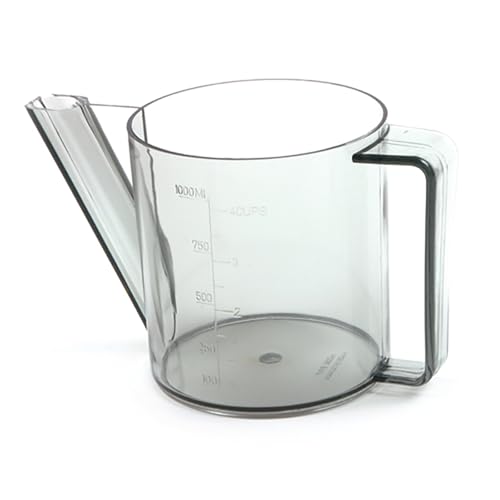
Norpro 4-Cup Capacity Fat/Gravy Separator
Shop at target.com →A built-in strainer is not just a helpful extra. It keeps the outlet path clearer by catching bones, herbs, roasted vegetables, and skin before they enter the container. Fine mesh catches more debris, while wider perforations drain faster. Either way, removable is easier to clean than fixed.
Measurement markings are also worth having. They help you judge how much liquid you have before adding it to a roux, and they make it easier to decide if you need extra stock. I treat those markings as a guide, then adjust the gravy by texture and taste.
Last, look at how the separator comes apart. Narrow spouts, valves, and gaskets all need prompt rinsing after use. If cleanup looks fiddly, assume it will feel even more fiddly once turkey fat cools down.
The best results come from a calm sequence: strain, settle, then pour. I pour the hot pan drippings through the separator’s strainer right away, after removing any especially large pieces with tongs. Then I set the separator on a stable, heat-safe surface and leave it alone.
Most warm drippings need around 10 to 20 minutes for the fat to collect at the top. A general timing guide for separating fat gives that same range, along with longer times for chilling in the refrigerator or freezer, in this overview of separation timing. For Thanksgiving, room-temperature settling is usually the most practical because the gravy still needs to get on the table.
Once the layers are distinct, I add the defatted liquid to my roux in a slow stream while whisking. If I’m using a bottom-release model, I stop as soon as the fat approaches the outlet. If I’m using a pitcher, I tilt gradually and stop before the upper layer reaches the spout.
A step-by-step fat separator technique guide shows the same basic process: pour, wait, then dispense slowly into the gravy pan.
The most common mistake is skipping the strainer. Small solids are exactly what clog bottom drains and narrow spouts. Once the outlet slows down, the temptation is to shake or squeeze the separator, and that often mixes the fat right back into the liquid.
The second mistake is moving the separator too much while it settles. Even a small jostle can disrupt the layers. I like setting it on a tray or folded towel so it stays put and any drips are contained.
The third mistake is waiting too long to clean it. Warm fat rinses out much more easily than cooled grease. As soon as the gravy is done, I would rinse the separator with hot water, wash the strainer separately, and flush the spout or valve from both directions if the design allows.
If some grease still sneaks into the gravy, you can often let the sauce sit briefly and skim the surface. For lumpier or greasier problems, this gravy troubleshooting guide is a useful reference.
Yes. They work by letting the heavier broth settle below the lighter fat so you can pour off the flavorful liquid first. The cleaner result depends on giving the drippings enough time to separate and keeping solids out of the outlet.
For a whole turkey, a 4-cup separator is usually the most useful size. It gives you room for a generous amount of drippings and enough headspace for the fat layer to form without making the container awkward to carry.
A clear heat-safe measuring cup and a spoon can work in a pinch. Strain the drippings, let them sit until the fat rises, then skim the top. If you have more time, chilling the drippings helps the fat firm up for easier removal.
Warm drippings generally need about 10 to 20 minutes at room temperature. If you are working ahead, chilling takes longer but can make the fat easier to remove cleanly.
A good Thanksgiving gravy separator should be heat-safe, easy to hold, easy to clean, and large enough for real turkey drippings. For most cooks, a clear 4-cup separator with a built-in strainer is the most practical choice, and careful straining plus patient settling will do as much for your gravy as the separator itself.

Paige Gilmore
Founder of Stripes & Willows — recipe creator, food photographer and stylist. Every guide is written to make honest, useful kitchen decisions easier.
More about Stripes & Willows →This page contains affiliate links. If you buy through them, Stripes & Willows may earn a commission at no extra cost to you — it never affects what we recommend.