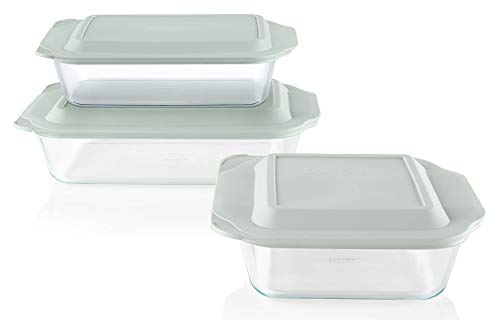
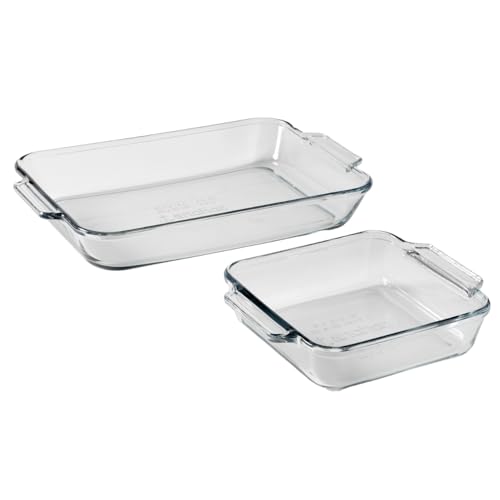
If I had to give the short answer, I’d say this: glass is the better everyday casserole dish, while enameled cast iron is the better choice when heat retention, browning, and oven-to-table serving matter more. Both are oven-safe, both handle acidic ingredients well, and both can bake beautifully, but they behave differently enough that the right pick depends on the dish in front of you.
How They Feel Different in Real Cooking
The biggest difference is not just what happens in the oven, but what happens before and after. Glass heats more gently and is usually easier to lift, rotate, wash, and store. I like that I can see bubbling along the sides and check browning without pulling the dish around too much.
Enameled cast iron asks more from you physically. It is heavy, especially when full, and it stays hot for a long time. That can be a real advantage with baked pasta, gratins, and roasted vegetables, because the dish keeps cooking steadily and holds heat at the table far longer than glass. It also means I’m more careful about carryover cooking and where I set it down.
In simple terms, glass feels practical and easy. Enameled cast iron feels more substantial and more committed.
Which One Cooks Better?
Neither material is better at everything. Glass tends to suit recipes that benefit from steady, moderate heat rather than aggressive browning. That makes it a natural fit for casseroles, cobblers, baked pasta, and many desserts. It also helps to be able to see the sides of the dish, especially with layered dishes where you want to judge bubbling and set.
Enameled cast iron shines when I want stronger heat retention and a more deeply browned finish. A gratin, a tray of roasted vegetables, or a hearty pasta bake often benefits from that stored heat. Once preheated, the iron body keeps the dish hot and encourages crisping around the edges.
That said, retained heat cuts both ways. With enameled cast iron, I’d start checking for doneness a few minutes earlier than I would with glass, especially for creamy bakes or egg-based dishes. The dish can keep pushing the food further after it comes out of the oven.
Glass is less intense in that way. It still holds heat well, as Taste of Home notes in its bakeware comparison, but it generally gives me a gentler cooking rhythm.
Best Situations for Glass
I think glass makes the most sense for routine baking: family casseroles, lasagna, fruit desserts, and recipes where lighter weight is genuinely helpful. It is also budget-friendly, easy to maintain, and typically dishwasher-safe, which matters if a dish is in constant rotation.
Another practical advantage is visibility. With a glass dish, I can see if the edges are bubbling too hard or if a fruit filling is thickening. That visual cue is useful, especially with desserts and layered pasta.
Glass also does not react with acidic foods, so tomato sauces, citrus, and fruit fillings are no problem. That’s true for enameled cast iron too, but glass keeps things especially straightforward.
Best Situations for Enameled Cast Iron
Enameled cast iron earns its place when I want a dish to hold heat exceptionally well. If dinner will linger on the table, or if I want a more browned, crisp-edged finish, this is usually the material I’d choose.
It also has the advantage of versatility beyond the oven in some cases. Certain enameled cast iron dishes can go on an induction cooktop or other stovetops, while glass cannot. That does not mean every piece should be used that way, though. The dish has to be rated for it, and the limits of the enamel, handles, lid, and knob still matter.
The enamel coating itself is nonreactive and does not need seasoning. As this explanation of enameled cast iron points out, the cooking surface is essentially a glass-like coating fused to iron. That gives you the heat-holding power of cast iron without the maintenance routine of bare iron.
Temperature Changes Matter With Both
This is where many problems start. Glass and enameled cast iron are both oven-safe, but neither one likes abrupt temperature shifts. I would not move a cold glass dish straight into a hot oven unless the manufacturer explicitly says it is safe for that use. I also would not set a hot glass dish on a wet towel, cold stone counter, or chilly metal sink.
Enameled cast iron is tougher in some ways, but the enamel can still crack under thermal shock. A refrigerator-cold dish should not go straight into high heat, and a hot pot should not be parked on a wet or cold surface. The iron core is sturdy, but the enamel finish still needs reasonable treatment.
Broiler use needs extra caution too. Glass is generally not a broiler pan, and direct burner use is out. Enameled cast iron may tolerate broiler or stovetop use better, but only if the manufacturer allows it. I would always follow the specific care guide rather than assuming all pieces share the same limits.
Cleaning and Long-Term Care
Both materials are relatively easy to maintain if you skip the harsh stuff. For everyday baked-on residue, I let the dish cool gradually, soak it in warm water, and use a soft sponge or nylon brush. That does more good than scraping aggressively.
Glass is usually simpler in day-to-day cleanup. It is often dishwasher-safe, though I still think hand-washing a large, hot, heavily soiled dish is gentler on it. The bigger issue with glass is damage: chips, cracks, deep scratches, or starburst marks are reasons to retire it from oven duty.
Enameled cast iron is easy to clean too, but I would treat it as hand-wash cookware even if a maker says otherwise. Nonabrasive cleaning is the safer path, and Martha Stewart’s cleaning guidance aligns with that approach. A baking soda paste can help with stubborn stains, but metal utensils, harsh powders, and rough scrubbing are not worth it.
If the enamel develops deep chips or cracks, especially in the cooking surface, I’d stop using it. Exposed iron in a damaged area is not something I’d ignore.
Common Mistakes to Avoid
The first mistake is overfilling. A casserole dish packed to the brim is harder to bake evenly, more likely to boil over, and more likely to leave you with an underdone center and overdone edges. A little headspace matters.
The second is assuming shape and capacity do not matter. If you swap a glass 9x13-style pan for a deeper or narrower enameled cast iron baker, the same recipe may cook differently simply because the food sits thicker in the dish.
The third is using damaged cookware because it still seems mostly fine. With glass, even a small chip or impact mark can become a bigger problem under heat. With enameled cast iron, a spreading crack or chipped cooking surface is more than cosmetic.
And finally, I would not ignore the care instructions that came with the dish. Oven-safe does not automatically mean broiler-safe, dishwasher-safe, or stovetop-safe.
FAQ
Which is better for baking, glass or enameled cast iron?
For everyday baking, I’d give the edge to glass. It is lighter, easier to handle, and well-suited to casseroles, desserts, and baked pasta. Enameled cast iron is better when I want stronger heat retention, deeper browning, and a dish that stays hot longer on the table.
Does enameled cast iron cook more evenly than a glass baking dish?
It can produce more sustained, even heat once fully preheated, and it usually browns more assertively. Glass cooks more gently, which can be a benefit for recipes that do not need intense edge crisping.
Can an enameled cast iron dish replace a glass baking pan?
Often yes, if the interior size and capacity are comparable. I’d still watch the timing closely, because enameled cast iron retains more heat and may cook the same recipe a bit differently.
Which one is easier to clean?
Glass is generally the easier low-fuss option, and it is commonly dishwasher-safe. Enameled cast iron is also easy to maintain, but I think it does best with gentle hand-washing and nonabrasive tools.
What are the main disadvantages of enameled cast iron?
The main tradeoffs are weight, slower preheating, and the need to protect the enamel from chips, cracks, and sudden temperature changes. It is excellent cookware, but it is less casual to handle than glass.
The Bottom Line
If I were choosing one dish for general casserole duty, I’d pick glass. If I wanted the best heat retention, better browning, and a more table-ready look, I’d reach for enameled cast iron.
They are both useful, just in different ways. The smartest choice is the one that matches how you actually cook.