Guide
Emile Henry Bakeware Materials
Our honest guide to Emile Henry bakeware materials — what actually matters, what to skip, and how to choose well.
Our honest guide to Emile Henry bakeware materials — what actually matters, what to skip, and how to choose well.
Best Overall
 Best Value
Emile Henry bakeware is made from high-fired ceramic formed from natural Burgundy clay and finished with a food-safe glaze. In practical terms, that means slower, steadier heating than metal, strong heat retention at the table, and a smooth surface that’s generally easy to clean. It also means ceramic asks for a little more care around temperature swings, knocks, and abrasive cleaning.
If I’m deciding whether this material suits my kitchen, I look at what I cook most. Ceramic is a strong fit for casseroles, pies, gratins, cobblers, and bread recipes that benefit from even heat and a dish that stays warm after it leaves the oven. It’s less ideal when I want very fast browning or the light weight and quick response of metal.
The core material is clay from Burgundy, France, fired at high temperature until it becomes dense ceramic. According to Emile Henry’s U.S. FAQ, the company’s ovenware is designed for regular kitchen use and made to handle everyday cooking demands.
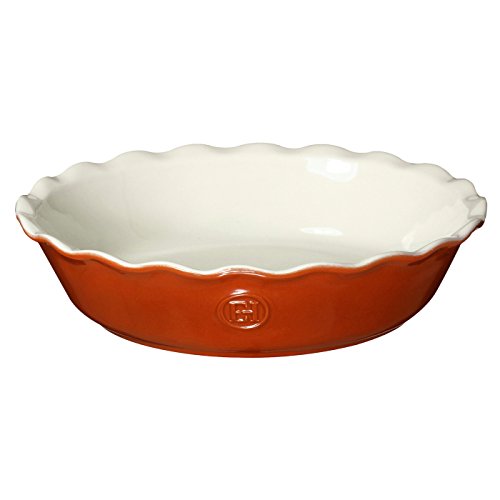
Emile Henry HR Ceramic Round Pie Dish, Pumpkin
Shop at Amazon →That clay body is what gives the bakeware its character. Ceramic doesn’t rush heat into food the way thin metal does. Instead, it warms gradually and spreads heat more gently through the dish. For baked pasta, fruit fillings, custards, and other dishes that can suffer from harsh hot spots, that slower pace is often the point.
I think it helps to expect a different rhythm from ceramic. A dish may take longer to come fully up to temperature, and recipes written for metal pans can brown or finish on a different schedule. The payoff is steadier cooking and better heat retention once the dish hits the table.
Over the ceramic body sits a glaze that seals the surface and gives the bakeware its finished color and shine. That glaze matters as much as the clay underneath because it creates the smooth, nonporous surface that comes into contact with food.
Emile Henry states that its materials contain no lead, cadmium, or nickel and meet food-contact standards, including California Proposition 65 requirements, as outlined in its customer FAQ. A sealed glaze also helps limit odor and stain absorption compared with unglazed pottery.
In everyday use, the glazed finish affects cleanup more than anything else. Saucy bakes and fruit desserts usually release more easily after a short soak, and the dish doesn’t behave like raw earthenware that can absorb moisture and flavor. Still, “nonporous” doesn’t mean invincible. Deep chips, flaking glaze, or sharp cracks are all signs to stop using a damaged piece.
Ceramic tends to produce balanced, gentle heat rather than aggressive bottom browning. That can be a real advantage for dishes where I want the center and edges to cook at a similar pace.
Compared with other common bakeware materials:
This matters most with timing. If I move a familiar recipe from a metal pan into ceramic, I don’t assume the oven time will be identical. I watch the first bake closely and use visual doneness cues instead of trusting the clock alone. Ceramic often shines when I care more about even cooking and oven-to-table serving than sharp, fast browning.
For breads and baked desserts, the retained heat can also keep the dish warm longer after baking. That’s useful for serving, but it can also mean carryover cooking is slightly more noticeable than it would be in a thinner pan.
Food-safety questions come up often with ceramic, and they’re worth taking seriously. Emile Henry says its bakeware is free of lead and cadmium, and its published materials also describe the glaze as safe for food contact. You can also compare general cookware guidance through resources like the FDA’s information on lead in foodwares.
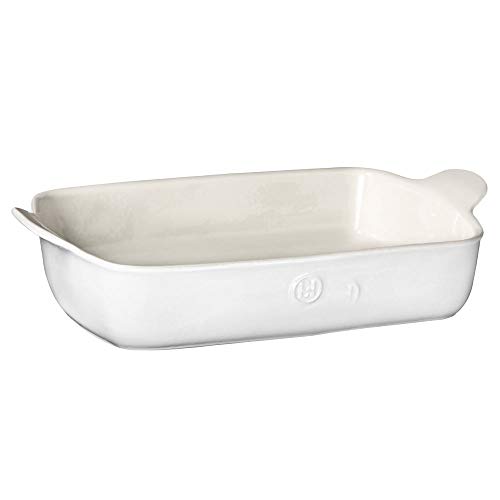
Emile Henry 13" x 9" Large Rectangular Baker - Modern Classics Collection | Sugar
Shop at Amazon →For me, the practical takeaway is simple: original material claims matter, but condition matters too. Even a well-made glazed ceramic dish should be retired if it develops a deep crack, a flaking interior surface, or a chip that leaves a sharp or compromised food-contact area.
“Non-toxic” in normal kitchen language usually means the materials are made without certain substances of concern and intended for safe cooking under ordinary conditions. It doesn’t mean the dish can be used carelessly, overheated in ways the manufacturer doesn’t allow, or kept indefinitely once damaged.
One of the most useful things to understand about ceramic is that strength and fragility can exist at the same time. High-fired ceramic can be sturdy in daily baking, but it still dislikes sudden temperature changes and hard impact.
The most common cracking risk is thermal shock. That happens when one part of the dish changes temperature much faster than another, creating internal stress. Common mistakes include:
Emile Henry notes that certain pieces are designed for freezer-to-oven use when used according to instructions, as explained on its official site. Even so, I think it’s smart to treat every ceramic transition carefully. “Freezer to oven” is not the same as “immune to temperature abuse.” The dish still needs proper support, a dry resting surface, and handling that avoids abrupt change.
Ceramic bakeware is not difficult to care for, but the best habits are gentle ones. The good news is that the glazed surface usually doesn’t need much force.
My basic approach is simple:
Dishwasher use is generally permitted by the maker, but that doesn’t always make it the best option if the dish will knock against heavier cookware. Hand washing can be the gentler route, especially for preserving the look of the glaze over time.
For marks and discoloration, a baking soda paste can help with surface residue without the roughness of harsh scouring powders. I’d skip metal scrapers and gritty cleaners, since they can dull or scratch the finish even when the ceramic body underneath remains sound.
Storage matters too. If dishes must be nested, placing a cloth or liner between them helps protect rims and glazed surfaces from rubbing.
It’s made from high-fired ceramic formed from natural Burgundy clay and coated with a food-safe glaze. The clay body affects how it heats, and the glaze creates the smooth cooking surface.
According to the manufacturer, its materials contain no lead or cadmium, and its published guidance also states that the products meet food-contact requirements.
Some pieces are designed for that use when the product instructions allow it. The important part is following the care guidance for the specific dish and avoiding sudden temperature stress beyond those directions.
Yes. Ceramic heats more gradually and holds warmth longer, while metal heats faster and usually browns more quickly. That can change both bake time and crust color.
The usual causes are thermal shock, impact damage, or an existing hairline fracture that worsened in the oven. Hot-to-cold transitions are the biggest risk.
Emile Henry bakeware materials are straightforward: high-fired Burgundy clay for the ceramic body and a food-safe glaze for the finished surface. If I want even heat, strong heat retention, and attractive oven-to-table baking, ceramic makes a lot of sense, as long as I respect its limits around temperature shock and rough handling.

Paige Gilmore
Founder of Stripes & Willows — recipe creator, food photographer and stylist. Every guide is written to make honest, useful kitchen decisions easier.
More about Stripes & Willows →This page contains affiliate links. If you buy through them, Stripes & Willows may earn a commission at no extra cost to you — it never affects what we recommend.