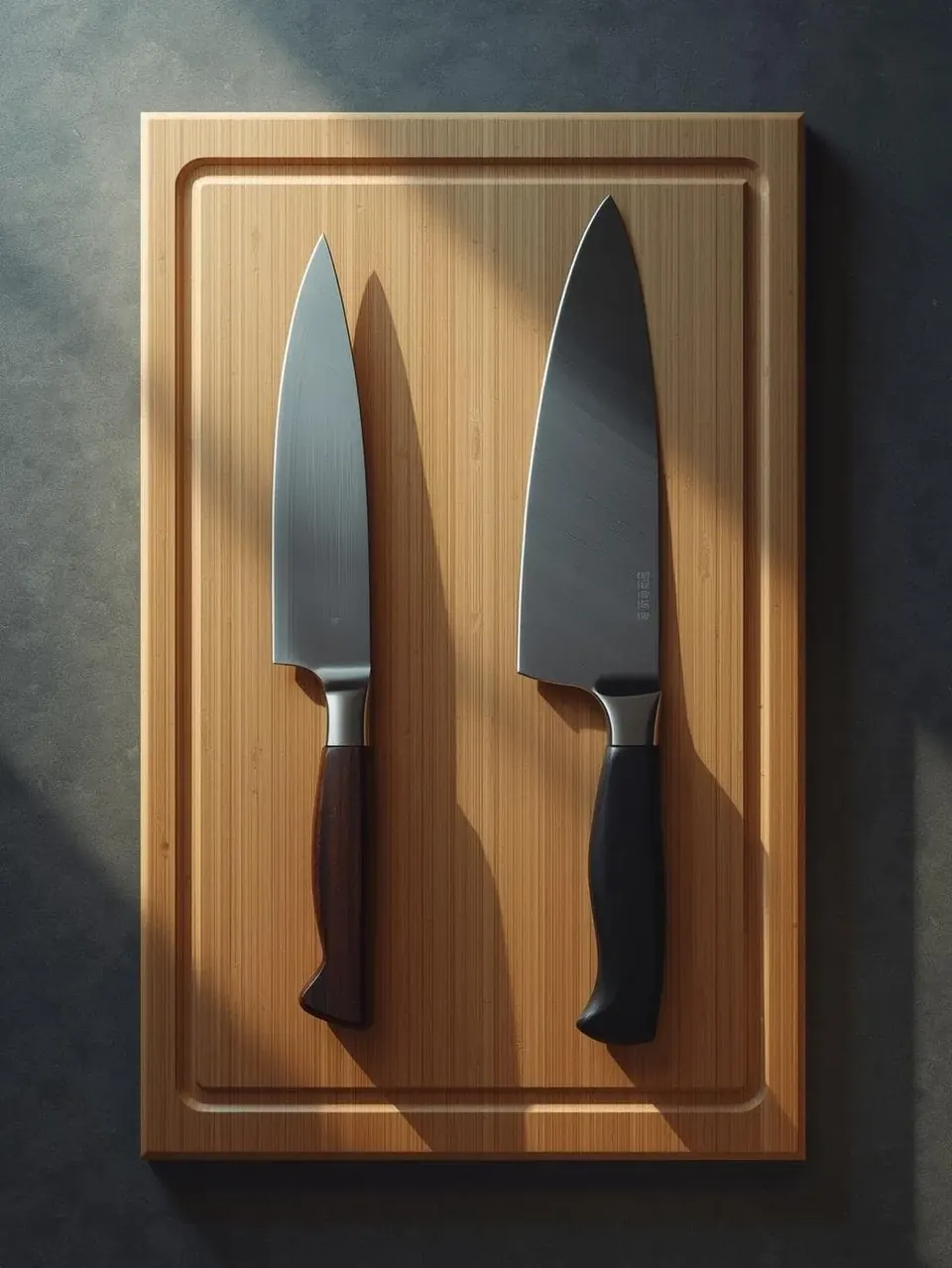
You know that moment when you're standing in the knife aisle, staring at all those shiny blades, and you're not sure if you should grab the classic chef's knife or try something new like a santoku? I've totally been there. After years of chopping, dicing, and sometimes crying over onions, I've realized that picking between these two kitchen workhorses isn't just about what looks cool on your counter.
The big difference comes down to blade shape and how you cut: chef's knives have a curved edge that's perfect for rocking, while santoku knives have a straight edge for precise up-and-down chopping. Both can handle most kitchen jobs, but each one brings its own vibe and strengths to the table.
I'm going to walk you through everything from blade design differences to which knife matches your cooking style. I'll also share some tips on care and maintenance to keep your blade sharp for years. Whether you're team Western tradition or leaning toward Japanese precision, you'll have a clear idea of which knife belongs in your kitchen.
Fundamental Differences Between Chef's Knife and Santoku Knife
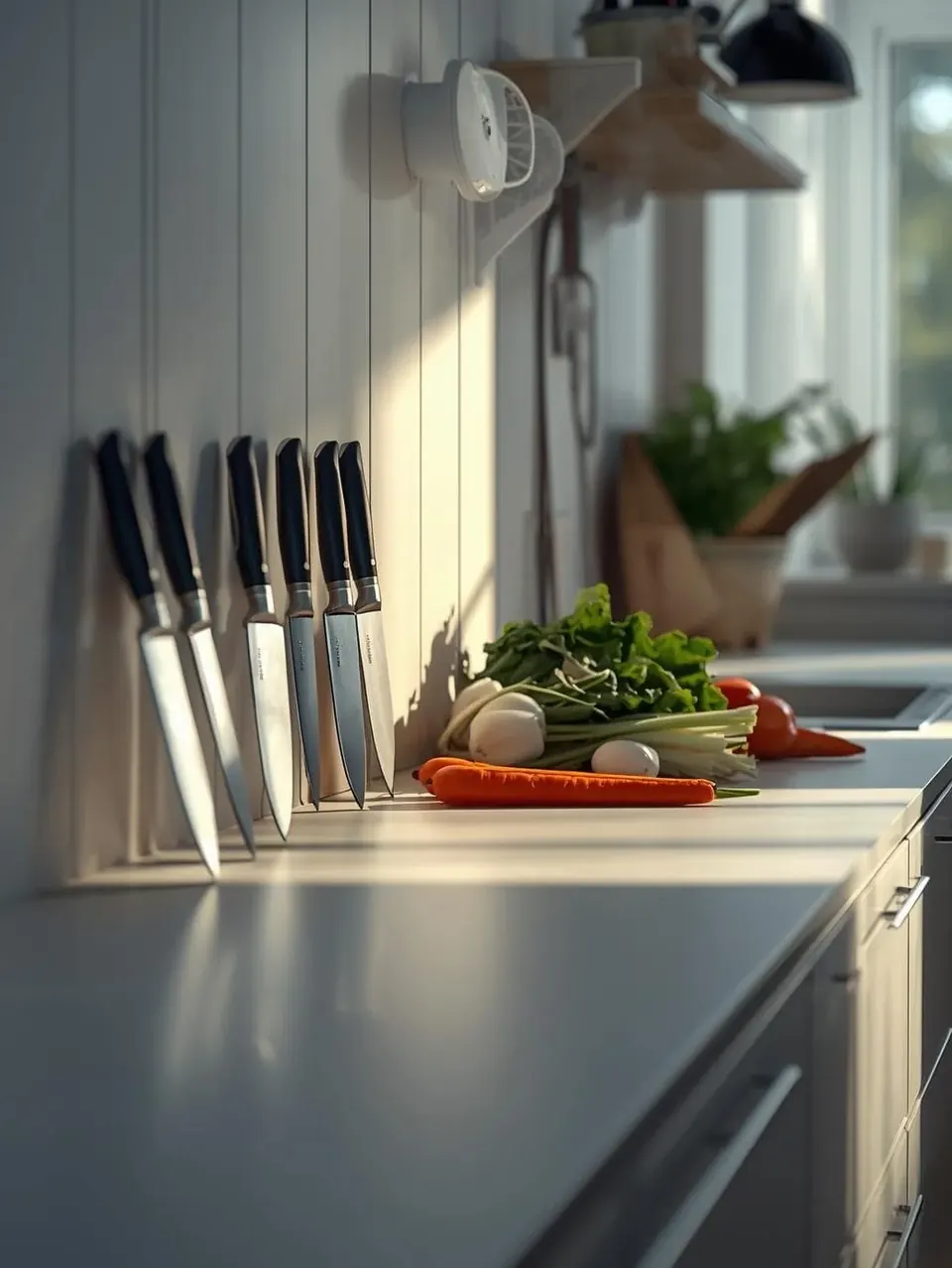
These two knives come from totally different worlds and were designed with different ideas in mind. The chef's knife grew out of European traditions that focus on versatility and power. The santoku, meanwhile, stands for Japanese precision and efficiency.
Origins and Cultural Background
I think it's fascinating how these knives tell the story of two food cultures. The chef's knife started in 18th century France, evolving from butcher knives used in busy kitchens. French chefs needed a tool that could do everything from chopping veggies to breaking down big cuts of meat.
The santoku is a newcomer. It showed up in Japan in the 1940s as home cooking changed. The name means "three virtues"—it can slice, dice, and chop. This knife fits the Japanese approach to kitchen efficiency, made for the veggies, fish, and smaller proteins common in Japanese homes.
Japanese craftsmanship really shines in the santoku's design. Where Western knives aim for versatility, Japanese makers focus on building the perfect tool for specific jobs.
Overall Purpose and Uses
From my own experience, these knives really shine in different ways. Chef's knives are the ultimate all-rounders. I can rock-chop herbs, slice through thick steaks, and even handle small bones. That curved blade just makes rocking motions so easy.
Santoku knives are all about precision. I love using mine for:
Vegetable prep—especially julienne cuts
Fish filleting and delicate proteins
Straight chopping moves
The santoku's straight edge and lightweight feel make it perfect for detailed work. Still, I wouldn't pick it for breaking down a whole chicken or working through tough meat—that's where the chef's knife's weight and curve win.
Blade Design and Construction
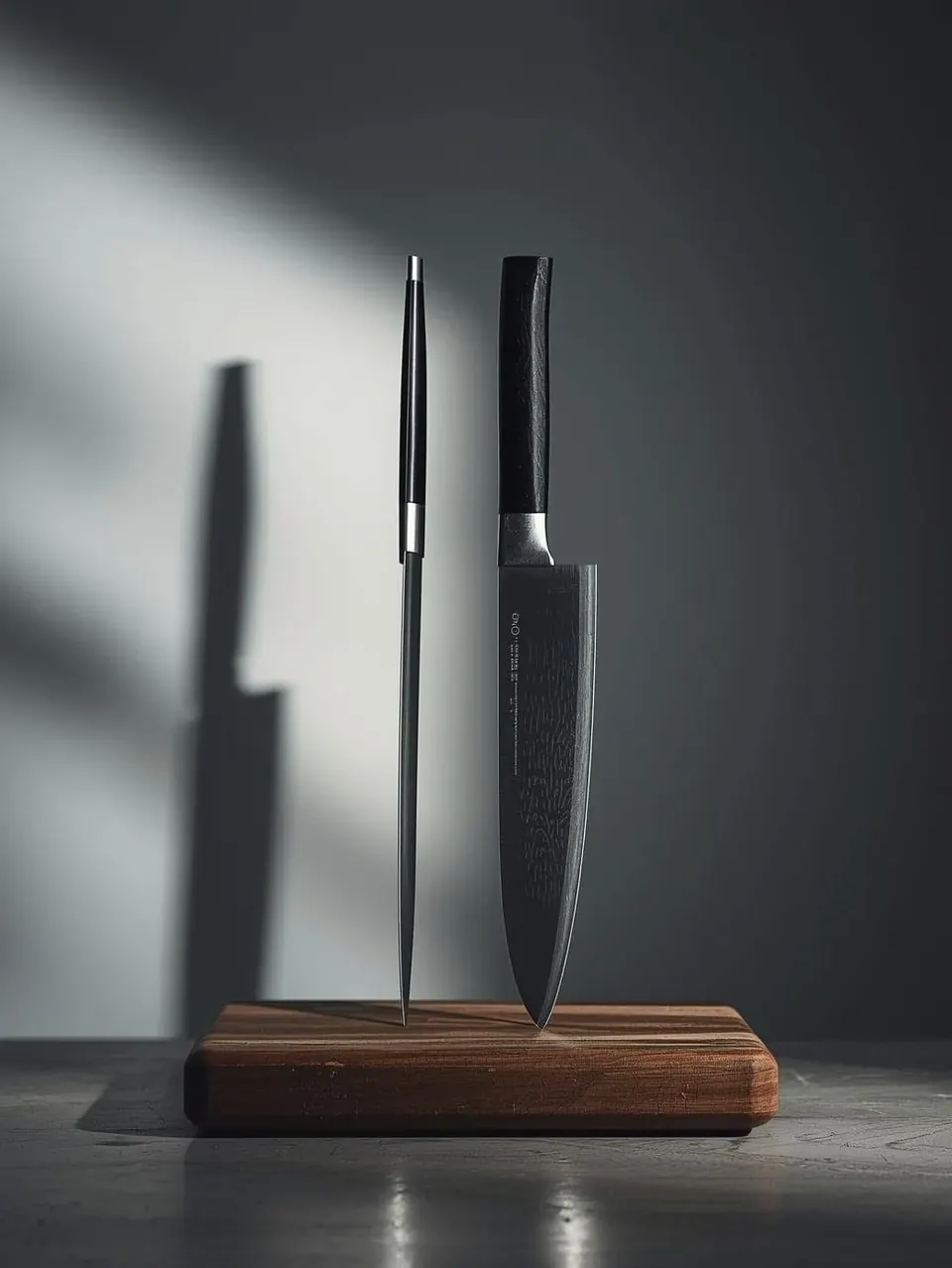
The blade is where these two really show their personalities. Chef knives have that classic curved profile I love for rocking cuts. Santoku blades stay straight and narrow for clean slicing.
Shape and Edge Profile
The biggest difference I notice when I pick up these knives is the edge profile. My chef knife has a beautiful curved belly that lets me rock through herbs and garlic. It's like the blade was made for rolling.
The santoku blade tells a totally different story. Its straight cutting edge stays flat on the cutting board, which is perfect for clean, straight cuts through veggies. No rocking—just up-and-down chopping.
What really excites me about santoku knives are those little dimples along the edge. These Granton edges create tiny air pockets that keep food from sticking. I can slice a potato and watch each piece fall away instead of clinging to the blade.
Blade Length Variations
Size makes a difference. Chef knives usually run from 8 to 10 inches, so I've got plenty of blade for bigger jobs.
My 7-inch santoku feels more compact and controlled in my hand. Most santokus are 5 to 7 inches, which is just right for detailed prep. The shorter length means I can make precise cuts without the tip getting in my way.
The short santoku blade gives me confidence when I'm dicing onions or julienning carrots. I like having control over every inch of the blade.
Material and Corrosion Resistance
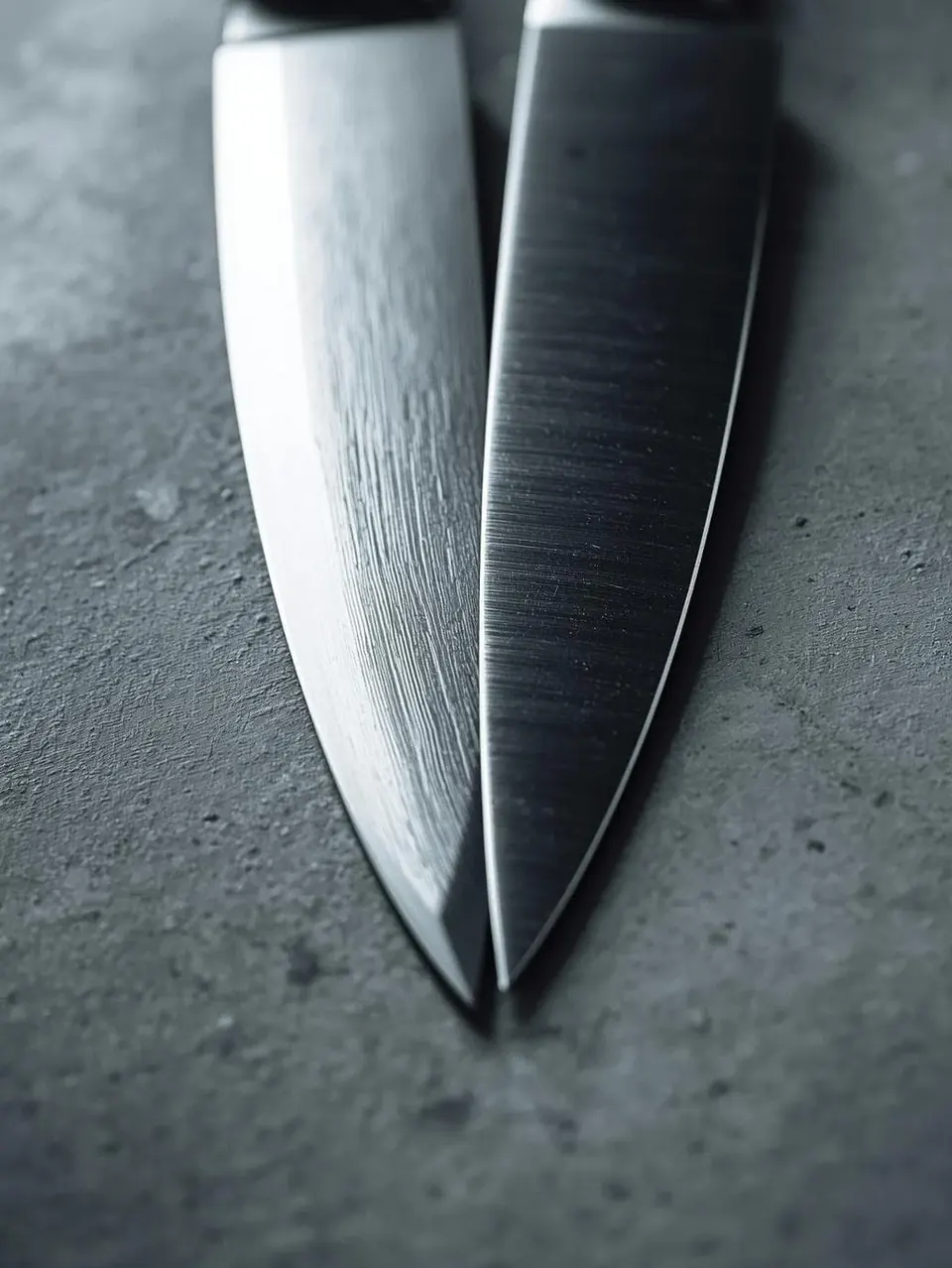
Japanese steel is common in high-quality santokus, and I notice the difference right away. These blades use harder steel that keeps a sharp edge way longer than most Western knives.
My chef knife usually has German or American steel, which is a bit softer but more forgiving. I don't have to baby it, and it bounces back from rough treatment better than my delicate santoku.
Edge retention is different too. My santoku stays razor-sharp for weeks, while my chef knife needs more frequent touch-ups with a honing steel. The chef knife, though, handles accidental bone hits better.
Corrosion resistance depends on the steel, not the knife style. I always dry both knives after using them to avoid rust spots.
Weight and Balance
The weight feels totally different. My chef knife carries most of its weight in the blade, creating a forward balance that helps with chopping.
My santoku feels lighter and more balanced toward the handle. This makes it nimble, especially during long prep sessions. I can work for an hour without my wrist getting tired.
The lighter santoku means I have to use more effort for heavy-duty tasks like breaking down a chicken. My heavier chef knife powers through those jobs with less work from me.
Cutting Techniques and Styles
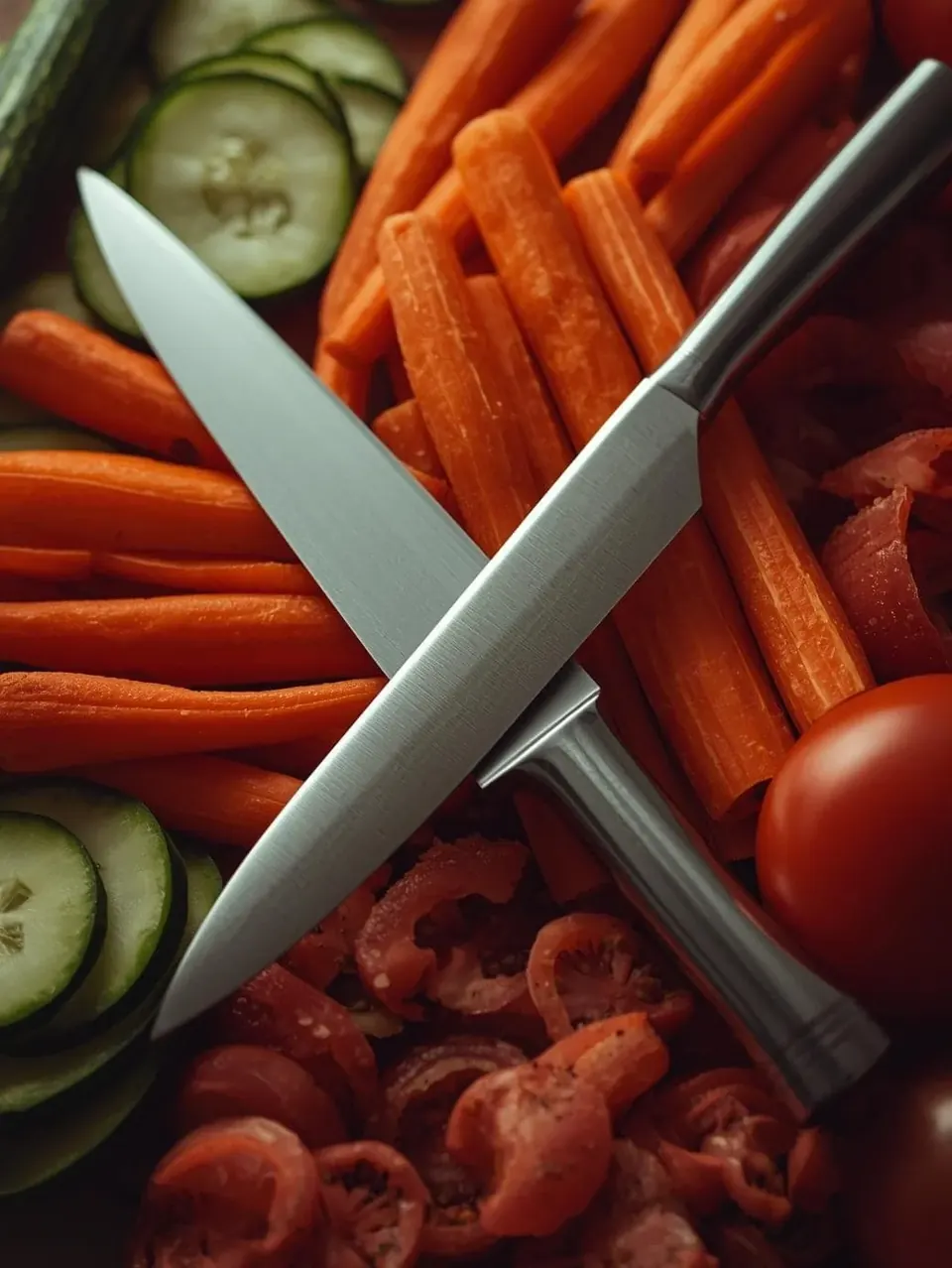
How you move your knife really changes your cooking. Chef's knives are great for a rocking motion, while santokus are built for straight up-and-down cuts that make veggie prep easy.
Rocking Motion vs Push-Cutting
I've spent a ton of time with both knives, and the way you use them is like comparing a dance to a karate move. Chef's knives are made for the rock chop—the tip stays on the board while you rock the blade through ingredients.
The curved belly makes this rocking motion feel natural. I can mince garlic or herbs quickly with a gentle rhythm.
Santoku knives are built for the push cut. You lift the whole blade and bring it straight down. This straight chopping motion gives you awesome control.
I find the push cut perfect for uniform veggie slices. The flat edge of the santoku gives me clean, precise cuts without the rolling that happens with curved blades.
Chopping, Dicing, and Slicing
For chopping veggies, I pick different knives for different jobs. My chef's knife handles big stuff like whole chickens or tough squash. The pointed tip pierces, and the curved edge powers through.
For dicing onions, both knives work but in their own ways. The chef's knife lets me rock through fast. The santoku gives me more control for tiny, neat dice.
Slicing is where the santoku shines. Its wide, flat blade glides through tomatoes without crushing them. I get paper-thin cucumber slices that would be tricky with a rocking motion.
The Japanese style of single downward cuts makes the santoku super efficient for prep. Every slice is clean and deliberate.
Precision and Control
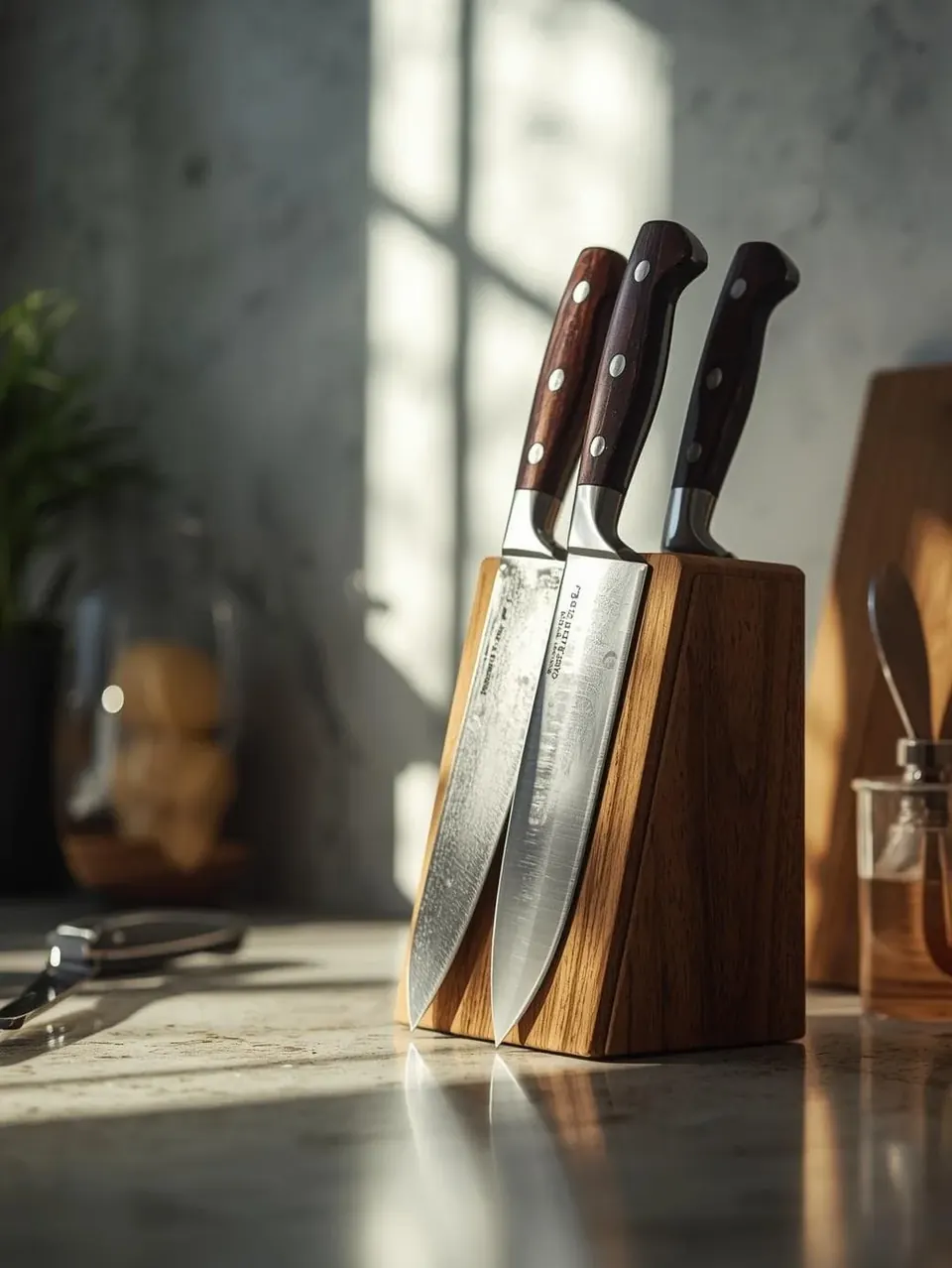
My santoku gives me a level of precision that feels almost surgical. The shorter blade means less knife to control, so my cuts are more accurate. When I'm doing delicate work like brunoise or chiffonade, that control really helps.
The tap-chopping technique is perfect with a santoku. I can tap-tap-tap through herbs or nuts with even pressure.
Chef's knives offer a different kind of control—the control that comes from momentum and a natural rocking motion. The longer blade lets me slice through big ingredients in one go.
Weight matters too. The heavier chef's knife does more of the work, while the lighter santoku needs more deliberate pressure from me.
Granton Edge and Food Release
Lots of santokus have a granton edge—those little dimples along the blade. At first, I wasn't sure they mattered, but they really do help with food release. When I'm slicing potatoes or cheese, food doesn't stick as much.
Those dimples create tiny air pockets that reduce contact between the food and the blade. Less sticking, less frustration.
Some chef's knives have granton edges too, but it's more common on santokus. When I'm prepping a lot, that easy food release saves me time.
The wide, flat santoku blade also helps me scoop up chopped food and move it to the pan. It's a small thing, but it makes cooking smoother.
Best Uses and Food Preparation Tasks
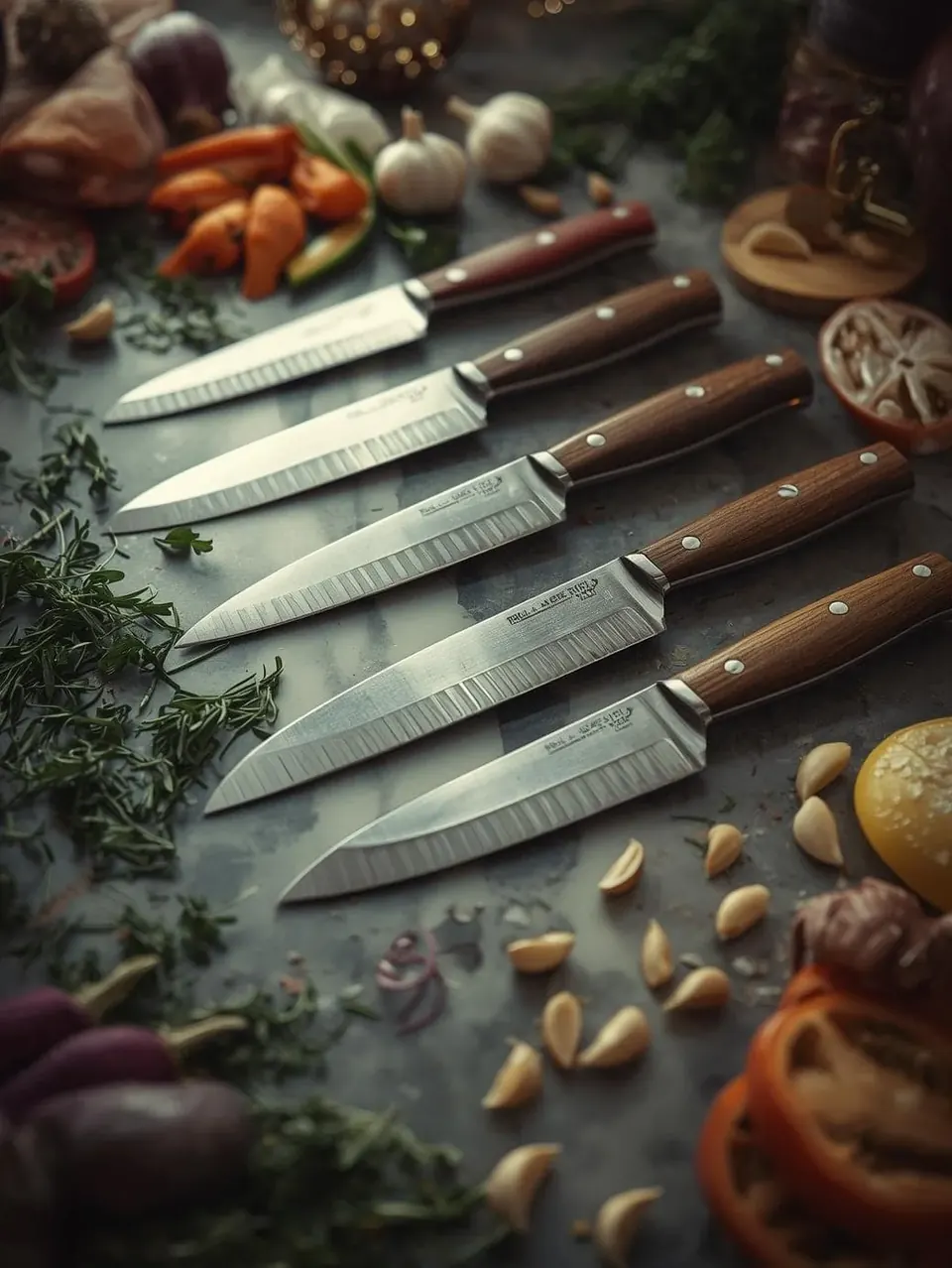
Both knives shine in different kitchen situations, and I've learned that knowing their strengths helps me pick the right tool. The santoku is awesome for precise veggie work and delicate tasks. My chef's knife handles heavier jobs and a wider range of cuts.
Vegetables, Fruits, and Herbs
I grab my santoku almost every time I'm prepping veggies. Its flat blade glides through onions, giving me perfectly even dice every time. The sharp edge makes paper-thin cucumber slices easy, and it handles herbs without bruising them.
For carrots, bell peppers, and zucchini, the santoku's precision can't be beat. The straight edge gives me clean cuts, which helps veggies cook evenly. I love it for stir-fries or salads where looks matter.
My chef's knife is great for bigger veggies. When I'm breaking down a butternut squash or chopping thick cabbage, the curved blade and pointed tip give me the leverage I need. The rocking motion is perfect for rough chopping herbs for stocks or sauces.
Best veggie tasks by knife:
Santoku: Onions, tomatoes, small veggies, precise herb cuts
Chef's knife: Large veggies, rough chopping, tough-skinned produce
Meat, Fish, and Proteins
This is where the differences really show. My chef's knife rules when cutting meat because of its pointed tip and curved blade. I can separate chicken joints, trim fat, and slice through tough cuts.
The pointed tip helps me work around bones and get into tight spots. When I'm butterflying chicken breasts or trimming tenderloin, that tip is key.
My santoku is awesome for fish. The thin, sharp blade glides through salmon and tuna without tearing. For slicing cooked meats like roast beef or turkey, the santoku makes perfect, even slices.
But neither knife is great for really heavy-duty stuff like breaking down whole chickens or cutting through bones. That's when I grab a cleaver or boning knife.
Specialty Tasks and Limitations
I've found some surprises over the years. My santoku crushes garlic—one quick smash and the cloves peel right off. It's also my favorite for moving chopped food from the board to the pan.
The chef's knife is best for rocking cuts and mincing. When I need finely minced garlic or shallots, that curved blade rocks back and forth super smoothly. It's also better for tip work, like scoring meat or making garnishes.
What neither knife does well:
Frozen foods (you'll wreck the blade)
Bones or really hard stuff
Bread (get a serrated knife for that)
Cake decorating
Trying to use either knife for the wrong job just leads to frustration and can wreck your blades.
Comparing Knife Selection: Which Is Right for You?
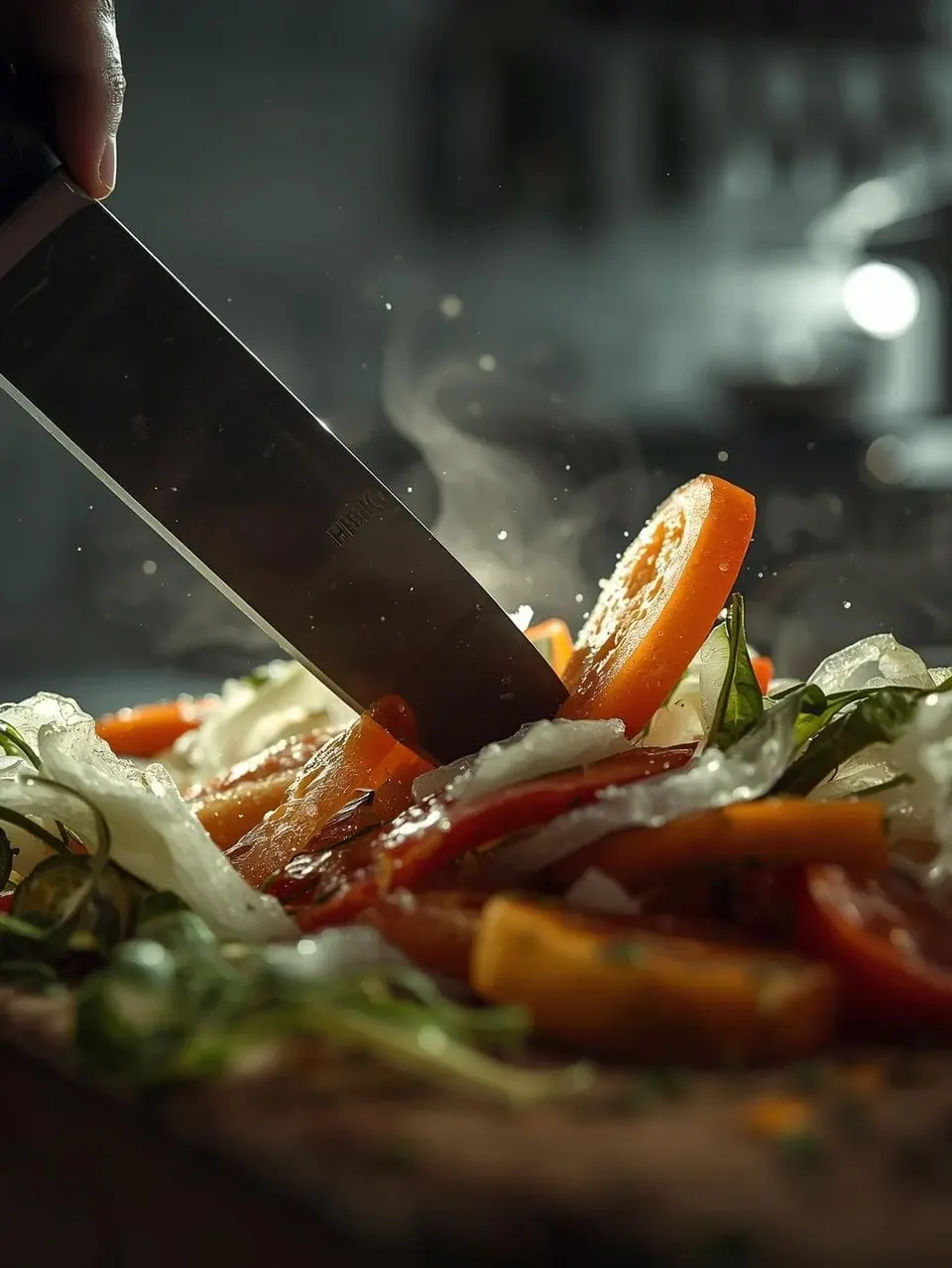
After years of trying both knives in my kitchen, I’ve realized the right choice really depends on your cooking habits, hand size, and what just feels good when you’re prepping food.
Personal preferences and cooking style matter way more than any so-called rule.
Factors to Consider for Home Cooks
Budget matters a lot. Chef’s knives often cost less than santoku knives at the same quality, so they’re a smart pick for beginners.
Kitchen space is something I think about too. Santoku knives take up less room and don’t look as intimidating on small cutting boards.
Here’s what I always tell home cooks to think about:
Maintenance needs – Both knives need sharpening now and then.
Versatility – Chef’s knives can handle more jobs, like breaking down chickens.
Learning curve – Santoku knives are easier to control if you’re just starting out.
Storage options matter more than you’d think. My santoku fits on a magnetic strip because it’s lighter, while chef’s knives need a sturdier spot since they’re longer.
Precision-focused cooks who value clean cuts usually lean toward santoku knives.
Suitability for Different Hands and Skills
Hand size changes everything. I have medium hands and chef’s knives feel great for long prep sessions.
People with smaller hands often find 8-inch chef’s knives awkward. The shorter santoku blade gives them better control and less hand fatigue.
Grip strength is a big deal too. Santoku knives are lighter and don’t tire out your wrist so fast.
Skill level affects your choice:
Beginners – Santoku knives give more control.
Experienced cooks – Chef’s knives are more versatile.
Professional techniques – Chef’s knives rock for rocking motions.
Shorter santoku blades make users feel like they have more control compared to longer chef’s knives.
Choosing Based on Cooking Styles
If you love Asian cuisine, grab a santoku knife. I use mine all the time for cutting veggies and delicate fish.
Western cooking is easier with chef’s knives. The curved blade rocks through herbs and tackles tough stuff like butternut squash.
Here’s how I usually match knives to cooking styles:
Cooking Style Best Choice Why Meal prep Santoku Precise, repetitive cuts Family dinners Chef's knife Handles variety of ingredients Baking Either Both slice fruits and nuts well
Cutting techniques matter most. I love using the rocking motion with my chef’s knife for onions.
Ingredient types in your usual meals can help you decide. Heavy-duty tasks like splitting chicken bones are way easier with a chef’s knife.
Care and Maintenance Tips
Both chef’s knives and santoku knives need regular care to stay sharp. The main thing is keeping the blade sharp with honing and storing your knives safely.
Sharpening and Honing Techniques
Keeping my knives sharp just makes cooking better. Honing steel is your friend—run the blade along it at a 15-20 degree angle, about 5-6 times per side.
Japanese blades need more care since the steel is harder. I sharpen mine every couple of months with a whetstone instead of electric sharpeners.
Edge retention is different for each:
Chef’s knives (German steel): Hold edges well, easy to sharpen.
Santoku knives (Japanese steel): Stay sharp longer but need gentle care.
I test sharpness by slicing paper. If it tears, it’s time to sharpen! Proper care and maintenance keeps knives working for years.
Storage and Longevity
How you store your knife really matters. I never toss mine in a drawer.
Best storage options:
Magnetic knife strips (my favorite)
Knife blocks with slots
Blade guards for drawers
Always hand wash and dry right away. Dishwashers ruin knife edges and handles.
I oil my Japanese blade handles every month to stop them from cracking. Carbon steel needs even more care—wipe dry after cutting tomatoes or anything acidic to avoid rust.
Keep knives away from heat. Big temperature swings can warp handles and mess up the blade.
Frequently Asked Questions
People ask me about these two kitchen workhorses all the time, and honestly, I get why it’s confusing. The differences come down to blade shape, cutting style, and what feels right in your hand.
What are the main differences between a chef's knife and a santoku knife?
The biggest difference is the blade shape. My chef’s knife has a curved edge, perfect for rocking back and forth on the board.
It’s usually 8-10 inches long with a pointed tip. My santoku knife is shorter at 5-7 inches, with a straighter edge and a blunt tip.
The santoku knife design focuses on precision instead of rocking like a chef’s knife. Chef’s knives are heavier and balanced toward the blade, while santoku knives feel lighter and more balanced in my hand.
Can you use a santoku knife for the same tasks as a chef's knife?
Absolutely! I use my santoku for almost all the same jobs as my chef’s knife.
Both chop, slice, and dice like pros. My santoku is better for precision work.
When I want paper-thin cucumber slices or perfect veggie dice, I grab the santoku. For bigger jobs like breaking down chickens or chopping thick veggies, I still reach for my chef’s knife.
The shorter blade on a santoku knife can make users feel like they have more control for detailed work.
What are the unique benefits of using a chef's knife in the kitchen?
My chef’s knife is like my kitchen’s Swiss Army knife. The curved blade lets me rock through herbs and garlic with a rhythm I just love.
The pointed tip is great for things like removing seeds or scoring meat. I like the length for chopping big piles of vegetables.
The weight helps with momentum, so prepping for big meals doesn’t wear me out. After all these years, it honestly feels like an extension of my arm.
Is a santoku knife better suited for chopping vegetables than a chef's knife?
This is where my santoku shines! The straight edge and sharp angle make clean cuts through veggies without crushing them.
I get more control with the santoku when I’m julienning carrots or dicing onions. The blade doesn’t rock, so every cut is clean and deliberate.
Still, my chef’s knife is faster for rough chopping, like for soups. It really depends if I want precision or speed.
How do the blade shapes of chef's knives and santoku knives affect their uses?
The curved blade on my chef’s knife is perfect for rocking. I keep the tip on the board and just move through ingredients in one motion.
My santoku’s straight edge works best for up-and-down chopping. Some newer santoku models have more rounded bottom edges for a little rocking, but it’s not the same.
The pointed tip on my chef’s knife helps with detail work, while the blunt santoku tip keeps things safer but limits some tasks.
What type of knife should a beginner cook consider buying: a chef's knife or a santoku knife?
Honestly, I'd say start with a chef's knife. It's just so versatile.
You can learn all the basic knife skills with it, and those skills work with other knives too. The rocking motion might feel odd at first, but it gets easier.
With a solid 8-inch chef's knife, you can handle almost any kitchen task. Most cooking techniques and how-to videos use a chef's knife anyway.
But hey, if you've got smaller hands or just like more control, maybe a santoku fits better. If you're someone who really cares about neat cuts and easy handling, the santoku could totally win you over from the beginning.