Guide
Best Serving Platters For Thanksgiving
Our honest guide to best serving platters for thanksgiving — what actually matters, what to skip, and how to choose well.

Our honest guide to best serving platters for thanksgiving — what actually matters, what to skip, and how to choose well.
Best Overall
 Best Premium
The best serving platters for Thanksgiving are the ones that match the food, the guest count, and the way you plan to serve. I look for one roomy platter for the turkey, a few side pieces with the right depth, and materials that make sense for heat, weight, and cleanup. If a platter is too small, too heavy, or too shallow for the dish, it tends to make the meal harder instead of prettier.
Thanksgiving serving pieces have a practical job to do. A turkey platter needs enough open surface for sliced meat and resting juices. Sides like mashed potatoes or glazed carrots usually need a rim that helps contain sauces and gives a serving spoon some room to work. Rolls, cookies, and roasted vegetables are easier on a flatter piece that guests can reach without scraping the edges.
Everyday White Porcelain Oval Serving Platter, 16 Inch Large Turkey Platter for Thanksgiving, Dishwasher and Oven Safe D
Shop at Amazon →I like to think about four things before setting the table: shape, depth, material, and quantity. That quick check helps prevent the last-minute shuffle where one side ends up in a mixing bowl and another is awkwardly balanced on a plate.
Size matters more than decorative details. For a turkey, I pay attention to the usable interior space, not the outer dimensions that include a wide border. A large bird or arranged slices need room to sit flat, and a raised rim helps catch juices before they end up on the tablecloth.
Shape changes how food looks and how easily it serves. Oval platters are especially good for poultry, sliced ham, and long vegetables because the shape follows the food naturally. Rectangular platters make efficient use of buffet space and work well for rows of sliced meat or appetizers. Round platters are handy for rolls, desserts, and foods guests will reach for from all sides.
Divided pieces can help with nuts, crackers, cut fruit, or small appetizers, but I would keep them for foods with similar textures and temperatures. Crisp foods soften quickly when they sit beside moist ones. If you want a general sense of the kinds of seasonal divided trays sold for gatherings, this Thanksgiving serving platter roundup shows the format, though the better test is still whether the sections suit your menu.
A deeper rim is helpful for gravy-rich sides, braised vegetables, stuffing, and anything likely to shift as it is passed around the table. A shallower platter is usually better for sliced turkey, roasted vegetables, bread, cookies, and appetizers because guests can serve themselves more cleanly.

Le Creuset Heritage Oval Serving Platter
Shop at lecreuset.com →One common mistake is overfilling a deep platter. It seems efficient, but it leaves no margin for serving utensils and increases the chance of spills. I would rather refill once than send a dish to the table filled to the brim.
Ceramic and porcelain are often the easiest choices for a Thanksgiving table because they work for so many foods and look at home with nearly any place setting. They suit turkey, sliced roasts, composed vegetable dishes, and salads especially well. Lighter food also tends to stand out nicely against pale glazed surfaces.
Porcelain is often thinner and sometimes lighter than heavier ceramic pieces, which can make carrying easier. Ceramic can bring a little more texture and visual warmth, but chips and fine cracks are worth watching for before the holiday.
The biggest care point here is heat. A platter is only oven-safe if the maker says it is. I would not move a cold ceramic or porcelain piece straight into a hot oven, and I would let any heated piece cool gradually afterward. Sudden temperature shifts are a common way to damage serving ware.
Stoneware is a solid choice for hearty sides and baked dishes because it feels stable and substantial on the table. It works well for roasted vegetables, dressing, and other foods you want to serve warm in a piece that does not feel flimsy.
The tradeoff is weight. Once full, stoneware can be quite heavy, so it helps to plan its route from oven or counter to table ahead of time. For larger gatherings, several medium pieces are often easier to manage than one very large stoneware platter.
As with ceramic, I would check the care guidance before heating it. Similar-looking pieces can have very different temperature limits.
Glass platters and serving dishes are useful when the food itself is part of the presentation. Layered salads, desserts, and colorful sides can look especially good in glass because the material stays visually quiet.
The caution with glass is thermal shock. Rapid temperature changes can cause damage, so I keep it away from direct heat changes and handle warmed or chilled pieces with a little extra care. For Thanksgiving, I think glass is most useful for cold or room-temperature dishes unless its care instructions clearly allow more.
Metal platters are practical for buffets, chilled dishes, and situations where durability matters. They are often a good fit for appetizers, cold seafood, or foods that benefit from a sturdy, lighter-feeling surface than stoneware.
I would be cautious with acidic foods unless the piece is lined or specifically intended for food service of that kind. Metal also varies widely in finish and maintenance needs, so the care label matters here more than it does with simpler glazed pieces.
Wood is a natural fit for bread, cheese, fruit, cured meats, and other dry appetizers. It brings warmth to the table and works especially well on a sideboard or appetizer station. I would avoid letting wet or saucy foods sit on it for long stretches, and I would not leave it soaking in water after the meal.
Melamine is useful when low weight and durability matter most, like outdoor meals, children’s tables, or busy appetizer service. It handles bumps well, but it is not for ovens, broilers, or direct heat. For Thanksgiving, I think of melamine as support serveware, not the piece for the hottest dishes.
For a small Thanksgiving, I would plan on one turkey platter, two or three serving dishes for sides, a bowl or boat for gravy, a bowl for cranberry sauce, one bread piece, one appetizer platter, and a separate dish for dessert. That is usually enough to keep the meal organized without crowding the table.
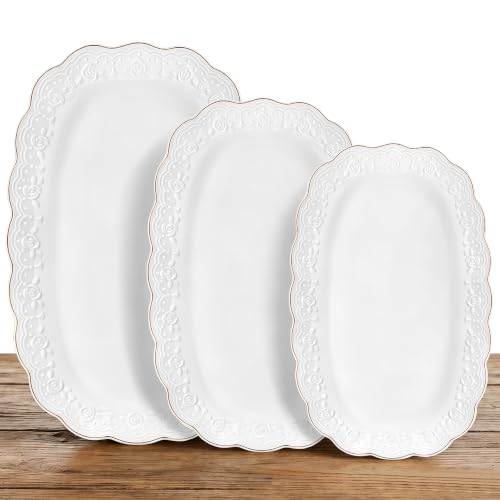
Kassel Ceramic Serving Platter Set | 14”/12”/10” Oval Serving Trays for Entertaining at Parties and Weddings | Oven Safe
Shop at Amazon →For 12 to 20 guests, the count usually goes up more because of flow than because of food volume. It often helps to split popular sides between two platters so guests at both ends of the table can reach them. If you are serving buffet-style, add extra bowls and trays because every dish needs its own place in line, plus some room for replenishing. This buffet serveware checklist is a useful reminder that layout and traffic matter as much as the dishes themselves.
I also count the serving tools. A platter without a spoon, fork, ladle, or tongs tends to cause more confusion than a missing platter.
The turkey should sit somewhere stable, with enough space around it for carving or serving. If you carve before it reaches the table, arranging slices in overlapping rows keeps it neat and easier to portion. I like the platter to stay mostly clean, with extra juices moved to gravy instead of pooling around the meat.
Hot sides should be grouped together on protected surfaces, and cold dishes should have their own area if possible. That keeps movement simpler and helps preserve temperature a bit longer. I would not place hot platters under low decorations or too close to glasses that can be knocked over during passing.
Smaller platters are often the better choice for appetizers, rolls, and desserts. They let guests serve themselves without reaching across the center of the meal, and they are easier to clear when the next course is ready.
A good turkey platter is long and sturdy, with enough clear interior space for the bird or sliced meat to lie flat. A raised rim is helpful because it catches carving juices and keeps the table cleaner.
For 20 guests, I would plan on one large turkey platter, several pieces for sides, separate vessels for gravy and cranberry sauce, a bread platter or basket, an appetizer piece, and dedicated dessert serveware. For a buffet or a long table, duplicates for popular sides are usually worth having.
A serving platter is meant to hold and present food at the table. A serving tray is more about transport and may have handles or higher sides designed for carrying drinks or dishes from kitchen to table.
Only if the maker says they are oven-safe. I would always check the temperature guidance and avoid moving a cold ceramic piece directly into a hot oven.
Turkey, sliced roasts, roasted vegetables, stuffing, bread, appetizers, fruit, cheese, and desserts all work well on platters. The key is matching a shallow or deeper shape to the texture of the dish.
The best serving platters for Thanksgiving are not necessarily the fanciest ones. They are the pieces that fit your food, hold up to the heat or weight involved, and make passing, carving, and serving feel easy.
If I were narrowing it down, I would prioritize one generous turkey platter, a few dependable side pieces with the right depth, and enough extras to keep the table calm instead of crowded.

Paige Gilmore
Founder of Stripes & Willows — recipe creator, food photographer and stylist. Every guide is written to make honest, useful kitchen decisions easier.
More about Stripes & Willows →This page contains affiliate links. If you buy through them, Stripes & Willows may earn a commission at no extra cost to you — it never affects what we recommend.