Guide
Best Loaf Pans For Fall Baking
Our honest guide to best loaf pans for fall baking — what actually matters, what to skip, and how to choose well.
Our honest guide to best loaf pans for fall baking — what actually matters, what to skip, and how to choose well.
 Best Overall
 Best Value
For most fall baking, the best loaf pan is a light-colored metal pan in the size your recipe calls for. It gives pumpkin bread, apple loaf, zucchini bread, and other quick breads the most reliable balance of browning, structure, and easy release. If I want decorative shapes for gifting or a more dramatic table loaf, I save those pans for sturdier batters and pay closer attention to greasing, fill level, and doneness.
The pan matters more than it sometimes gets credit for. Material affects how fast the batter heats and how dark the crust gets. Shape affects how easily a loaf releases and how neatly it slices. Size changes batter depth, which changes baking time. A good fall loaf pan is not just about appearance; it is about getting an evenly baked center without overbrowned edges.
If I were picking one pan for fall baking, I would choose light-colored aluminum or aluminized steel. These pans heat efficiently and tend to brown quick breads evenly without pushing the edges too far before the center is done. That balance is exactly what I want for batters made with pumpkin purée, applesauce, grated apple, mashed banana, or other moist ingredients.
OXO Good Grips Non-Stick Pro Ceramic Coated Metal Bakeware 1Lb Loaf Pan – Storm Blue
Shop at Amazon →This is also the easiest material for everyday use. Straight-sided metal pans release more predictably than detailed ones, and they make neat, even slices for breakfast breads, snack cakes, and savory loaves. If you are unsure what size your recipe is written for, a simple loaf pan size guide is useful because similar-looking pans can hold different amounts.
The most common mistake with metal loaf pans is overfilling them. For most quick breads, filling the pan about two-thirds full is a safe place to start. A batter that sits too high in the pan can dome too aggressively, spill over, or leave the center underbaked while the edges dry out.
Another easy mistake is assuming all metal pans bake the same. Darker finishes brown faster, especially around the sides. If I move a recipe from a light pan to a dark one, I start checking earlier rather than changing the temperature right away.
Decorative loaf pans have real appeal in fall. Leaf patterns, harvest motifs, and other detailed shapes can make a simple spice loaf feel more finished. But these pans are less forgiving than plain metal. They are best for firm quick breads and loaf cakes that can hold a pattern when turned out.
What makes them trickier is not just the shape, but the weight and detail. Heavy pans retain heat, so the loaf can continue to set after it comes out of the oven. They also have more grooves and corners where batter can stick. A moist pumpkin loaf is often where this goes wrong: one missed crevice, and the design tears during unmolding.
For this style of pan, careful preparation matters. I like a thin, even layer of butter or shortening worked into every line and corner, followed by flour or another recipe-appropriate dusting if the batter allows it. Too much grease can pool and blur the detail; too little leaves dry spots that grab the loaf.
Parchment is helpful in a plain loaf pan, but not usually here. In a decorative pan, paper cannot sit flush against carved shapes, so it can interfere with both the finish and the release. Greasing thoroughly is the better approach.
Cooling matters too. Let the loaf rest long enough to firm up, but not so long that steam makes it damp in the pan. If it resists, loosen around the edges gently and turn it out in one steady motion instead of tugging at the loaf.
Ceramic and stoneware loaf pans can work well for recipes where you want steady heat and a substantial crust, but they usually need more attention to timing. These materials heat gradually and hold warmth for a long time, which can be helpful for even baking once they are fully hot, but the center of a loaf may take longer to set.
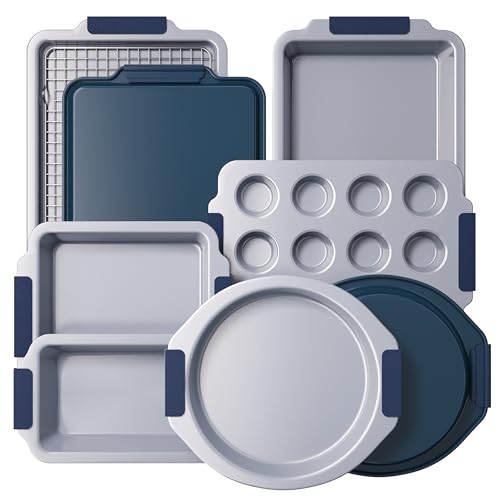
BRONYPRO Ceramic Bakeware Set
Shop at Amazon →This is the pan type that rewards patience. If the top looks done but the middle still seems soft, the answer is usually a little more baking time, not a rushed unmolding. Quick breads should feel springy in the center and show moist crumbs rather than wet batter when tested with a skewer.
Because ceramic and stoneware vary, I keep an eye on the care guidance that comes with the pan and avoid sudden temperature changes. Setting a hot ceramic pan onto a cool wet surface or running it under cold water can shorten its life.
If you are converting a recipe from one pan shape or size to another, a pan converter can help compare capacities so you are not guessing at batter depth.
Silicone loaf molds are useful for novelty shapes and easy release, but they do not bake quite like metal. In my kitchen, the trade-off is simple: easier unmolding, softer and paler edges. If you like a well-defined crust on pumpkin or apple bread, silicone may not give the same result.
The other thing to watch is stability. A filled silicone mold needs to sit on a rigid baking sheet before it goes into the oven. Otherwise, carrying it safely becomes awkward, and the batter can shift.
Because browning is lighter in silicone, visual cues are less helpful. I rely more on a skewer test and the loaf’s springiness in the center than on crust color alone.
Pan size is not a small detail. A narrow pan makes a taller loaf and usually needs more time. A wider pan creates a lower loaf that sets faster. Mini loaf pans bake faster still, so they are useful for gifting, but they need earlier doneness checks and even batter distribution if you want matching results.
Amazon Basics Rectangular Nonstick Bread Loaf Pan for Baking Meatloaf with Even Heat Distribution, 9.5 x 5 Inch, Gray, S
Shop at Amazon →If I divide one batch among mini pans, I portion the batter as evenly as possible and begin checking at about half the original baking time. That does not mean they will be done exactly then, only that mini loaves move quickly once the center starts setting.
The shape matters too. Straight sides are best for sandwich-style slicing and soft quick breads. Decorative cavities are better reserved for cakes and sturdy batters that can hold detail.
Most loaf pan frustration comes down to two things: the loaf sticks, or it comes out before it is fully baked. Both are preventable.
A practical guide to getting bread out of a loaf pan makes the same point I come back to every fall: patience is part of the method. A rushed turn-out is often what breaks an otherwise good loaf.
If you want another useful doneness check, many quick breads finish around 200 to 205°F in the center. That is especially handy with pumpkin and apple loaves, where a moist crumb can make visual cues less clear. General differences in browning and heat behavior between pan materials are also worth understanding, and this comparison of loaf pan materials gives a clear overview.
Good care is fairly simple, and it matters most with nonstick coatings and detailed interiors. I let pans cool before washing, use mild soap and a soft sponge, and avoid abrasive scrubbers that can wear down finishes or flatten decorative detail.
For baked-on residue, soaking in warm soapy water usually does more good than scraping. A nylon brush or wooden tool is safer than anything sharp. With uncoated steel, drying thoroughly matters because moisture can lead to rust. If pans are stacked, a cloth or paper layer between them helps prevent scuffing.
The common mistake here is thermal shock: taking a hot pan straight to cold water. That can warp metal and stress ceramic or stoneware. Let the pan cool first.
Light-colored aluminum or aluminized steel is the best all-purpose choice for most fall quick breads. It gives balanced browning, reliable structure, and straightforward release.
Usually, no meaningful one. The terms are often used interchangeably. What matters more is the pan’s capacity, shape, and material.
Usually because a groove was missed during greasing, the batter was especially moist, or the loaf was turned out before it had time to firm up. Detailed pans need thorough prep and a little patience.
Mini loaves bake faster because the batter is shallower and divided into smaller portions. Start checking them much earlier than the full-size recipe suggests, often around halfway through the original baking time.
A light metal loaf pan is still the best choice for dependable fall baking, especially for pumpkin, apple, and spice breads. Decorative, ceramic, and silicone pans all have their place, but they ask for a little more attention. Match the pan to the recipe, keep the fill level modest, and let the loaf cool just enough before turning it out.

Paige Gilmore
Founder of Stripes & Willows — recipe creator, food photographer and stylist. Every guide is written to make honest, useful kitchen decisions easier.
More about Stripes & Willows →This page contains affiliate links. If you buy through them, Stripes & Willows may earn a commission at no extra cost to you — it never affects what we recommend.


