Guide
Best Bread Baskets For Thanksgiving
Our honest guide to best bread baskets for thanksgiving — what actually matters, what to skip, and how to choose well.

Our honest guide to best bread baskets for thanksgiving — what actually matters, what to skip, and how to choose well.
Best Premium
 Also Great
The best bread baskets for Thanksgiving keep things simple: serve one soft, crowd-friendly roll plus one second bread with a different texture, like a biscuit, cornbread square, or savory loaf. That gives guests something good for gravy, something with contrast, and enough variety to feel thoughtful without turning the bread basket into its own side dish.
I think the most useful Thanksgiving bread basket starts with function. Bread should support the meal, not compete with stuffing, mashed potatoes, and all the richer sides already on the table. For most menus, that means a soft dinner roll first, then one contrasting option.
Soft dinner rolls are the easiest win. They work with turkey and gravy, they tear neatly at the table, and they pull their weight again the next day for leftovers. Parker House-style rolls, potato rolls, and other tender yeast rolls all fit that role well. If I were picking just one category, this would be it.
Then I like to add one second bread that changes the texture. Biscuits bring flaky layers and a buttery feel. Cornbread adds a crumbly bite and a little sweetness, which can be especially good next to savory dressing and roast turkey. If you want broader recipe inspiration, Epicurious has a solid roundup of Thanksgiving rolls and bread recipes that reflects the kinds of breads people actually want on this table.
A seasonal loaf can also work, but I’d keep it restrained. Herb breads with rosemary, thyme, sage, roasted garlic, or cheese feel more naturally at home with Thanksgiving than anything too sweet. Pumpkin bread can be lovely, but in small slices and only if the rest of the menu is not already leaning heavily on sweet potatoes, cranberry sauce, and maple flavors.
The common mistake here is offering too many heavy or sweet breads at once. A basket filled with honey rolls, pumpkin bread, and dense whole-grain slices can feel tiring before the meal really gets going. Bread should round out the plate, not weigh it down.
For a full Thanksgiving meal, I’d plan on one to two small rolls or bread portions per person, counting all varieties together. That usually lands in the right place because people already have a lot on their plates, and bread is rarely the main event.
A useful starting point is about 1.5 rolls per guest, then adjusting from there. If you’re serving both rolls and cornbread, think in mixed portions rather than full servings of each. For six guests, for example, six rolls and six small cornbread squares often feels more generous and more sensible than a dozen of each. General bread portion guidance backs up that one-to-two range.
I’d scale down a bit for young children, who often take half a roll or skip bread altogether. I’d scale up if you know people love making turkey sandwiches from leftovers, or if bread and butter will be on the table before the meal starts.
Two bread varieties are enough for most gatherings. A third starts to make sense only for a larger group or when one option needs to be gluten-free or dairy-free. More than that, and the basket can start to feel cluttered instead of welcoming.
The best Thanksgiving bread baskets have some contrast built in. I like one soft, neutral bread and one second option with a little more personality. That could mean flaky biscuits, a rustic herbed loaf, or cornbread cut into modest pieces.
CASADEMA Bread Warmer Basket with Warming Stone (Large Oval 12 x 9) - Bundled w/Linen Bread Bag & Bread/Sugar Saver - Br
Shop at Amazon →Texture matters more than people sometimes realize. Tender rolls are especially good with gravy because they absorb without falling apart. Biscuits pair nicely with turkey and vegetables. A firmer loaf can be useful if you know people will reach for bread again with leftovers.
What usually throws a basket off balance is density. If the table already includes stuffing, mashed potatoes, sweet potatoes, and a casserole or two, all-heavy bread choices can make the meal feel too starchy. One denser or grainier option is enough.
I also think it helps to keep sweet-leaning breads in check. If your menu already has sweet sides, I’d stop at one bread with noticeable sweetness. Cornbread is usually fine because the portions are small and the sweetness is mild. A sweet quick bread belongs more naturally with coffee later unless you’re serving it very intentionally in thin slices.
If you’re accommodating dietary needs, keep that bread clearly separate. Use a dedicated plate or small basket for gluten-free options and give it its own serving utensil if needed. That keeps things easy and comfortable for guests without making it a production. Serious Eats has a helpful collection of Thanksgiving breads suited to gravy and leftovers that can also help when you’re trying to balance textures and uses.
A good bread basket is as much about handling as it is about the bread itself. Warm bread is lovely, but trapped steam is not. I line the basket with a clean cotton or linen cloth so the bread stays warm while still breathing a little.
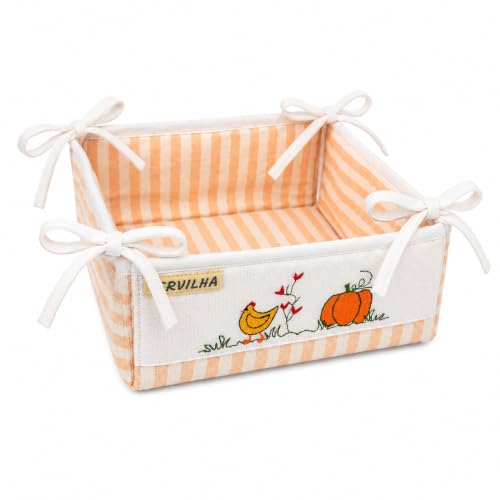
Ervilha Countryside Harvest Embroidered Bread Basket, Made in Portugal, Collapsible Tie-Corner Fabric Basket, Cotton Ble
Shop at Amazon →That cloth liner does a few jobs at once: it cushions soft rolls, catches crumbs, and helps prevent condensation from making everything damp. A tightly closed container is the wrong move here, especially for warm bread, because it softens crusts and can make quick breads sticky.
For serving, small rolls and biscuits are easiest left whole. Firm loaves are better sliced shortly before dinner so no one needs to wrestle with a bread knife at the table. If you want to include cornbread, I’d cut it into smaller squares rather than large wedges. That keeps portions realistic on an already full plate.
I also prefer filling the basket in smaller batches instead of piling in everything at once. Bread stays fresher, the basket is easier to pass, and the table looks tidier. If more is needed, a second warm batch can come out from the kitchen without much fuss.
Thanksgiving is not the day I want bread to create extra stress. Most rolls, biscuits, cornbread, and many quick breads can be made ahead, cooled completely, wrapped well, and frozen. That takes real pressure off the oven schedule.
The key is freezing bread at its best, not after it has already started drying out. Once thawed, I’d reheat gently at 300°F under loose foil until warmed through. That protects the crust and keeps the interior from drying out before the center is hot. If you want a little texture back on the outside, uncover briefly at the end.
Cornbread needs a lighter touch because it dries faster than rolls. Quick breads also do better when cut only as needed and kept covered until serving. If you want a planning framework, this make-ahead Thanksgiving timeline is useful for thinking through when to bake, freeze, thaw, and reheat.
One common mistake is reheating everything at high heat in one large batch. That tends to harden the outside and leave the center uneven. Smaller batches are easier to control and easier to replenish at the table.
Leftovers are worth planning for too. Rolls are ideal for turkey sliders or next-day sandwiches. More rustic bread can be cubed and dried for stuffing. I’d keep any sweet breads separate from savory leftovers so they don’t change the flavor of what comes next.
Soft dinner rolls are the most versatile choice because they work with gravy and leftovers. I’d add one second option, like biscuits, cornbread, or a savory herb loaf, for contrast.
Plan on one to two small portions per guest, with about 1.5 as a reliable starting point. If you’re serving more than one kind of bread, count the total portions across all the breads rather than making a full amount of each.
Yes. Rolls freeze well when baked, cooled completely, and wrapped tightly. Thaw them covered and reheat gently at 300°F under loose foil before serving.
Line the basket with a clean cotton or linen cloth, add the warm bread close to serving time, and fold the cloth loosely over the top. That keeps the bread warm without trapping too much steam.
Yes, if the portions stay modest. Rolls and cornbread make a good pair because one is soft and neutral while the other is crumbly and a little sweeter.
The best bread baskets for Thanksgiving are balanced, not overbuilt: one soft roll, one contrasting bread, and portions that fit a full holiday plate. Keep the bread warm in a cloth-lined basket, reheat gently, and let the basket support the meal instead of stealing focus.

Paige Gilmore
Founder of Stripes & Willows — recipe creator, food photographer and stylist. Every guide is written to make honest, useful kitchen decisions easier.
More about Stripes & Willows →This page contains affiliate links. If you buy through them, Stripes & Willows may earn a commission at no extra cost to you — it never affects what we recommend.