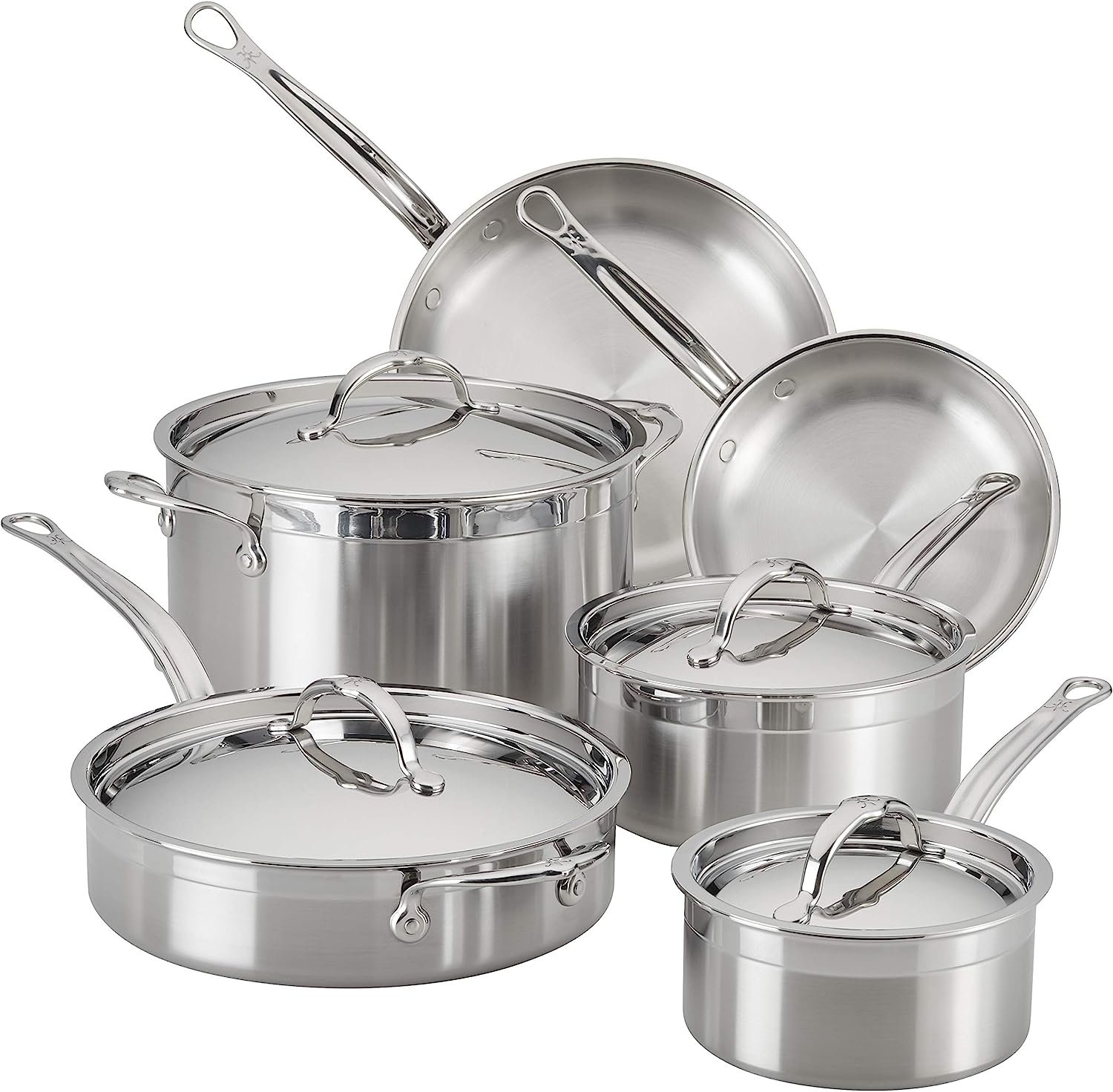
If I had to give one clear answer, it’s this: a tri-ply stainless steel skillet is the better long-term all-purpose pan, while a ceramic-coated skillet is the easier pan for delicate, lower-heat cooking. I reach for stainless when I want browning, searing, pan sauces, and a piece of cookware that can handle years of regular use. Ceramic makes eggs, fish, and quick weeknight meals feel simpler, but it asks for gentler heat and more careful upkeep.
How they cook differently
The biggest difference is not just the surface, but how each pan wants to be used. Ceramic-coated skillets are built around easy release. They tend to heat quickly, often because the body is aluminum, and they do their best work over medium or medium-low heat. That makes them especially handy for scrambled eggs, pancakes, flaky fish, and vegetables that I don’t want to fight off the pan.
Tri-ply stainless steel is more technique-driven. The stainless cooking surface itself is not as naturally slick, but the layered construction helps it heat more evenly and hold useful heat well. Once properly preheated, it handles cold food better, keeps its temperature steadier, and gives me the browning I want on chicken, mushrooms, chops, or anything else that benefits from real color.
This is also where fond matters. Stainless steel is the better pan if I want those browned bits left behind after searing, because that’s the base of a quick pan sauce. Ceramic can still brown food, but it is not the pan I’d choose for aggressive searing or deeply caramelized residue.
Where ceramic shines
Ceramic-coated skillets are appealing for a reason: they make fragile foods feel less fussy. A little oil or butter, moderate heat, and foods usually release cleanly. For a lot of home cooks, that ease is more important than restaurant-style searing power.
I think ceramic makes the most sense for cooks who mostly prepare lighter meals and want straightforward cleanup. It is also usually lighter in the hand than tri-ply stainless, which can matter if you cook often or prefer a less hefty pan.
The trade-off is that ceramic’s easy release is not permanent. As this overview of ceramic and stainless cookware notes, ceramic nonstick relies on a coating, and coatings change with use. High heat, abrasive cleaning, residue from cooking sprays, and frequent dishwasher cycles can all make the surface less slick over time.
Where stainless steel wins
Tri-ply stainless is the more versatile cooking tool. It works for searing, sautéing, reducing sauces, cooking acidic ingredients, and finishing dishes in the oven. It also tends to be induction compatible, while ceramic-coated pans vary depending on the base.
For me, stainless is the pan that rewards good habits instead of depending on a coating. If food sticks, the answer is usually in the preheat, the oil timing, or trying to turn the food too soon. Once a crust forms, many foods release naturally.
It is also the more durable choice. A stainless skillet can pick up scratches, rainbow discoloration, or cooked-on stains and still remain a very useful pan. That makes it a practical workhorse if I want one skillet that can handle more demanding cooking without worrying much about wearing out the surface.
Heat, oven use, and everyday durability
If high heat is part of your routine, stainless steel is the safer bet. Tri-ply stainless generally has good heat retention and is well suited to stronger stovetop heat and oven use. Ceramic-coated skillets usually have more limited heat tolerance, especially once handles and coating limits are factored in.
I never assume “oven safe” means the same thing for every pan. With ceramic-coated cookware, the metal body may tolerate more heat than the coating or handle does. Broiler use is an even bigger point to check carefully. Stainless steel usually gives more flexibility here, though it still depends on the full pan construction.
Acidic foods are not a problem for either one in normal cooking. Tomato sauce, wine, vinegar, and lemon all work well in stainless steel, and ceramic coating creates a barrier over the underlying metal. I still wouldn’t store leftovers in the pan for long stretches, but for cooking, both are practical choices.
Maintenance and common mistakes
Both pans are fairly manageable day to day, but they respond to different kinds of care. Stainless steel is easier in the sense that it does not depend on preserving a delicate coating. Ceramic is easy too, but only if I stay within its lane.
Ceramic-coated skillet care
The biggest mistakes with ceramic are overheating an empty pan, using high heat for routine cooking, scrubbing with abrasive pads, and relying on aerosol cooking sprays that leave sticky buildup. Once that residue bakes on, the pan often starts to feel less nonstick even if the coating still looks fine.
I treat ceramic as a gentle-use pan: moderate heat, soft sponge, mild soap, and a little patience with soaking if something sticks. Hand-washing is the safer habit here. Even if a manufacturer allows more, repeated dishwasher cleaning tends to be harder on coated surfaces.
Stainless steel care
Stainless is more forgiving, but it still benefits from a few good habits. I let the pan preheat, add oil once it’s hot enough, and avoid moving food too early. For cleanup, a soak or a short simmer with water helps loosen stuck bits. If stains or cooked-on residue remain, a nonabrasive cleaner usually handles it.
One common mistake is judging stainless too quickly. If you treat it like a nonstick pan, it can feel frustrating. If you let it heat properly and give the food time to release on its own, it becomes much easier to use.
Another mistake with both materials is thermal shock. Pouring cold water into a very hot pan is tough on cookware. I let pans cool down first before washing.
Which one makes sense for your kitchen?
If your usual meals are eggs in the morning, quick vegetables at lunch, and fish or reheated leftovers at dinner, ceramic-coated cookware may fit your life better. It is lighter, simpler, and friendlier for low-stress cooking.
If you cook meat often, like to brown mushrooms deeply, make pan sauces, or want one skillet that can move from stovetop to oven with fewer limitations, tri-ply stainless steel is the stronger choice. It has a steeper learning curve, but more range.
For many kitchens, the most practical answer is not choosing one forever. It is using each for the jobs it handles best. I like ceramic for sticky, delicate foods and stainless for everything that needs heat, color, or durability. That split also helps prevent the classic mistake of trying to force a coated pan to do stainless steel work.
This lines up with broader cookware guidance from sources like BestReviews on stainless and ceramic cookware and Prudent Reviews’ comparison of ceramic and stainless steel cookware, both of which point to the same basic pattern: ceramic is easier, stainless is more capable.
FAQ
Which is better for everyday cooking, ceramic or stainless steel?
For easy everyday cooking at moderate heat, ceramic is usually simpler. For a wider range of tasks, including browning, searing, oven finishing, and sauces, tri-ply stainless steel is better.
Does ceramic cookware lose its nonstick performance over time?
Yes. Ceramic-coated pans usually become less slick with use, especially if they are overheated, cleaned aggressively, or used with cooking sprays that leave residue.
Why do so many cooks prefer stainless steel?
Because it handles high heat well, builds fond for sauces, and stays useful for a long time. It is less about instant convenience and more about versatility and durability.
Which skillet is easier to clean?
Ceramic is usually easier right after cooking because food releases more readily. Stainless may need soaking or a little extra cleanup, but it is less sensitive to wear over time.
The Bottom Line
If I’m choosing one skillet to do the most jobs well over the long haul, I’d choose tri-ply stainless steel. If I want the easiest path to eggs, fish, and gentle everyday cooking, ceramic-coated is the friendlier option.
In a busy home kitchen, the smartest setup is often both: ceramic for easy release, stainless for everything that needs real heat and staying power.