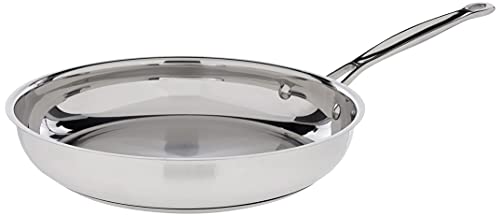
If I had to choose one skillet for most home cooks, I’d pick tri-ply stainless steel. It’s easier to live with, handles acidic ingredients without complaint, and moves comfortably from searing to sauces to weeknight odds and ends. Carbon steel is excellent too, especially for high-heat cooking and foods that benefit from a seasoned surface, but it asks for more care in return.
How They Cook Differently
The biggest difference is not that one is “good” and the other is “bad.” It’s that they reward different habits. Stainless steel is steady, nonreactive, and practical. Carbon steel is responsive, naturally slick once seasoned, and a little more demanding.
Tri-ply stainless steel gets its appeal from construction as much as material. Stainless alone is not a great heat conductor, so the layered build is what helps it heat more evenly and hold a stable temperature. Carbon steel also has good heat retention, but it tends to react faster when I raise or lower the burner. That makes it useful when I want quick browning or more immediate control.
In day-to-day cooking, that means stainless steel feels especially comfortable for chicken cutlets, vegetables, pan sauces, and anything involving wine, tomatoes, lemon, or vinegar. Carbon steel shines with eggs, seared meats, fried rice, sautéed vegetables, and other drier, hotter cooking.
Stainless Steel’s Strength: Flexibility
What I like most about tri-ply stainless steel is that it doesn’t force me to think about the pan before I think about dinner. I can sear in it, deglaze it, simmer something acidic, wash it with soap, and use it again tomorrow.
It’s also a strong choice when I want fond. The browned bits left behind after searing are easy to see on stainless steel, which makes it simpler to judge color and build a pan sauce without guessing. That’s one reason professional kitchens keep so much stainless in rotation. A useful overview from Prudent Reviews makes the same point: construction and intended use matter more than broad claims about one metal beating the other.
The trade-off is sticking. Stainless steel is not naturally nonstick, so it rewards better preheating and a little patience. If food clings at first, that doesn’t always mean I did something wrong. Proteins often release when they’ve browned enough. The common mistake is trying to move food too early.
Carbon Steel’s Strength: High Heat and Seasoned Release
Carbon steel earns its place by doing a few things very well. It heats relatively quickly, responds fast to burner changes, and develops a seasoned patina that can make eggs, fish, and other delicate foods easier to cook once the surface is built up properly.
That seasoned surface is also the catch. Carbon steel needs it. Without seasoning and regular use, it can be sticky, prone to rust, and less pleasant to cook on. With seasoning, it becomes much more capable. The pan darkens over time, and that is usually part of the process rather than a flaw.
It’s also reactive with acidic food. That matters more than many people expect. A quick splash of lemon at the end of cooking is one thing; simmering tomato sauce or reducing wine for a while is another. Acid can strip seasoning and sometimes affect flavor. Made In’s comparison explains this divide well: carbon steel is great for seasoned, high-heat work, while stainless is broader in ingredient compatibility.
Which Is Better for Searing?
Both are good searing pans, so this usually comes down to what happens after the sear. If I want to brown meat and then make a pan sauce, stainless steel is usually the better tool. I can build fond, add shallots or garlic, deglaze with stock or wine, and finish without worrying about the pan surface.
If I want a hard sear with quick heat response and no sauce in the pan, carbon steel makes a lot of sense. It’s especially appealing for steaks, chops, burgers, and vegetables cooked hot and fast.
The mistake with both pans is using too much heat. People often crank the burner to maximum, then end up with scorched oil and uneven browning. Medium to medium-high preheating is usually more useful than aggressive heat for its own sake.
Eggs, Fish, and Delicate Foods
This is where carbon steel usually feels easier. A well-seasoned pan with a small amount of fat can release fried eggs and delicate fish much more readily than stainless steel. That doesn’t mean stainless can’t do it. It can. It just asks for more exact timing.
With stainless, I want the pan preheated, the fat added at the right moment, and the heat adjusted before the food goes in. Too cool and food bonds to the surface; too hot and the exterior sets too fast. With carbon steel, the margin is often a little friendlier once the seasoning is established.
Care and Maintenance
This is the category that separates them most clearly. Tri-ply stainless steel is easy. It’s generally dishwasher safe, though hand-washing is still nice if I want to keep the finish looking cleaner. It can also handle more assertive cleanup methods, including deglazing stuck-on bits with water or stock while the pan is still warm.
Carbon steel needs a gentler routine. I would not soak it or put it in the dishwasher. After washing, it should be dried promptly and, if needed, wiped with a very thin film of oil to help protect the surface. A practical guide from iMesh Kitchenware mirrors the standard advice here: brief washing, immediate drying, and ongoing attention to seasoning.
The other maintenance point is emotional as much as practical: carbon steel tends to look used. Its patina can be blotchy, dark, uneven, and still completely normal. Stainless steel, by contrast, may discolor or show water spots, but it stays visually familiar to most cooks.
Cooktop and Oven Compatibility
Both materials are typically induction compatible and oven safe, which makes them versatile in a modern kitchen. The caveat is always to check the specific pan’s handle and manufacturer guidance before high-heat oven use.
On glass or electric cooktops, both can work well, but carbon steel can be less forgiving if heated too abruptly or slid around roughly. On gas, carbon steel’s quick response is especially noticeable. Stainless steel feels a little steadier across different burner styles, largely because of its clad construction.
Common Mistakes to Avoid
- Using stainless steel without enough preheat, then assuming the pan is the problem.
- Cooking acidic sauces in carbon steel for too long and stripping the seasoning.
- Overheating either pan until the oil smokes aggressively before food is added.
- Soaking carbon steel or leaving it wet, which invites rust.
- Expecting carbon steel to look perfectly even and polished after seasoning.
Who Should Choose Which?
If I cook a broad mix of foods and want one dependable skillet, tri-ply stainless steel is the safer pick. It has good heat retention, easy maintenance, and none of the seasoning upkeep that can make carbon steel feel fussy.
If I cook at higher heat often, care about a seasoned cooking surface, and don’t mind the upkeep, carbon steel can be deeply useful. It fits cooks who are happy to dry the pan right away, keep acidity in check, and treat seasoning as part of the routine rather than a nuisance.
And if I cook a lot, keeping both actually makes the most sense. Stainless handles sauces and acidic ingredients; carbon steel handles eggs, searing, and hot, fast stovetop work. Food Republic lands in a similar place: the better choice depends less on hype and more on what you cook every week.
FAQ
Which is better for everyday cooking, stainless steel or carbon steel?
For most kitchens, stainless steel is the easier everyday pan. It works with a wider range of ingredients, including acidic foods, and it does not require seasoning maintenance.
Is carbon steel or stainless steel better for steak?
Both can sear steak well. Carbon steel is great for quick, high-heat browning, while stainless steel is especially useful if I want to build fond and turn it into a sauce.
Which pan is better for eggs?
Carbon steel usually has the advantage once it is well seasoned. Stainless steel can cook eggs successfully too, but it asks for more careful heat control and timing.
What are the downsides of carbon steel?
It needs seasoning, can react with acidic foods, should not go in the dishwasher, and must be dried promptly to avoid rust. It also has a slightly steeper learning curve at the start.
The Bottom Line
Tri-ply stainless steel is the better one-pan answer for most home cooks because it is versatile, easy to maintain, and comfortable with nearly any ingredient. Carbon steel is worth having if you love high-heat cooking, eggs, and a seasoned surface, but it makes the most sense when you’re willing to care for it properly.