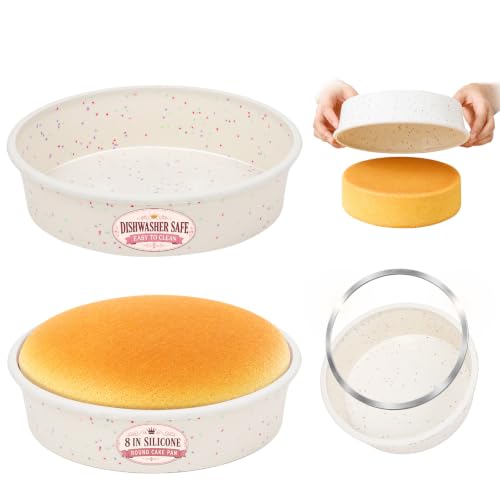
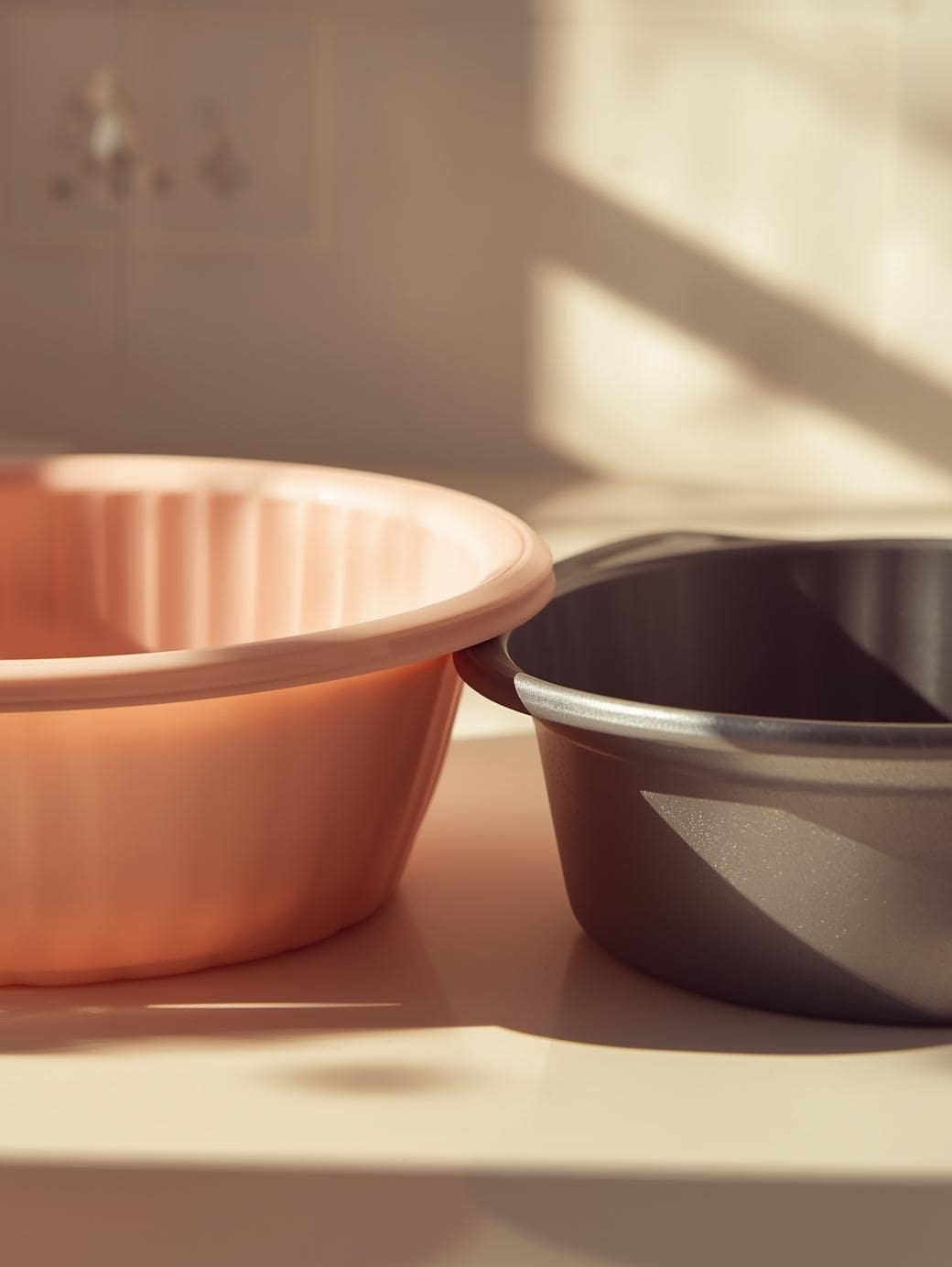
If I’m choosing one pan for most cakes, I’d pick a light-colored nonstick metal pan over silicone. It bakes with more reliable browning, straighter sides, and a cake that holds its shape better. Silicone has real strengths, especially for easy release and molded bakes, but for everyday layer cakes and loaf cakes, nonstick metal is usually the steadier choice.
How the Material Changes the Bake
The biggest difference comes down to how each pan handles heat. A nonstick cake pan has a rigid metal body with a slick coating, so the batter gets direct heat from the sides and base. That helps the cake set sooner around the edges, which usually means more color, a firmer crust, and cleaner lines.
Silicone works differently. It’s flexible, naturally nonstick, and slower to transfer heat than metal. In practice, that often means paler edges, a softer outer crust, and sometimes a slightly longer bake. The Kitchn notes that cakes baked in silicone tend to come out lighter than those baked in dark nonstick pans under the same conditions, which lines up with what many home bakers see in their own ovens.
That slower heat transfer is not always a drawback. If I’m baking something delicate or sticky, a softer edge can actually help. But if I want a classic birthday cake layer with tidy sides and easy stacking, metal usually makes the job simpler.
When Nonstick Metal Works Better
Nonstick metal is the better default when shape matters. The rigid walls support the batter as it rises, so round and square cakes keep more defined edges. That makes a difference for layer cakes, snack cakes, and loaf cakes that need to slice neatly.
It also gives more predictable browning. A cake baked in metal is usually easier to read: the edges color, the top sets, and the bottom firms up in a way that helps with doneness. I still pay attention to pan color here. Light-colored metal tends to be more forgiving, while darker nonstick finishes can brown the outside faster.
Another advantage is stability. A metal pan stays firm when you fill it, move it to the oven, rotate it, or cool it on a rack. That sounds basic, but it matters, especially with thinner batters or larger cakes. You don’t have to think much about support or shifting.
When Silicone Makes Sense
Silicone earns its place when easy release is the priority. Because the pan flexes, you can often peel it away from a cooled cake instead of prying the cake out. That’s especially helpful for detailed molds, sticky batters, flourless cakes, and desserts that are prone to tearing.
It’s also practical to store. Silicone pans are light, and many can tuck into a cabinet more easily than rigid metal pans. If kitchen space is tight, that matters.
The trade-off is structure. Flexible walls can bow outward or wobble when full, so silicone is best treated as supported bakeware, not something to carry on its own. Martha Stewart’s guide to baking with silicone makes the same point: the easy release is useful, but flexible molds need a thoughtful approach.
What to Expect in the Oven
Browning and Crust
If you like a lightly golden edge and a firmer exterior, nonstick metal usually gives you that more readily. Silicone cakes often come out with a softer, paler finish. Neither is automatically better, but they are different.
Shape and Lift
Metal pans help cakes hold straight sides and a more even profile. Silicone can still produce a good rise, but very soft molds may spread or flex enough to soften the final shape. This is most noticeable with tall batters, heavy pound cakes, or deep layers.
Release
Silicone often wins on release, especially once the cake has cooled. Nonstick metal can release very well too, but I still wouldn’t skip basic prep just because the surface is coated.
How I’d Choose by Cake Type
For standard layer cakes, loaf cakes, and most butter cakes, nonstick metal is the safer choice. It gives more support, better browning, and edges that are easier to frost or slice cleanly.
For cheesecakes, sticky syrup-based cakes, flourless cakes, or novelty shapes, silicone can be genuinely useful. The flexibility helps with unmolding, and that can save a delicate dessert from cracking or tearing.
If I were building a small baking setup from scratch, I’d start with metal and add silicone as a specialty option rather than treating it as a full replacement.
Care and Longevity
Both materials are fairly easy to maintain, but they need different kinds of care. With nonstick metal, the main goal is protecting the coating. I avoid cutting in the pan, scraping with metal utensils, or attacking baked-on spots with abrasive scrubbers. Gentle washing and careful stacking help the surface last longer.
Nonstick pans are often best washed by hand, even if they seem sturdy. Repeated dishwasher cycles can be hard on coated finishes, and once the coating starts to scratch or peel, it’s time to stop using that pan.
Silicone is simpler in some ways, but it can hold onto greasy residue or odors if it isn’t washed thoroughly. Hot water, dish soap, and full drying usually take care of it. If a pan feels slick even after washing, it often just needs a more thorough cleaning rather than more oil the next time you bake.
Silicone is broadly oven-safe, but I still follow the maker’s temperature guidance and keep it away from direct heat sources like broilers or heating elements. Nonstick metal is also oven-safe only within its stated limits, so it should not be overheated either. Both materials do best when used within their intended range.
Common Mistakes That Cause Trouble
Assuming “Nonstick” Means No Prep
I still grease nonstick metal for cakes, and for layer cakes I usually line the base with parchment too. For silicone, a light grease is still smart for sticky, sugary, or detailed bakes. A pan’s surface helps, but it does not replace good preparation.
Filling Silicone Before Supporting It
This is probably the easiest mistake to avoid. Set the silicone pan on a baking sheet first, then fill it. That keeps the mold flat, prevents spills, and makes it much easier to move to the oven.
Judging Doneness by Color Alone
Silicone cakes can be fully baked while still looking pale, and dark nonstick pans can brown early while the middle still needs time. I start checking close to the recipe’s suggested bake time and rely on the usual signs: a tester that comes out clean or nearly clean, a center that springs back lightly, and edges that look set.
Unmolding Too Early
This matters most with silicone. Because the pan flexes, turning out a warm, tender cake too soon can make it crack or slump. Letting the cake cool properly makes release much easier and gives it time to firm up.
FAQ
Do silicone cake pans need longer baking time?
Often, yes. Silicone transfers heat more slowly than metal, so cakes may need a little more time to bake through. I wouldn’t change the oven temperature right away; it’s better to start checking at the usual time and add a few minutes if needed.
Which pan gives better browning?
Nonstick metal usually does. Because metal conducts heat more efficiently, it tends to produce a more golden exterior and a firmer crust. Material comparisons like this one also point to clear differences in how metal and silicone bake.
Are silicone cake pans safe in the oven?
Food-grade silicone pans are made for oven use, as long as they stay within the manufacturer’s temperature range. I keep them away from open flame, broilers, and direct contact with heating elements.
Do cakes release better from silicone or nonstick metal?
Silicone usually has the edge here because you can flex the pan away from the cake. That said, a well-prepared nonstick metal pan also releases very reliably, especially if the base is lined for layer cakes.
What’s the main downside of silicone bakeware?
The biggest drawback is that it doesn’t brown or support cakes as well as metal. Cakes can come out paler, softer at the edges, and a bit less defined in shape, especially if the mold is very flexible.
The Bottom Line
For most home bakers, nonstick metal is the better all-purpose cake pan because it gives stronger structure, better browning, and more predictable results. Silicone is still worth keeping for delicate or sticky cakes, but I’d treat it as a useful backup, not the first pan I’d reach for.