Guide
Calphalon Cookware Materials
Our honest guide to Calphalon cookware materials — what actually matters, what to skip, and how to choose well.

Our honest guide to Calphalon cookware materials — what actually matters, what to skip, and how to choose well.
Best Overall
 Best Value
 Also Great
 Also Great
 Best Premium
Calphalon cookware is not made from one single material. Across the range, the main materials are hard-anodized aluminum, stainless steel with bonded aluminum inside, and ceramic-coated cookware. In practice, that means the pan body affects how quickly and evenly it heats, while the cooking surface affects sticking, browning, and how much care the pan needs.
If I’m trying to make sense of any Calphalon pan, I look for two things first: the base metal and the interior surface. That tells me far more than a label like “nonstick” or “stainless” on its own. A hard-anodized nonstick skillet is built for easy release and quick weeknight cooking, while a clad stainless pan is better for searing and pan sauces. Ceramic-coated pieces sit somewhere in the middle for cooks who specifically want that style of nonstick surface.
Hard-anodized aluminum is one of the core materials in Calphalon’s nonstick cookware. Aluminum is naturally quick to heat and good at spreading heat across the pan, which is a big part of why these pieces tend to feel practical for everyday cooking. According to Calphalon’s material guide, hard-anodized nonstick is positioned as an everyday option, and that tracks with how this material is typically used in the kitchen.
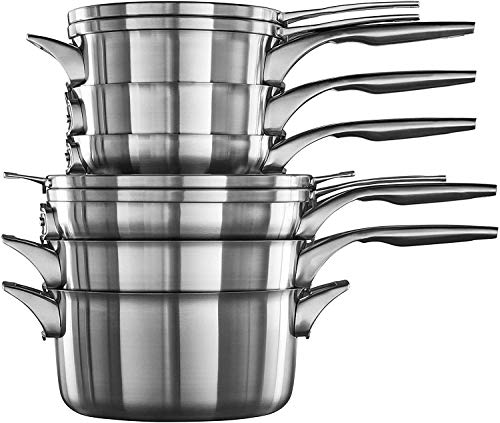
Calphalon Premier Hard-Anodized Nonstick Cookware 11-Piece Pots and Pans Set Dishwasher and Oven Safe with MineralShield
Shop at Amazon →The “hard-anodized” part matters. Anodizing changes the surface of the aluminum, making it harder and less reactive than plain aluminum. It creates a sturdy base, but it is still the nonstick coating on top that gives you easy food release. That distinction is worth keeping in mind because people sometimes treat hard-anodized cookware as if it is immune to wear. It isn’t. The body can be durable, but the coating still needs reasonable heat and gentle care.
This is the material I associate with eggs, pancakes, delicate fish, grilled sandwiches, and quick reheating. It’s useful when I want less sticking and less cleanup, especially on busy nights. Where it gives up ground is browning. A nonstick surface does not build fond the same way stainless steel does, so it is not my first pick for deep sear-and-deglaze cooking.
The biggest mistakes with hard-anodized nonstick are overheating, preheating it empty for too long, and using abrasive tools or scrubbers. Those habits shorten the life of the cooking surface faster than most people expect. I also avoid aerosol cooking spray on nonstick because residue can bake onto the surface and become surprisingly stubborn.
For care, I keep the heat moderate, use silicone or wooden utensils most of the time, and let the pan cool before washing. Even if a collection allows dishwasher cleaning, gentler hand washing is usually the lower-stress option for the finish.
Calphalon also makes stainless steel cookware, and this is the material family I think of for browning, sautéing, and sauce work. Stainless steel itself is durable and non-reactive, but it does not conduct heat as efficiently as aluminum. That is why many stainless pans use layered construction, with stainless on the cooking surface and aluminum inside to help the pan heat more evenly. Calphalon’s stainless cookware pages describe both three-layer and five-layer constructions across the category, so the exact build varies by collection and piece.
This is the better choice when I want strong color on chicken thighs, mushrooms, onions, or a steak, and when I want the browned bits left in the pan to turn into a sauce. Stainless gives me more direct contact between food and hot metal, which is what creates that useful fond. Nonstick cookware is easier, but stainless is more rewarding when browning matters.
The tradeoff is that stainless takes more technique. Food sticks when the pan is too cool, when it is crowded, or when the food is moved before it is ready to release. I get the best results by preheating over medium heat, adding oil once the pan is warm, and putting dry food into the pan rather than damp food. Then I leave it alone long enough to brown. If I try to force a turn too early, sticking is almost guaranteed.
Stainless is also the more flexible surface if I cook at higher heat or use metal utensils. It generally handles that kind of use better than coated cookware. For cleanup, I do not mind a bit of soaking and deglazing because the same browned residue that looks messy is often the start of a very good sauce.
If I’m comparing stainless options, I read the construction notes closely. The phrase “stainless steel” alone does not tell me enough. A bonded aluminum core or layered body is what makes a stainless pan cook more evenly, and Calphalon’s stainless steel range shows that those details differ across the line.
Ceramic-coated cookware in the Calphalon lineup uses a ceramic nonstick surface over a metal pan body. This is the option many people look at when they specifically want a PFAS-free ceramic coating. Calphalon describes its ceramic collection as made without PFAS and built with a scratch-resistant interior on its ceramic collection page.
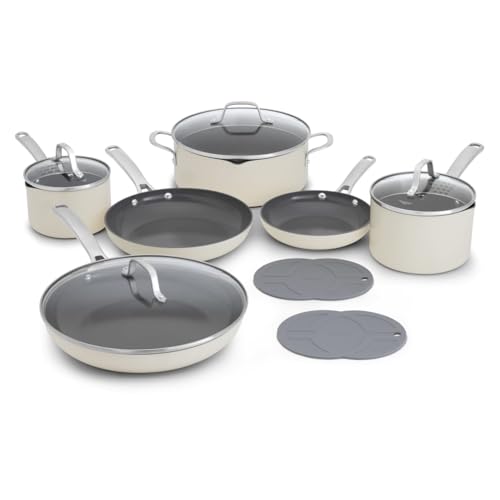
Calphalon Ceramic Nonstick 12 Piece Cookware Set, Easy Cleanup Pots and Pans for Everyday Cooking, PFAS-Free Kitchen Set
Shop at Amazon →In daily cooking, ceramic-coated pans fill a similar role to traditional nonstick: delicate foods, lighter cooking, and easier cleanup. Fish fillets, eggs, and quick sautés make sense here. But ceramic cookware still benefits from the same habits that help any coated pan last longer. High heat, rough scrubbing, stacking without protection, and aggressive utensils all work against the surface over time.
Even when a ceramic line is marketed as scratch-resistant or compatible with metal utensils, I still think gentle treatment is the smarter default. Moderate heat and softer tools are just easier on the pan. Ceramic release can change as the surface ages, so preserving it is mostly about avoiding unnecessary stress from day one.
This is also where I think expectations matter. Ceramic-coated cookware is not the same thing as bare ceramic cookware, and it should not be treated like a searing pan just because it looks sturdy. The body metal still matters, but the coated cooking surface sets the real limits for care and heat.
In general, these cookware materials are intended for food contact when they are used as directed and kept in sound condition. Calphalon states in its product disclosures that its products comply with applicable federal and state safety regulations.
For me, the practical part of safety comes down to condition and use. I do not worry about light cosmetic wear on the outside of a pan. What I pay attention to is the cooking surface: flaking, peeling, deep gouges, exposed underlying metal in a coated pan, or warping that affects stable contact with the burner. Those are the signs that tell me a pan is at the end of its useful life.
I also avoid overheating coated cookware, especially when it is empty. Most nonstick and ceramic cooking does not need high heat anyway. Medium or below handles the majority of jobs these pans are meant to do.
If your cooking leans toward eggs, pancakes, low-oil meals, and fast cleanup, hard-anodized nonstick makes the most sense. If you care more about searing, browning, and building sauces in the pan, stainless steel is the stronger fit. If you specifically want a ceramic nonstick surface, ceramic-coated cookware is the natural lane.
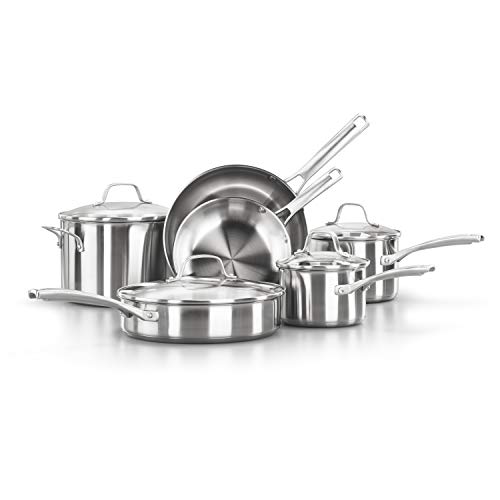
Calphalon Classic Stainless Steel Cookware Set, 10-Piece, Impact-Bonded Aluminum Base, Stay-Cool Handles, Oven Safe 450F
Shop at Amazon →I think a mixed setup is usually the most practical answer. One nonstick-style skillet for delicate foods and one stainless pan for browning covers a lot of ground without making every cooking task harder than it needs to be.
It is also worth checking details beyond the material name. Oven limits, dishwasher guidance, and induction compatibility can vary by collection and by piece, so I never assume one rule applies to every pan in the brand.
They are made from hard-anodized aluminum, stainless steel, ceramic-coated metal, or layered combinations of those materials. The exact construction depends on the collection and the specific pan.
Both. Many nonstick pieces use hard-anodized aluminum, while stainless steel cookware often uses stainless on the cooking surface with aluminum bonded inside for heat distribution.
Yes, when it is used according to its care instructions and the cooking surface remains in good condition. I would replace a pan if the coating is peeling, flaking, or deeply damaged.
Light surface marks are not the same as active coating failure. What matters more is deep scratching, peeling, flaking, or exposed metal, which are stronger signs that it is time to retire the pan.
Some pieces can, but that varies by collection and model. I would check the care guidance for the exact pan rather than assume all stainless pieces are treated the same way.
Calphalon cookware materials fall into three main camps: hard-anodized aluminum for easy everyday nonstick cooking, stainless steel with aluminum inside for browning and sauces, and ceramic-coated cookware for a PFAS-free nonstick option. The best choice depends less on the label and more on how you actually cook, how much browning you want, and how carefully you plan to treat the surface.

Paige Gilmore
Founder of Stripes & Willows — recipe creator, food photographer and stylist. Every guide is written to make honest, useful kitchen decisions easier.
More about Stripes & Willows →This page contains affiliate links. If you buy through them, Stripes & Willows may earn a commission at no extra cost to you — it never affects what we recommend.