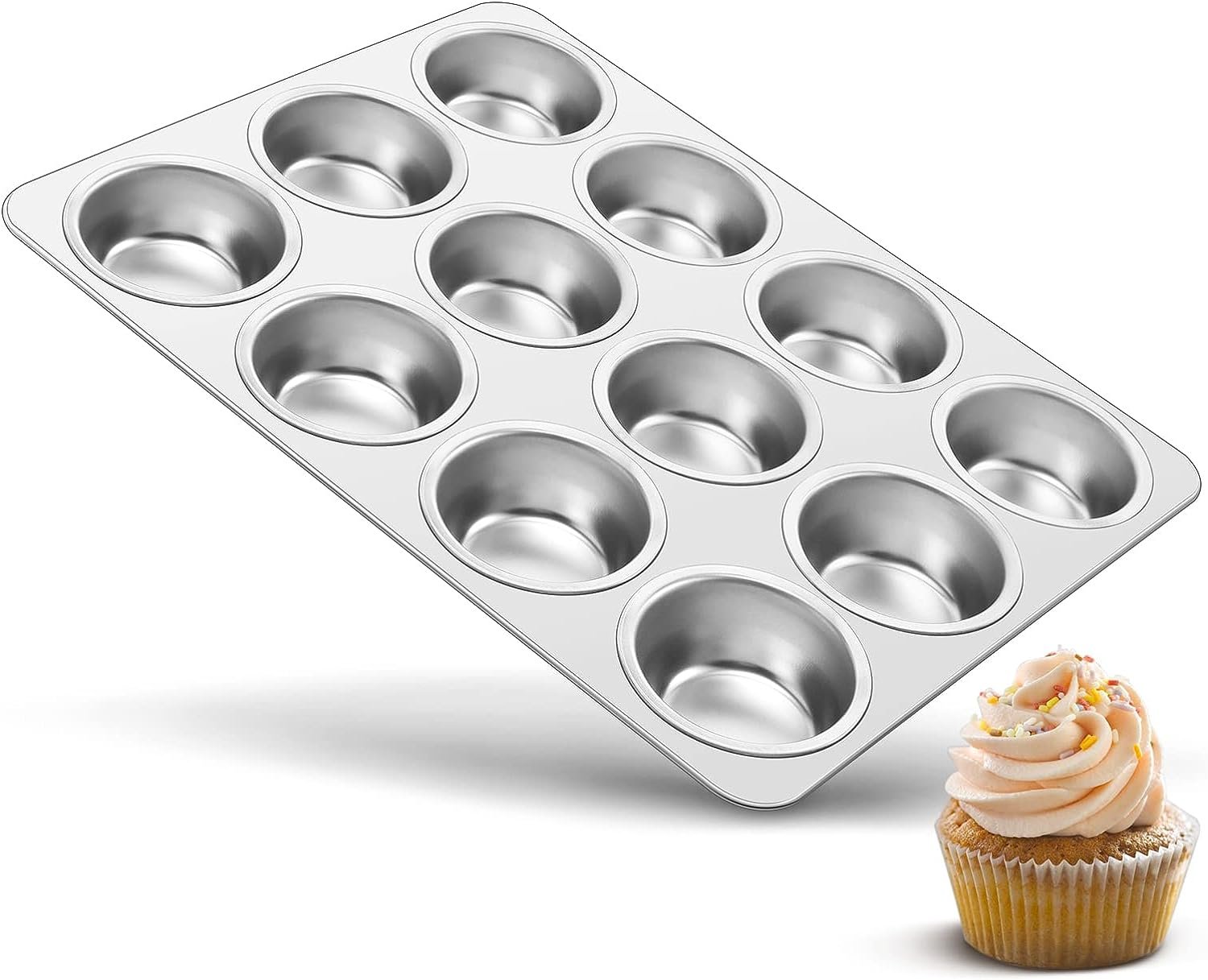
If I’m choosing one muffin tin for most home baking, I’d pick anodized aluminum over silicone. It gives more reliable browning, better structure, and a more predictable bake for standard muffins and cupcakes. Silicone still has a real place in the kitchen, especially for egg bites, sticky batters, and freezer portions, but it usually produces paler sides and needs a little more care when filling and moving.
How the bake actually differs
The biggest difference comes down to how each material handles heat. Aluminum transfers oven heat into the batter quickly, so the outer edge of the muffin sets sooner and browns more readily. That usually means better color, crisper edges, and a cleaner, taller rise. In practical terms, it’s the material I’d trust when texture matters as much as flavor.
Silicone behaves differently. It’s oven-safe, but it doesn’t push heat into the batter as assertively, so muffins often need a bit more time. The tops can look done while the centers still need another minute or two. The sides also tend to stay softer and lighter. That doesn’t make silicone bad; it just makes it better suited to bakes where easy release matters more than a golden crust.
This is why switching pans can change the result even with the same recipe. General baking guidance from The Dough Academy notes that silicone often needs longer baking time, and that lines up with the way many home bakers adjust doneness checks when moving from metal to silicone.
Why aluminum usually wins for muffins and cupcakes
For classic blueberry muffins, bran muffins, cornbread muffins, and cupcakes, aluminum is simply steadier. Its rigid walls support the batter as it rises, so the shape stays more uniform from cup to cup. If I want nicely defined sides and a domed top, that stability matters.
Color matters too. Muffins are not just done when the center sets; the browned edge contributes flavor and texture. Aluminum helps moisture evaporate at the perimeter, so the crumb near the sides turns slightly firmer and more structured. That’s often the difference between a bakery-style muffin and one that feels a little steamed around the edges.
Light-colored metal is usually the easiest to manage because it browns without pushing too fast. Darker pans can color the exterior more aggressively, so when changing pan material, I wouldn’t judge doneness by appearance alone. A toothpick check in the center is still the safer call.
Where silicone earns its space
Silicone shines when release is the main challenge. Egg bites, mini frittatas, sticky batters, and delicate portions come out more easily because the cup can flex away from the food. That matters when the bake is tender enough to tear in a rigid pan.
It’s also handy for make-ahead cooking. If I’m baking something I plan to cool, pop out, and freeze in portions, silicone is convenient because the mold bends without much effort. For savory bakes with cheese or egg, that easy release can be the whole reason to use it.
The tradeoff is handling. A flexible mold full of batter is awkward on its own, so it really needs to sit on a sheet pan before filling. That support should stay underneath from counter to oven to cooling rack. Without it, the cups can tilt, the batter can spill, and the final shape can come out uneven.
Release and texture: what to expect
People often think of this choice as release versus sticking, but it’s really release versus finish. Aluminum may need greasing or paper liners, especially for high-sugar, fruit-heavy, or cheesy recipes. Silicone often releases more easily with less help. But the finish from each pan is different.
With aluminum, direct contact with the pan helps create a more defined edge. With silicone, the sides stay gentler and moister. If I’m baking cupcakes that will be frosted, that softer edge may be perfectly fine. If I want a sturdy muffin with visible browning and a bit of crust, metal is usually the better fit.
Paper liners change things too. Even in aluminum, liners soften the side texture because the batter is no longer baking directly against the pan. So if someone is used to lined cupcakes and then bakes bare in aluminum, the improvement in browning can feel dramatic.
Common mistakes with each material
The most common silicone mistake is treating it like a rigid pan. It isn’t. Fill it on a baking sheet, don’t overfill the cups, and let the baked muffins rest briefly before peeling them out. If the crumb is still very warm and delicate, forcing release can tear the sides.
The most common aluminum mistake is under-prepping the cups. Even anodized aluminum benefits from greasing or liners when the batter is sticky, sugary, or full of mix-ins. Another mistake is leaving baked goods to sit in the hot pan too long. Aluminum doesn’t hold heat especially strongly, but warm metal still continues cooking the exterior. A short rest is fine; much longer can dry the edges.
For both materials, changing doneness by color alone leads to trouble. Silicone can stay pale even when fully baked, while aluminum can look deeply golden before the center is quite ready if the oven runs hot.
Care and long-term use
Both materials are fairly easy to maintain if cleaned promptly. Silicone is generally dishwasher-safe, but it can hang onto grease film and odors, so a thorough wash matters. A soft brush and warm soapy water usually do more for it than a quick rinse. If it starts feeling slick after washing, it likely needs a better degreasing pass.
Anodized aluminum is also easy to care for, but I’d keep it out of the dishwasher. Dishwasher detergents can be rough on aluminum over time, which is why hand-washing is the better habit. Guidance from Appliance Care Hub makes the same point about dishwasher wear on aluminum bakeware.
I also avoid sharp tools on either pan. Silicone can tear or puncture, and metal tools can mark aluminum surfaces and make cleanup harder later. Dry both thoroughly before putting them away so stale odors and residue don’t build up in the cups.
Safety and temperature notes
Both anodized aluminum and silicone are oven-safe for normal baking, but silicone deserves one extra reminder: always follow the manufacturer’s temperature guidance. Not every silicone mold is intended for the exact same heat range, and broiler use is a separate question entirely. I wouldn’t assume a muffin mold is suitable for direct high heat unless its instructions clearly say so.
Silicone is also not a stovetop or open-flame material, and it isn’t induction compatible. Aluminum bakeware is meant for oven use here, and while anodized aluminum does not react with acidic foods the way some people worry about with untreated metals, I still wouldn’t leave batter sitting in any pan longer than necessary before baking.
For a broad overview of how metal and silicone differ in baking performance, King Arthur Baking has useful general material guidance, especially on browning and heat behavior.
Who should choose which
If you bake muffins or cupcakes often and want dependable results, anodized aluminum is the stronger everyday choice. It’s light, easy to handle, budget-friendly, and better at producing the texture most people expect from a muffin tin.
If your priority is easy unmolding, portion baking, or soft egg-based recipes, silicone makes sense. It’s also light, budget-friendly, and easy to store, but it asks for a bit more patience and support during baking.
For many kitchens, this is less a question of right and wrong than of matching the pan to the job. If the goal is browned and structured, choose aluminum. If the goal is gentle release, choose silicone.
FAQ
Which material is better for baking muffins: aluminum or silicone?
For most muffins, aluminum is better because it browns more effectively, supports a stronger rise, and gives a firmer edge. Silicone is better when easy release matters more than color and crust.
Do muffins bake more evenly in aluminum than silicone?
Usually, yes. Aluminum transfers heat more efficiently, so the bake is more predictable from edge to center. Silicone can still work well, but it often needs slightly more time and may leave the sides paler.
What are the disadvantages of silicone muffin tins?
The main drawbacks are softer browning, longer bake times in some recipes, and a floppy structure that needs a sheet pan underneath. Silicone can also hold onto grease residue or odors if it isn’t cleaned thoroughly.
Are silicone muffin pans safe at high temperatures?
They’re generally safe for standard oven baking within the temperature range listed by the manufacturer. I would not use them under a broiler, on a stovetop, or near direct flame unless the instructions specifically allow it.
Are aluminum or silicone pans better for egg bites?
Silicone is usually easier for egg bites because the cups flex and release tender edges cleanly. Aluminum can work, but it needs careful greasing and is more likely to hold onto egg and cheese.
The Bottom Line
Anodized aluminum is the better all-around muffin tin if you care most about browning, structure, and consistent baking. Silicone is the better specialist option for easy release, egg bites, and freezer-friendly portions. If I had room for only one, I’d keep aluminum; if I had room for two, silicone would still earn a spot.