Guide
Best Stand Mixers For Christmas Baking
Our honest guide to best stand mixers for christmas baking — what actually matters, what to skip, and how to choose well.
Our honest guide to best stand mixers for christmas baking — what actually matters, what to skip, and how to choose well.
Best Overall
 Best Value
 Amazon
The best stand mixer for Christmas baking is the one sized for the batches you actually make, with steady low-speed control, a stable base, and the three basic attachments you’ll use all season: paddle, whisk, and dough hook. For most home bakers, a mid-size mixer is enough for cookies, cakes, buttercream, and occasional bread; if you regularly make doubled cookie doughs or heavy enriched breads, it makes more sense to look for a sturdier machine built for dense mixtures than to chase motor claims alone.
At Christmas, bowl size matters more than people think. A stand mixer can seem roomy with cake batter, then feel very cramped with stiff gingerbread or sugar-cookie dough. In most home kitchens, a 4.5- to 5-quart bowl works well for ordinary batches of cookies, cakes, and frosting. If you double recipes often or make bread every weekend in December, a larger-capacity, heavier-duty mixer is usually the more practical choice.
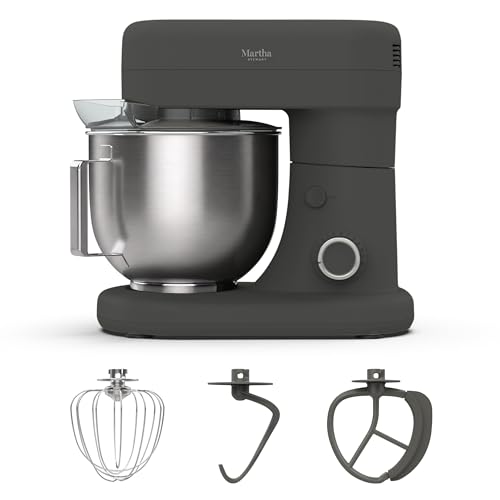
Martha Stewart 5.3QT Tilt Head Stand Mixer, 12 Speeds, Stainless Steel Bowl
Shop at Amazon →The key is not to treat published capacity as the amount you should fill every time. Dense dough puts more strain on the machine than light batter, and an overfilled bowl mixes less evenly. If flour keeps sitting at the edge, dough climbs the hook, or the mixer sounds stressed, the batch is too ambitious. I’d rather mix two steady batches than push one oversized one and end up with uneven texture.
General buying advice from Forbes’ stand mixer roundup lands in the same place: capacity, control, and workload matter more than broad claims about power.
The basic attachments do nearly all the work during holiday baking, and each one has a clear role.
The paddle is for cookie dough, cake batter, brownies, buttercream, and cream cheese mixtures.
The whisk is for egg whites, whipped cream, and light frostings.
The dough hook is for yeast dough once the mixture has come together.
That matters because texture changes fast when the wrong tool is doing the job. Thick dough in a whisk can strain the mixer, and egg whites in a greasy bowl will never whip properly. An attachment guide like this one from Mira reflects the same basic rule: match the tool to the density of the mixture.
Speed matters just as much. I start slowly almost every time, especially when adding flour or confectioners’ sugar. Low speed is right for dough and dry ingredients, medium works for creaming butter and sugar, and higher speeds are mainly for whipping. The highest setting is not a shortcut. It usually just means more splatter, more heat, and a greater chance of overmixing.
A stand mixer saves effort, but it doesn’t remove the pauses that make holiday baking manageable. Chilling, cooling, proofing, and decorating still take the most time, so the smoothest baking days start with a schedule.
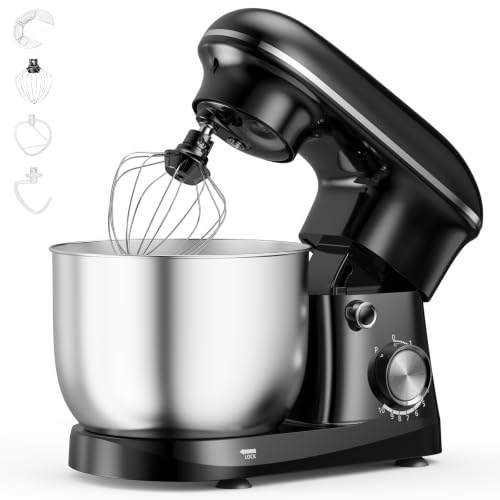
OLIXIS 6.3 Qt Stand Mixer, 10-Speed Tilt-Head Electric Mixer for Baking
Shop at Amazon →I like to work backward from when I need the finished bakes. Doughs that need chilling go first: sugar cookies, gingerbread, slice-and-bake logs. While one batch chills, I can line pans, portion the next dough, or clear counter space. Sturdy cookies usually come before cakes, and frostings wait until everything is fully cool.
It also helps to group recipes by attachment when possible. Cookie doughs can share the paddle. Bread can follow with the hook. Meringue or whipped cream should come only after the bowl and whisk are fully cleaned and dried. Even a little butter residue can ruin whipped egg whites.
A simple planning checklist, similar to the approach in this holiday baking guide, can prevent the usual holiday problems: no cooling-rack space, a full sink, or six recipes all needing the oven at once.
Stand mixers are especially useful for recipes that depend on consistency: creamed cookie doughs, butter cakes, buttercream, brioche, cinnamon rolls, meringue, and whipped cream. The machine helps, but the stopping point still matters more than the minutes on the timer.
For cookies and cakes, softened butter is the sweet spot. It should give when pressed but still hold its shape. Butter that is too cold stays lumpy; butter that is too warm turns greasy and can lead to flat cookies or slack batter. Beat with the paddle at medium speed until the mixture looks lighter and fluffier, then add eggs gradually. Once flour goes in, I slow down and stop as soon as the mixture comes together.
For brioche or cinnamon-roll dough, low speed at the start is the safest choice. Once the flour is hydrated, moderate kneading helps build structure. A well-mixed dough becomes smoother and more elastic. If the machine rocks, the dough wraps tightly around the hook, or the motor sounds strained, it’s a sign to pause. Sometimes the dough simply needs a short rest before more kneading.
For meringue, the bowl and whisk need to be perfectly clean and dry. Any trace of fat can interfere with volume. Start slow, then increase speed as the foam becomes finer. Add sugar gradually and stop when the recipe’s texture cue appears. With cream, watch the final minute closely. It goes from softly whipped to grainy very quickly.
The King Arthur Christmas baking guide is a good reminder of how many holiday recipes benefit from that kind of controlled mixing.
Most holiday mixer problems come from four things: ingredients at the wrong temperature, overloaded bowls, speeds that are too high, and mixing past the point the recipe needs.
Cold butter won’t cream properly. Overly warm butter can make dough greasy and cookies spread too much. Refrigerator-cold eggs often blend poorly into batters, so bringing them closer to room temperature helps. In a hot kitchen, buttercream and whipped mixtures can soften fast, so short pauses and a cooler bowl can make a real difference.
The other common issue is overmixing after flour is added. That’s where tender cakes turn dense and cookies become tougher than they should be. Once the dry ingredients go in, low speed and a light hand matter. I also think it’s worth scraping the bowl during mixing instead of trying to fix flour pockets at the very end with extra beating.
For dense doughs, adding mix-ins by hand at the end can help too. It keeps nuts, chocolate, and dried fruit intact and avoids pushing the mixer longer than needed.
Christmas baking is easier when cleanup happens in the gaps, not at the very end of the day. Dough and buttercream are much simpler to remove before they dry onto the bowl and attachments.
After a batch goes into the oven, take off the bowl and attachment and scrape away what you can with a spatula. Soak dried dough instead of attacking it with anything abrasive. Wipe the mixer body with a damp cloth and keep moisture away from vents, switches, and the attachment hub. Dishwasher safety can vary by finish and material, so it’s always worth checking the manual before dropping attachments into the machine.
Camic 8.45 QT All Metal Stand Mixer,10 Speed Large Capacity Kitchen Mixer with Digital Timer & Tilt-Head, Electric Mixer
Shop at Amazon →It also pays to inspect attachments before the holiday rush. Worn coating, bent wires, or damage at the connection point can affect performance. If a mixer smells hot, stalls, or starts moving around on the counter, stop and let it rest. Repeated heavy batches are exactly when strain tends to show up.
You do not need a giant kitchen to do serious Christmas baking, but you do need a clear workflow. Give the mixer a stable, level surface with room to lift or tilt the head and remove the bowl safely. Keep it away from the sink, stove, and counter edge.
In a small space, batch size is often limited less by the mixer than by the rest of the kitchen. Two regular batches may fit your oven, fridge, and cooling racks far better than one oversized one. I find it helps to keep one tray for measured ingredients, one area for tools, and one clear zone for hot pans and cooling. That prevents the counter from turning into one large pile halfway through the day.
If storage is tight, the most useful setup is also the simplest: keep the paddle, whisk, and hook easy to reach, and be selective about extra attachments. If a specialty tool only comes out once a year, it may not earn permanent cupboard space.
A mid-size bowl is enough for many home bakers making standard batches of cookies, cakes, and frosting. If you regularly double recipes or make stiff bread dough, a larger, sturdier mixer is usually the better fit.
Yes, as long as the batch stays within the manufacturer’s limits and you mix at an appropriate speed. Dense dough should be watched closely for signs of strain, especially if the bowl is packed full.
The paddle, whisk, and dough hook cover nearly everything. For most holiday baking, those three do far more useful work than a drawer full of specialty add-ons.
It depends on how much you bake and how much space you have. If you make multiple batches, enriched doughs, or lots of frosting every year, it can be genuinely helpful. If your holiday baking is lighter, a hand mixer may be enough.
The best stand mixer for Christmas baking is not the biggest or the flashiest one. It’s the model that fits your batch size, handles low-speed mixing well, and makes the recipes you actually bake feel calmer and more consistent.
If you match the bowl to the dough, use the right attachment, and avoid overmixing, a stand mixer can take a lot of pressure out of holiday baking season.

Paige Gilmore
Founder of Stripes & Willows — recipe creator, food photographer and stylist. Every guide is written to make honest, useful kitchen decisions easier.
More about Stripes & Willows →This page contains affiliate links. If you buy through them, Stripes & Willows may earn a commission at no extra cost to you — it never affects what we recommend.