Guide
Best Oven Mitts For Thanksgiving Cooking
Our honest guide to best oven mitts for thanksgiving cooking — what actually matters, what to skip, and how to choose well.
Our honest guide to best oven mitts for thanksgiving cooking — what actually matters, what to skip, and how to choose well.
Best Premium
 Amazon
 Amazon
For Thanksgiving cooking, the best oven mitts are the ones that stay dry, fit securely, offer real grip, and cover more than just your hand. I look for a pair that matches the job at hand: flexible fabric mitts for lighter baking tasks, silicone when steam or slick cookware is involved, and sturdier layered mitts for heavier roasting work. A backup pair matters too, because a damp or greasy mitt is one of the easiest ways to get burned in a busy kitchen.
Thanksgiving puts more demands on oven mitts than a typical weeknight dinner. You might be moving a roasting pan, a bubbling casserole, a Dutch oven, and a sheet pan all within the same hour. That means the safest choice is not just about heat resistance. It is also about grip, coverage, and how confidently you can hold something heavy without fumbling.
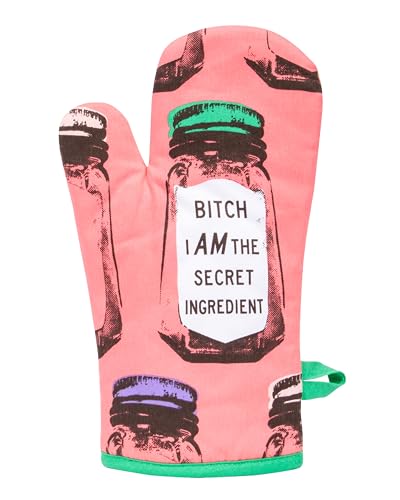
Miracu Funny Kitchen Cooking Oven Mitts, Baking Stuff Baker Gifts for Women
Shop at Amazon →I pay closest attention to four things: insulation, texture, cuff length, and fit. A mitt can have plenty of padding, but if it slips on a smooth pan handle or leaves your wrist exposed near the oven rack, it is not doing the full job. For larger holiday cookware, longer cuffs are especially helpful because they protect the wrist and lower forearm when reaching into a hot oven.
It also helps to remember that a temperature rating is only part of the picture. A stated rating is not a promise that you can hold a hot pan comfortably for any length of time. Heat keeps moving, and thin spots, pressure points, or longer carries make that happen faster. I treat any rating as a limit, not a challenge.
Moisture changes everything. Steam transfers heat quickly, and wet fabric loses insulating power fast. Grease can also make a mitt slippery and harder to control. That is why I keep oven mitts away from the sink during active cooking and swap them out if they feel damp, stiff, or slick.
For dry oven tasks, cotton and quilted fabric mitts are often the most comfortable and practical choice. They are usually flexible enough to grip a pie plate, steady a casserole, or slide out a baking sheet without feeling clumsy. That flexibility matters when you need to make small adjustments at the oven rack instead of just grabbing and lifting.
Fabric mitts are especially useful for baking-heavy menus. If I am rotating rolls, moving a slab pie, or pulling out a smaller gratin dish, this is the style I want nearby. The softer structure tends to offer better dexterity than very thick molded mitts.
The drawback is moisture. If a fabric mitt gets wet, even slightly, it can stop protecting you the way you expect. Steam burns happen fast, and they often happen when someone grabs a lid, a roasting pan with condensation, or a dish that has just come out of a covered bake. For that reason, I reserve fabric mitts for dry heat work and keep a second pair ready if one gets soiled during the day.
Look for even quilting, intact seams, and enough thickness through the palm and thumb. If those high-contact areas start to flatten, the mitt is losing usefulness even if it still looks presentable.
Silicone mitts make the most sense when cookware is wet, slippery, or likely to throw off steam. Covered casseroles, roasting pans with juices, and slick metal handles are where a textured silicone surface can be especially helpful. The main advantage is that silicone resists water and grease better than plain fabric.
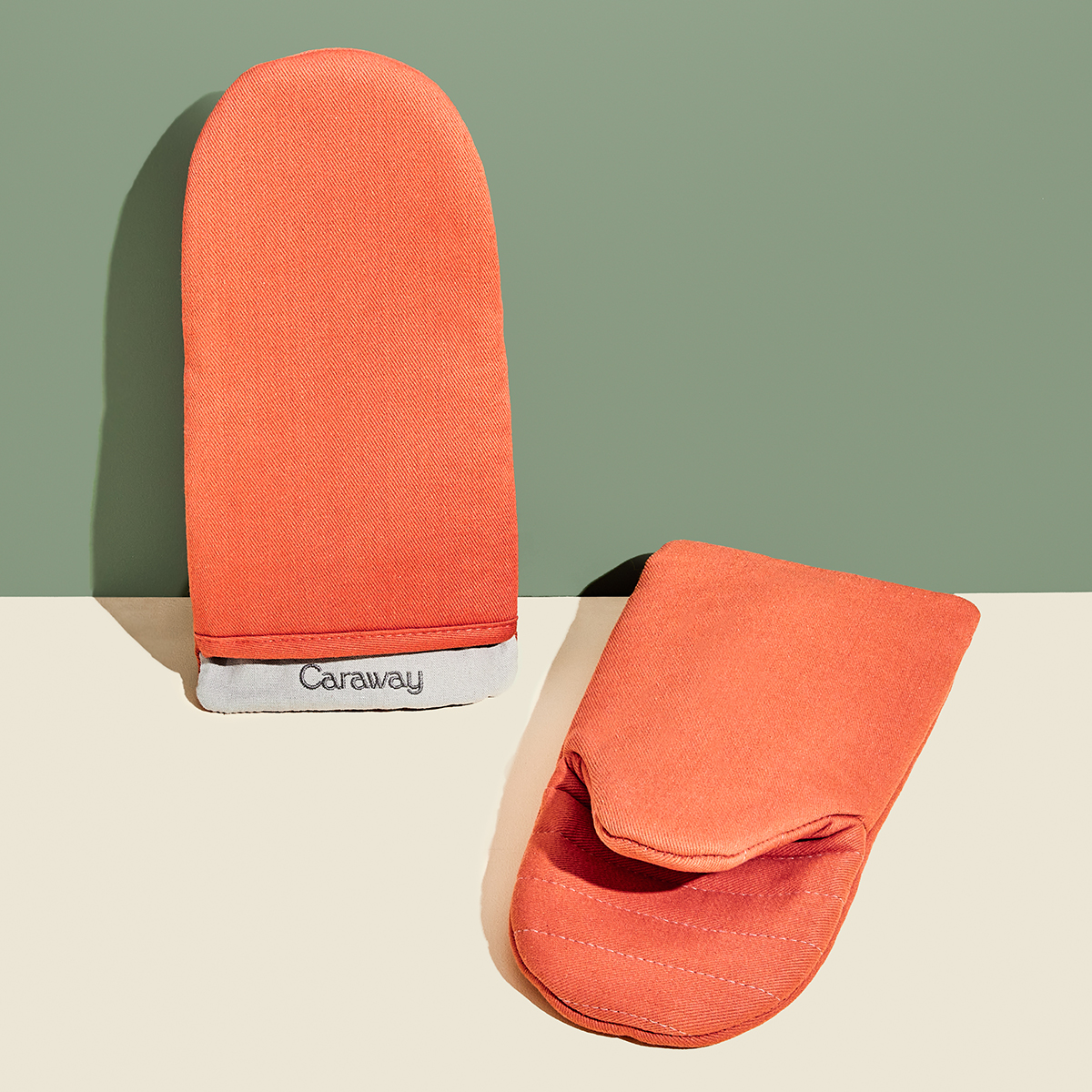
Caraway Home Oven Mitts In Perracotta | 100% Organic Cotton | Caraway
Shop at Caraway Home →Also at AmazonThat does not mean silicone solves every problem. Some silicone mitts can feel bulky, and if they are too stiff, they make it harder to get a natural grip on wider dishes. I think of them as ideal for short, secure transfers rather than long carries around the kitchen.
If you cook with lidded pots, braisers, or heavy casserole dishes on Thanksgiving, silicone is worth considering for the extra traction alone. Just make sure the inside stays dry. A water-resistant exterior does not help much if the lining is damp.
Heat safety groups regularly stress keeping towels and other improvised hand protection away from hot surfaces and open flames; that same common-sense approach applies here too, especially during holiday rush cooking. Holiday kitchen fire-safety guidance is a useful reminder that planning your path and clearing space before lifting hot cookware matters as much as the mitt itself.
For heavier roasting and higher-heat tasks, layered mitts made with advanced heat-resistant fibers can offer more protection than basic fabric alone. This category is useful when you are handling large roasting pans, moving cookware near intense oven heat, or carrying something awkward and substantial.
What matters here is the whole construction, not just the fiber name. Insulation, lining, stitching, grip texture, and cuff length all affect how well a mitt performs. The palm and thumb deserve the closest look because that is where pressure tends to concentrate when you lift a full pan.
These mitts can be a strong choice for turkey duty, but they still are not meant for lingering contact. Even very protective materials have limits once heat has time to travel through the layers. I still move quickly, set the pan down promptly, and use both hands every time.
If you want a better sense of how material affects performance, this overview of oven mitt materials and heat resistance is helpful for comparing the strengths and tradeoffs of silicone, cotton, and layered constructions.
For Thanksgiving, traditional oven mitts are usually the most useful all-around choice. They give broad palm coverage and good wrist protection, which is exactly what I want when lifting a turkey pan or carrying a full casserole dish from oven to counter.
Fingered oven gloves can be helpful when more control is needed, especially around narrower handles or smaller pans. The extra dexterity is real, but only if the gloves fit closely. Loose fingertips make the whole thing less safe, not more.
Pot holders still have a place, just not as the main tool for big holiday transfers. I keep them for hot lids, saucepan handles, and as a landing pad or trivet. They are handy, but they do not offer enough coverage for heavy oven cookware on their own.
The biggest mistake is using a damp mitt. The second is trying to make one mitt do every job. Thanksgiving is easier and safer when you have at least two good pairs ready, with different strengths if possible.
Another common problem is underestimating the awkwardness of a roasting pan. Before lifting, I like to pull the rack out enough to get a balanced grip on both sides, clear the landing spot, and make sure nothing is in the way. If a pan looks too heavy or the handles feel insecure, that is the moment to ask for help.
Steam is another frequent culprit. Opening the oven slowly and standing slightly to the side gives escaping heat a chance to move away from your face and hands. The same goes for removing lids from casseroles and Dutch ovens: let the dish settle on a heat-safe surface before shifting the lid.
And finally, towels are not oven mitts. Fire safety advice from the National Fire Protection Association consistently emphasizes caution around holiday cooking because kitchens are simply busier, hotter, and more crowded than usual. That is exactly when makeshift shortcuts tend to go wrong.
Holiday cooking is hard on mitts. Grease splatters, oven steam, and repeated trips in and out of high heat all wear them down faster than normal use. After Thanksgiving, I think it is worth checking the palm, thumb, fingertips, seams, and cuff before putting them back in the drawer.
Follow the care label first. Many fabric mitts can be machine washed, while silicone styles may need more deliberate hand washing to get grease out of textured surfaces. Whatever the material, complete drying matters. A mitt that feels dry outside but still holds moisture inside is not ready for use.
Replace mitts when you notice scorch marks, holes, thin patches, stiff areas, loose seams, or reduced grip. Flattened insulation is another sign that the mitt is past its best. If you cannot grip securely or you feel heat reaching your fingers sooner than before, it is time to retire that pair.
Decorative seasonal mitts deserve a quick inspection too. Loose trim, shedding details, or slippery embellishments can turn a cute holiday extra into an impractical one. If decoration interferes with grip or catches on oven hardware, it is better kept for display than active cooking.
For most Thanksgiving tasks, oven mitts are the better choice because they give broader coverage and feel more secure with heavy roasting pans and baking dishes. Oven gloves are useful when finger control matters more than full palm coverage.
They can, as long as the mitts are suitable for the heat, long enough to protect your wrists, and textured enough to grip securely. I still use two hands and keep the transfer as short as possible.
There is no single timeline. I replace them when insulation flattens, seams loosen, grip wears smooth, or heat starts coming through faster than it should.
Yes. Moisture reduces insulation and can transfer heat quickly, especially around steam or covered dishes. If a mitt is damp, I do not use it on hot cookware.
The best oven mitts for Thanksgiving cooking are dry, grippy, well-fitting, and long enough to protect your wrists while handling larger cookware. If you keep a reliable pair or two on hand and replace them when they start to wear out, holiday cooking feels noticeably calmer and safer.

Paige Gilmore
Founder of Stripes & Willows — recipe creator, food photographer and stylist. Every guide is written to make honest, useful kitchen decisions easier.
More about Stripes & Willows →This page contains affiliate links. If you buy through them, Stripes & Willows may earn a commission at no extra cost to you — it never affects what we recommend.