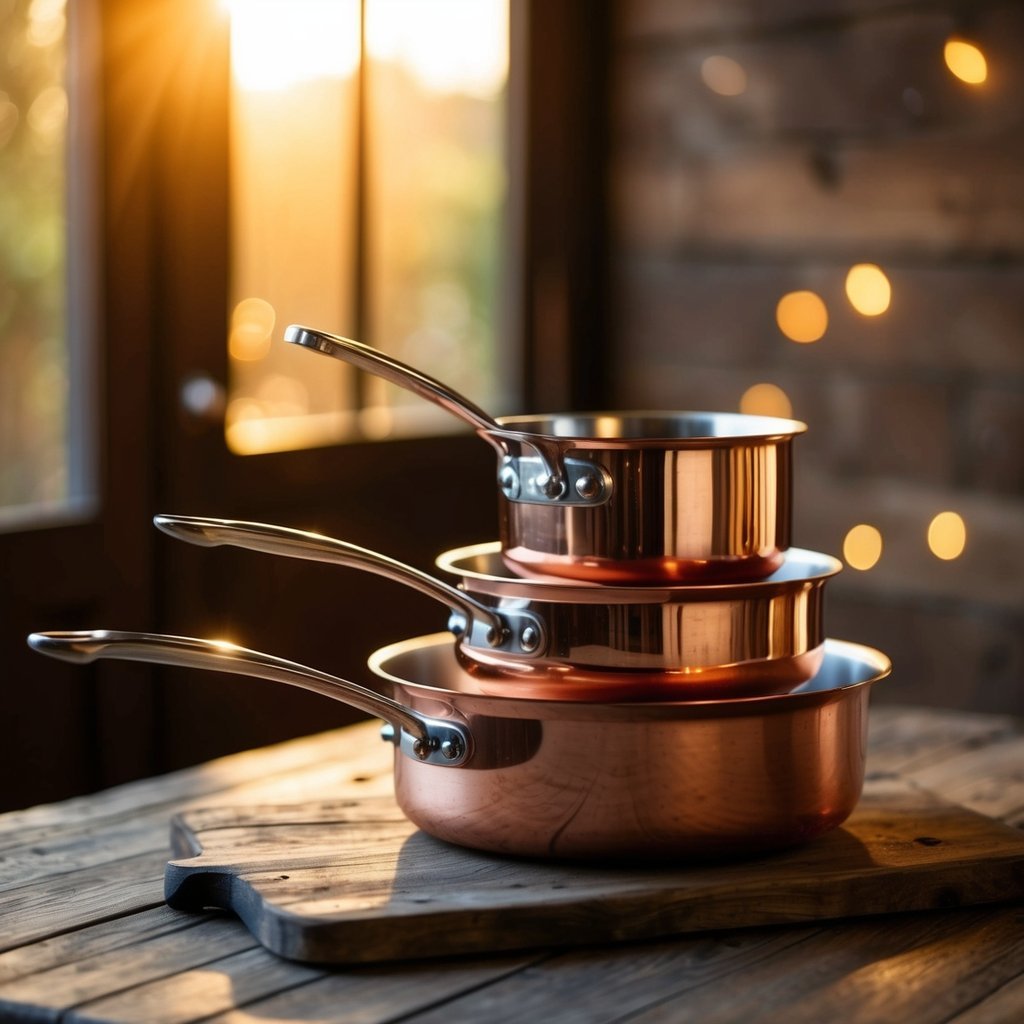
If I had to answer quickly, I’d say this: choose lined copper if you care most about precise heat control for delicate sauces, and choose ceramic-coated if you want an easier everyday saucepan with simpler cleanup. Copper is the better tool for responsiveness; ceramic-coated is the easier fit for routine cooking.
That difference matters most when I’m making something that can turn in a minute. A copper saucepan reacts fast when I lower the heat or pull it off the burner, which is why it has such a strong reputation for custards, caramel, butter sauces, and reductions. Ceramic-coated cookware can still do good work, but it doesn’t give the same immediate response. In most cases, the pan’s aluminum or steel body is doing the real heating, while the ceramic coating mainly affects food release and cleanup.
How Copper And Ceramic-Coated Pans Cook Differently
The biggest gap between these two materials is heat behavior. Copper conducts heat extremely well and, just as importantly, it sheds heat quickly. That low heat retention is useful when I want a sauce to stop cooking before it breaks or thickens too far. Ceramic-coated saucepans tend to have fair heat retention and a more forgiving feel for general simmering, but they are not as nimble when I need tiny temperature adjustments.
That’s why copper is so appealing for classic sauce work. As this comparison of copper and ceramic cookware notes, copper remains valued for its responsiveness. I think that matters less for boiling water or reheating soup and much more for hollandaise, pastry cream, lemon curd, and any reduction that can go from perfect to sticky in a moment.
Ceramic-coated saucepans have a different strength. Their smooth surface usually releases food more easily, especially when the coating is in good shape and I keep the heat moderate. For oatmeal, milk-based sauces, simple reheating, and small batches of grains or beans, that easier release can make the pan feel more pleasant to use day to day.
Where Copper Has The Clear Edge
I think copper earns its keep when control matters more than convenience. A lined copper saucepan spreads heat evenly and responds almost immediately to changes at the burner. That can help prevent scorching around the edges and makes it easier to hold a steady gentle simmer.
It is also a strong choice for browning butter or reducing stock because I can watch the cooking more closely and correct course faster. If I’m making a pan sauce or finishing a reduction, that control feels practical rather than fussy.
But copper is not a carefree material. Food should not touch exposed copper, especially acidic ingredients like tomatoes, wine, vinegar, or citrus. Acid reacts with copper, so a saucepan meant for regular cooking should have a proper lining. Guidance on copper and acidic sauces makes the same point: exposed copper is not the right cooking surface for acidic foods.
That lining matters. Tin-lined copper has a long cooking tradition and handles delicate heat beautifully, but it needs more caution because overheating can damage the lining. Stainless-lined copper is more durable and more tolerant of higher heat, though it may not release food as easily as a nonstick surface.
Where Ceramic-Coated Makes More Sense
Ceramic-coated saucepans fit a more low-maintenance cooking style. They’re often lighter than copper, usually easier to wash, and commonly available in shapes and formats that work across gas, electric, and some induction cooktops. Induction compatibility varies, so I’d always check the pan details rather than assume.
For everyday cooking, I like the simplicity of a ceramic-coated surface. Thick sauces, porridge, and sticky starches are often easier to clean up, and the pan doesn’t ask for exterior polishing the way copper does. It’s a more practical option if I want to make dinner, wash up, and move on.
The trade-off is durability and heat tolerance. Most ceramic-coated cookware does best on low to medium heat. Long empty preheating and very high heat can shorten the life of the coating. This cookware safety overview is helpful on that point too: construction matters more than broad labels. “Ceramic” usually means a coated metal pan, not a pan made entirely from solid ceramic.
Common Mistakes I’d Avoid With Both
The most common mistake with ceramic-coated cookware is treating it like a pan that can take any heat and any utensil. It usually can’t. I’d stick with wood or silicone utensils, skip abrasive scrubbers, and avoid aerosol cooking sprays that can leave stubborn residue. If food starts sticking badly on a clean surface, that’s often a sign the coating is wearing out.
With copper, the mistake is assuming its reputation means it’s difficult or fragile in every way. It isn’t difficult; it just responds quickly. Moderate heat is usually enough, and that fast reaction is the whole point. The real concern is the lining and the reactive copper beneath it. I would not use exposed copper for cooking, and I’d be especially careful with acidic foods.
Another mistake with both materials is sliding pans across a glass cooktop or washing them while they’re still very hot. Letting cookware cool before cleaning is a small habit that can help preserve both the finish and the cooking surface.
Care And Longevity
If maintenance is high on my list, ceramic-coated wins the daily routine. Hand washing with a soft sponge and mild soap is usually enough. Even if a manufacturer says dishwasher-safe, I think hand washing is the safer long-term habit. In practice, ceramic-coated cookware is better treated as not dishwasher-safe if I want the coating to last as long as possible.
Copper asks for more. It usually should be hand washed, dried well, and occasionally polished if I care about keeping the exterior bright. Polishing is cosmetic, but it is part of copper ownership. Patina doesn’t necessarily hurt cooking performance, though some people love the polished look and some don’t care.
For lifespan, copper has the advantage if the pan is well made and properly lined. A quality lined copper saucepan can stay in service for decades, while ceramic-coated cookware has a more limited life because coatings wear down over time. A lifespan comparison of copper and ceramic cookware points to the same basic reality: copper asks for more care, but it can reward that care with far longer use.
Weight matters too. Copper tends to be medium in weight and can feel substantial once filled. Ceramic-coated saucepans are often lighter and easier to handle for quick everyday cooking. If I’m lifting, pouring, and washing the same pan constantly, that difference is worth considering.
Who Each One Suits Best
I’d lean toward copper for someone who cooks with attention and likes fine control. If sauces, reductions, pastry work, and careful simmering are part of the routine, copper makes a strong case. It is also oven-safe in many cases, though I would still check handle and lining guidance.
I’d lean toward ceramic-coated for someone who wants a lighter saucepan for frequent daily use, easy cleanup, and straightforward cooking at gentle to moderate heat. Oven use can be more limited, and that depends on the pan’s construction, so I would verify those instructions before relying on it.
In short, copper rewards technique; ceramic-coated supports convenience.
FAQ
Which is better for everyday cooking: copper or ceramic-coated?
For most everyday cooking, I think ceramic-coated is the easier choice because it releases food more easily, weighs less, and needs less upkeep. I’d choose copper for everyday use only if delicate sauces and precise temperature control are a regular part of the routine.
Can I cook acidic foods in a copper saucepan?
Only if the saucepan is properly lined. Acidic foods should not touch exposed copper because the metal can react with them. Stainless-lined or tin-lined copper is the safer format for real cooking.
Why does ceramic-coated cookware stop acting nonstick?
The coating can wear down from overheating, abrasive cleaning, metal utensils, stacking damage, and normal use over time. Once release performance drops noticeably across a clean surface, it usually means the coating is reaching the end of its useful life.
Is copper harder to maintain than ceramic-coated?
Yes. Copper usually needs hand washing and occasional polishing, while ceramic-coated pans are simpler in day-to-day cleanup. Copper can last much longer, but it asks for more attention along the way.
Is copper or ceramic-coated better for sauce making?
If I’m making delicate sauces where precise heat control matters, I’d pick lined copper. If I’m making simple simmered sauces and care more about easy release and cleanup, ceramic-coated is often the more practical option.
The Bottom Line
Copper is the better saucepan for precision, speed, and control, especially in delicate sauce work. Ceramic-coated is the better saucepan for convenience, lighter handling, and easier cleanup, as long as I’m willing to treat the coating gently and accept a shorter lifespan.