Guide
Best Hand Mixers For Thanksgiving Baking
Our honest guide to best hand mixers for thanksgiving baking — what actually matters, what to skip, and how to choose well.

Our honest guide to best hand mixers for thanksgiving baking — what actually matters, what to skip, and how to choose well.
 Best Overall
Best Value
Best Overall
Best Value
 Amazon
Yes, a hand mixer is a very good tool for Thanksgiving baking, as long as I keep it in its lane. It shines with whipped cream, frostings, cake batters, cheesecake filling, pie fillings, mashed potatoes, and softer cookie doughs. For very stiff doughs or oversized holiday batches, I reach for a sturdier tool so I do not fight the motor or ruin the texture.
A hand mixer earns its keep during holiday baking because it is quick to grab, easy to store, and well suited to light and medium mixing jobs. I like it most for recipes where control matters more than brute force.
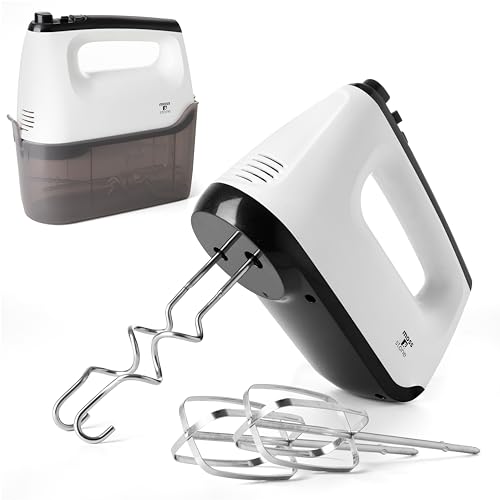
Cuisinart Electric Hand Mixer, 9 Speeds, Extra Long Beaters, 220W
Shop at Amazon →It works especially well for whipped cream, meringue, buttercream, cake batter, pumpkin pie filling, cheesecake filling, and plenty of cookie recipes. This lines up with the common uses outlined in this overview of hand mixer tasks. For Thanksgiving prep, that covers a surprisingly large part of the dessert table.
It can also help with savory sides. Brief mixing makes smooth mashed potatoes, though I keep that mixing short so they do not turn gluey. Holiday cooking guidance also points to whipped cream and mashed potatoes as practical hand mixer jobs, which feels right to me.
Where it starts to struggle is with yeast dough, very stiff cookie dough, chilled butter mixtures, and large-batch mixing. If the beaters slow down, stall, or stop moving ingredients around the bowl, that is usually the sign to stop and switch tools.
For Thanksgiving, the best hand mixer is not simply the most powerful one. What matters more is how easily I can control it across different textures, from thin pie filling to thicker frosting and dough.
I want a true low speed for flour, powdered sugar, and anything likely to splatter. Medium speeds are useful for creaming butter and sugar or blending eggs into batter. Higher speeds are most helpful for whipped cream and egg whites. A gradual start is more useful in the kitchen than a dramatic burst of power.
Standard beaters cover most Thanksgiving recipes. Whisks are helpful for cream and egg whites. Dough hooks can help with lighter doughs, but I still treat them cautiously because hand mixers are not built for the heaviest mixing. If I am comparing options, I also look for attachments that release easily and can be cleaned without fuss.
Thanksgiving prep often means moving from one bowl to the next for hours. A comfortable grip, balanced weight, and enough cord length all make that easier. I also like a mixer that can rest without smearing the counter with batter-covered beaters.
Even a capable mixer struggles in a bowl that is too shallow or too crowded. A deeper bowl helps contain flour and cream, and it gives the beaters room to move around the sides and bottom. If the batch is large, dividing it often gives better results than forcing it through in one go.
Some mixtures are naturally hand-mixer-friendly, and some need a lighter touch.
These are some of the easiest and best uses. I start low, then increase speed once the ingredients are moving cleanly. For whipped cream, I stop as soon as the texture matches the recipe. For meringue, a clean bowl and grease-free beaters matter. For buttercream, softened butter and gradual additions of confectioners' sugar help keep the mixture smooth.
A hand mixer is well suited to cake batter and smooth fillings, but it pays to be restrained. I use medium speed to cream butter and sugar, then lower the speed once flour goes in. For cheesecake filling, frequent scraping matters because cream cheese likes to cling to the bowl. Too much mixing can add excess air, which is one reason cheesecake can crack.
Pumpkin and other custard-style fillings usually need blending rather than aggressive beating. Low speed is enough. I am looking for a smooth, even mixture without whipping in extra air.
Softer cookie doughs are fine, especially at the creaming stage. Once flour starts making the dough heavy, I mix only until combined. If it turns stiff, I finish with a spoon. Mashed potatoes are similar: brief mixing after adding butter and warm milk is enough. Past that point, the texture can go from fluffy to sticky in a hurry.
A hand mixer works best when I treat it as a precise tool, not a shortcut that can be left running while I look away.
I place the beaters in the bowl before turning the mixer on, and I begin at the lowest speed. That single habit prevents most flour clouds and powdered sugar messes. Once the mixture is partly combined, I move up a speed at a time instead of jumping straight to high.
Softened butter creams more evenly. Room-temperature cream cheese blends more smoothly. Cold heavy cream whips better. Good mixing starts before the mixer ever touches the bowl.
I guide the mixer around the perimeter, through the center, and along the bottom of the bowl so ingredients do not sit untouched at the edges. I still stop to scrape the bowl by hand because hand mixers miss pockets, especially in thicker batters and fillings.
This is where good baking often lives. Once flour disappears into cake batter, I stop. Once whipped cream holds the right peak, I stop. Once frosting is smooth, I stop. Overmixing is one of the easiest ways to make cakes tough, whipped mixtures flat, or potatoes gummy.
Most hand mixer problems come down to using too much speed, too much volume, or too much force for the recipe in front of me.
If cake or muffin batter turns tough, overmixing after the flour went in is a likely reason. If whipped cream or egg whites collapse, the mixture may have been overbeaten or too warm. Slowing down and stopping earlier solves a lot.
Dense dough puts real strain on a hand mixer. If the motor sounds labored, the housing gets hot, or the beaters stop circulating ingredients well, I pause immediately. Short mixing intervals help, but some mixtures simply need a stand mixer, pastry blender, food processor, or a sturdy spoon.
Frosting, dough, and cold butter mixtures can wrap around the beaters and stop efficient mixing. I always switch the mixer off and unplug it before clearing them. Usually the fix is a smaller batch, a deeper bowl, or a recipe-appropriate tool change.
This is common in thick batters and cookie dough. Adding dry ingredients in smaller portions and scraping the bowl between additions helps. I always check the bottom edge of the bowl before calling a batter finished.
Thanksgiving baking goes more smoothly when I clean the mixer as I go instead of letting batter dry on the attachments.
I unplug the mixer before ejecting beaters or whisks, then wash removable parts according to the manual. A quick rinse right away is helpful, even for dishwasher-safe attachments. Dried frosting and batter are much harder to deal with later.
For the housing, I use a damp cloth and mild soap, then dry it right away. I keep water away from vents, switches, and attachment openings. The motor housing should never be submerged or rinsed under running water.
Before storing, I make sure every part is fully dry. I also avoid wrapping the cord tightly around the body, since that can stress it over time. A loose coil and a clean set of beaters stored nearby make the next round of baking easier.
Yes. They are a smart choice for whipped cream, frostings, cake batters, pie fillings, cheesecake filling, mashed potatoes, and many cookie doughs. They are less suited to very stiff doughs and very large batches.
I use medium speed for creaming butter and sugar, then low speed once flour is added. The goal is a smooth batter without overworking it.
Yes, but briefly. Mix cooked, warm potatoes with warm butter and milk just until smooth. Too much mixing can make them gluey.
It can handle softer cookie doughs well, especially early in the mixing process. If the dough becomes dense or starts straining the motor, it is better to finish by hand or switch tools.
Thick dough creates more resistance than a hand mixer is meant to handle for long periods. Pausing can help, but repeated strain is a sign the batch is too heavy or too large for the machine.
A hand mixer is one of the most useful small tools for Thanksgiving baking because it handles so many desserts and side dishes with very little setup. It works best when I use low speed to start, keep batches reasonable, and know when a thicker dough needs a different tool.

Paige Gilmore
Founder of Stripes & Willows — recipe creator, food photographer and stylist. Every guide is written to make honest, useful kitchen decisions easier.
More about Stripes & Willows →This page contains affiliate links. If you buy through them, Stripes & Willows may earn a commission at no extra cost to you — it never affects what we recommend.